Going off-trail and getting to the top of any one of Glacier Park’s many peaks can be one of the most memorable things you’ll ever do. And it’s becoming increasingly popular. Surprisingly the vast majority of peaks in the park can be reached without any technical gear. We refer to this as “scrambling” or “peak-bagging.” It can also be called “climbing” as it often involves strategic route finding, steep cliffs and ledges, dangerous exposure, 3,000′ to 6,000′ feet elevation gain, and a lot of careful placement of hands and feet on loose rock.
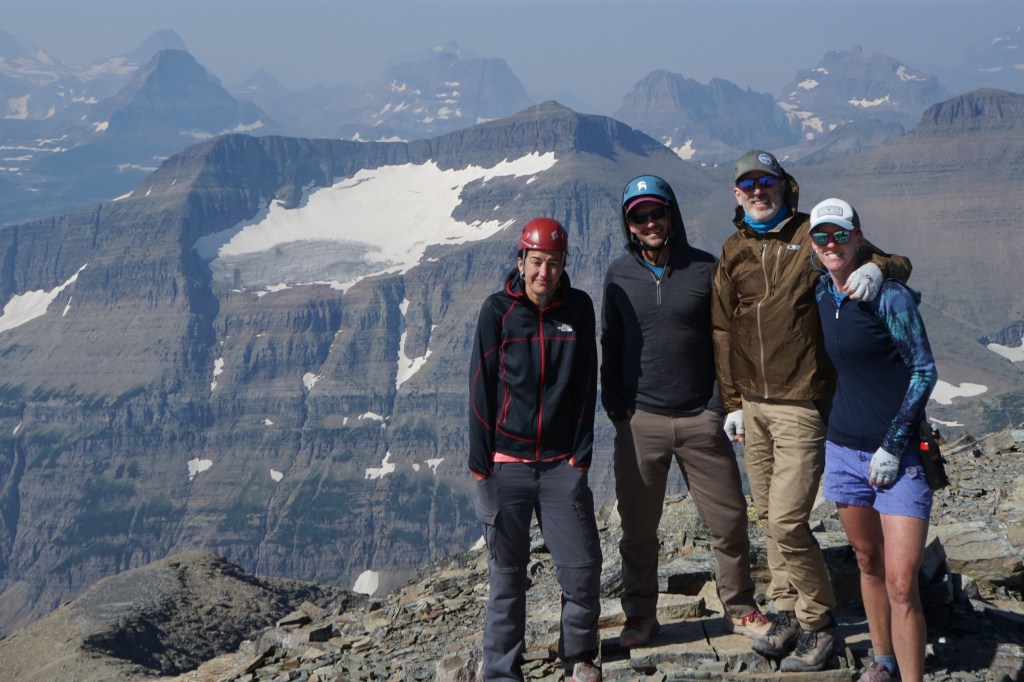
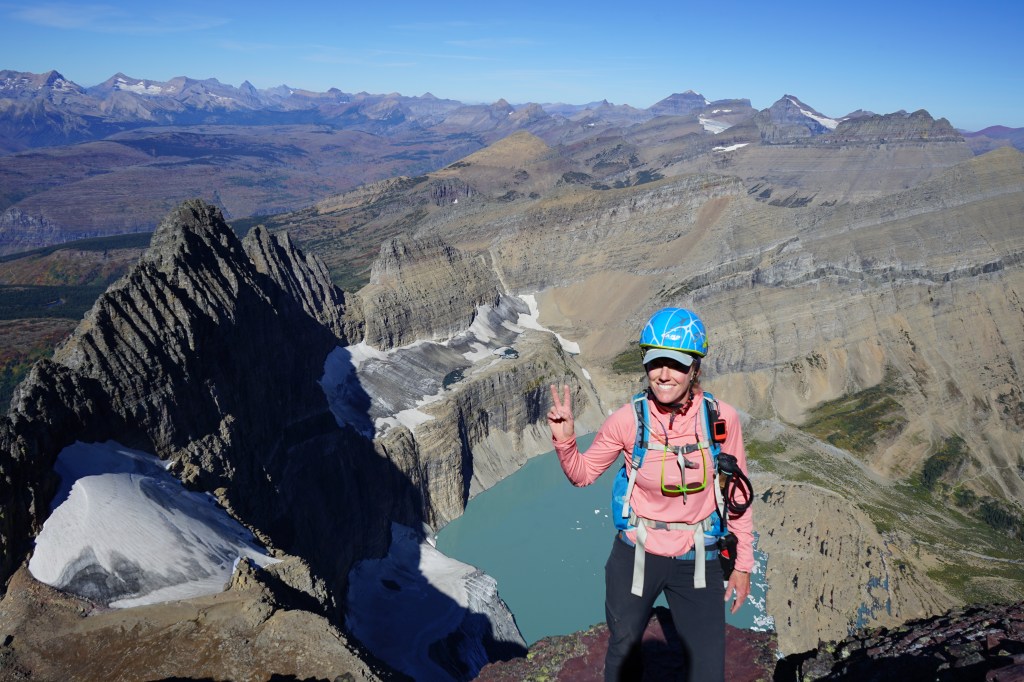
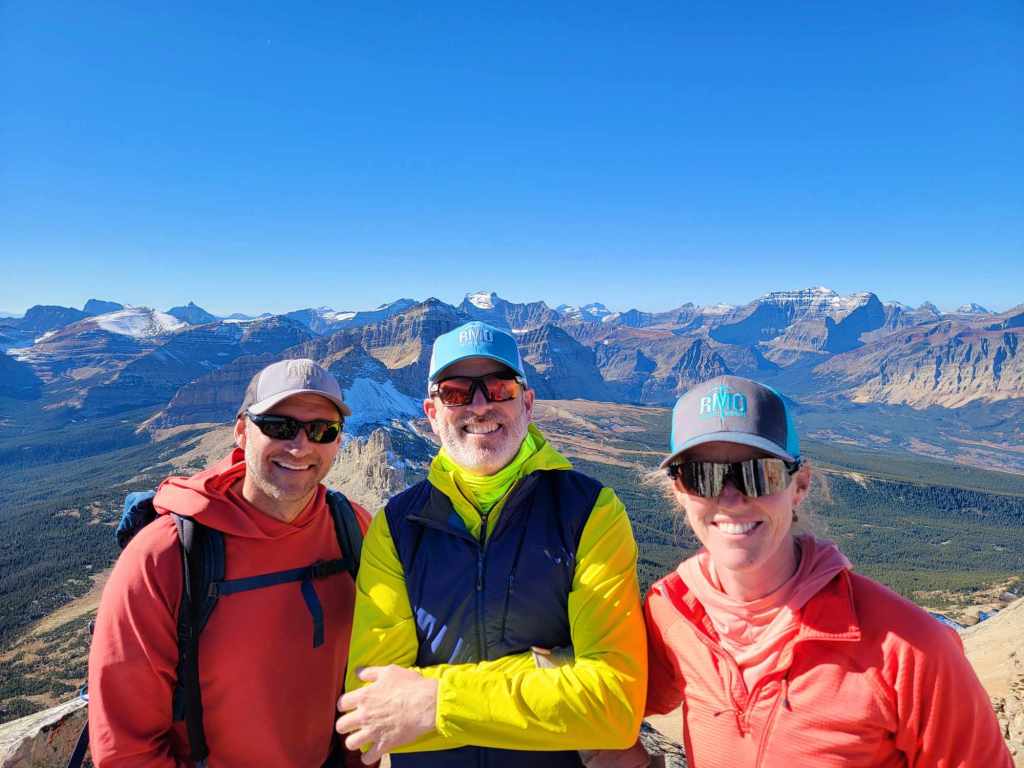
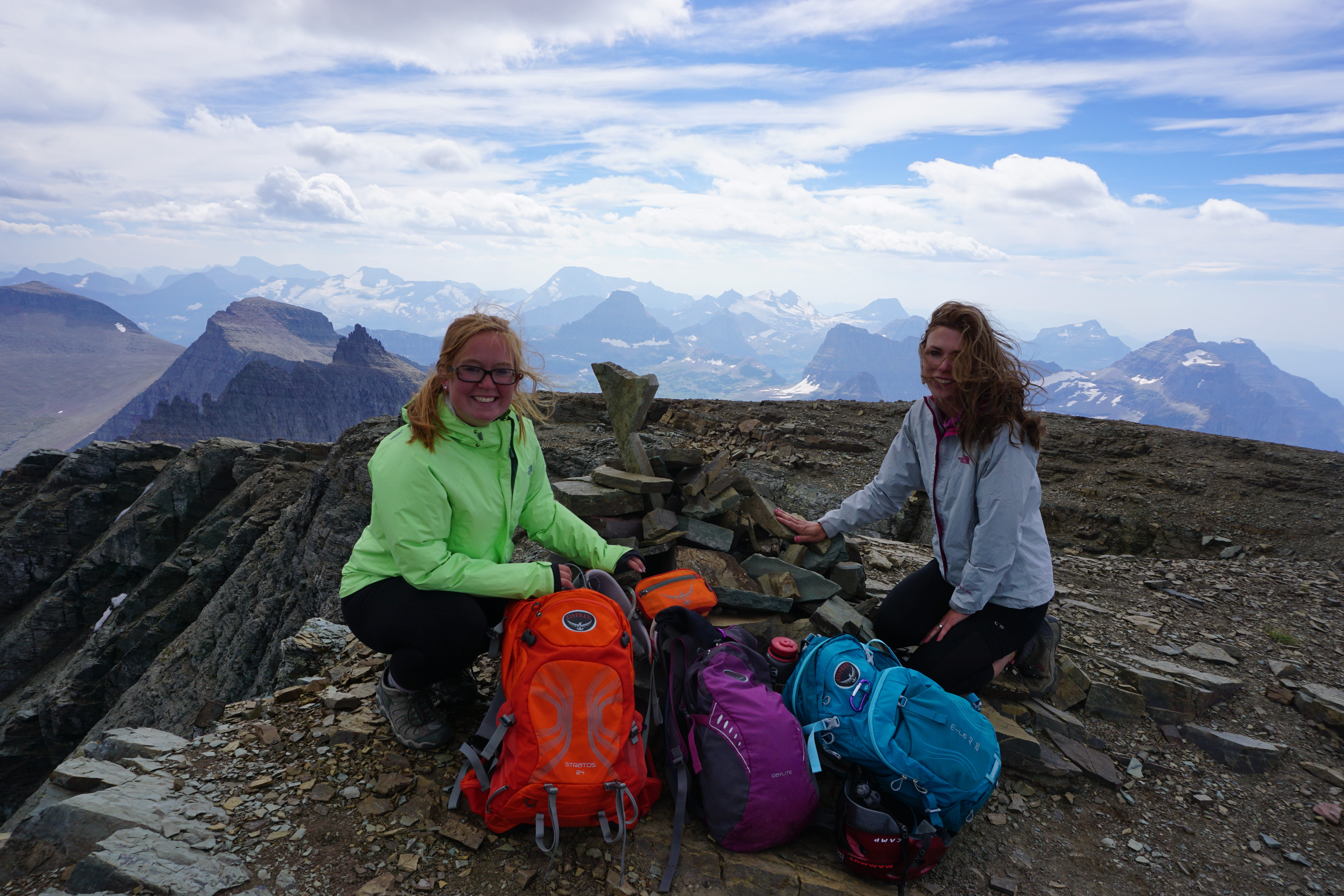
Friends on the summit of Mount Siyeh
Off-trail travel and climbing is allowed in Glacier National Park with few exceptions. Climbing and exploring are considered historical and cultural activities which are protected by law, and while the NPS allows it they certainly do not promote or encourage it (because it’s dangerous and people don’t always come prepared). There are sensitive environments where off-trail travel is strictly prohibited. An example of this is all areas off the boardwalk in the Logan Pass area (except designated climber trails for Reynolds and Oberlin). There may be occasional temporary closures due to wildlife, rescues, resource protection, or other hazards.
There are 234 named peaks or high points as accepted by the Glacier Mountaineering Society. They’re a great organization if you are looking for a way to join others on a climb or learn more about climbing. Though a summit of most peaks doesn’t require ropes, it must be noted this activity is inherently dangerous. In fact it can be, and has been, DEADLY. One missed step, a slide on a wet rock, or a loose rock pulling out can lead to disaster. Anyone engaging in these types of activities should recognize, and never underestimate, the potential danger involved.
The author on Iceberg Peak photo: Andrew Schnell
With the risk disclaimer out of the way, now it’s time to talk turkey. I love climbing in Glacier. It’s without question my favorite thing to do. I’ve climbed nearly 200 peaks in the park with about 125 of those being unique (several others were repeated). I enjoy taking experienced climbers with me but I also choose to prioritize taking “newbies.” I think it’s important for those getting started as peak-baggers to find someone with experience to mentor them. This simply helps make climbers safer.
First and foremost I encourage climbers to be prepared. This necessitates an understanding of weather, wildlife, rock conditions, route planning, personal fitness, group dynamics, and the ability to mitigate, retreat, self-rescue, or spend the night. So, what resources are available to help one learn how to climb safely in the park? The two best print sources of this information are A Climber’s Guide to Glacier National Park, by J Gordon Edwards, and the Climb Glacier National Park series by Blake Passmore. These references are loaded with history, geography, geology, route info, and tips on climbing techniques.
People often get route information, often referred to as “beta” from online sources. Two of the most common online sites for beta are mountainproject.com and summitpost.org
And now my two cents-worth about climbing ethics: Please, be a Conservator and not a Consumer. Follow Leave No Trace Ethics. Respect our Wild Places and our Public Lands. Model good stewardship. Follow GNP rules.
Ethics Examples:
Pack out your trash, including TP. Bury your poop in a cat hole
Don’t build cairns unless absolutely necessary for navigation
Don’t trample vegetation/flowers
Keep an appropriate distance from wildlife
Don’t carve your name on rocks or trees
Don’t disturb tribal artifacts or archeological sites
Get a permit if it’s required
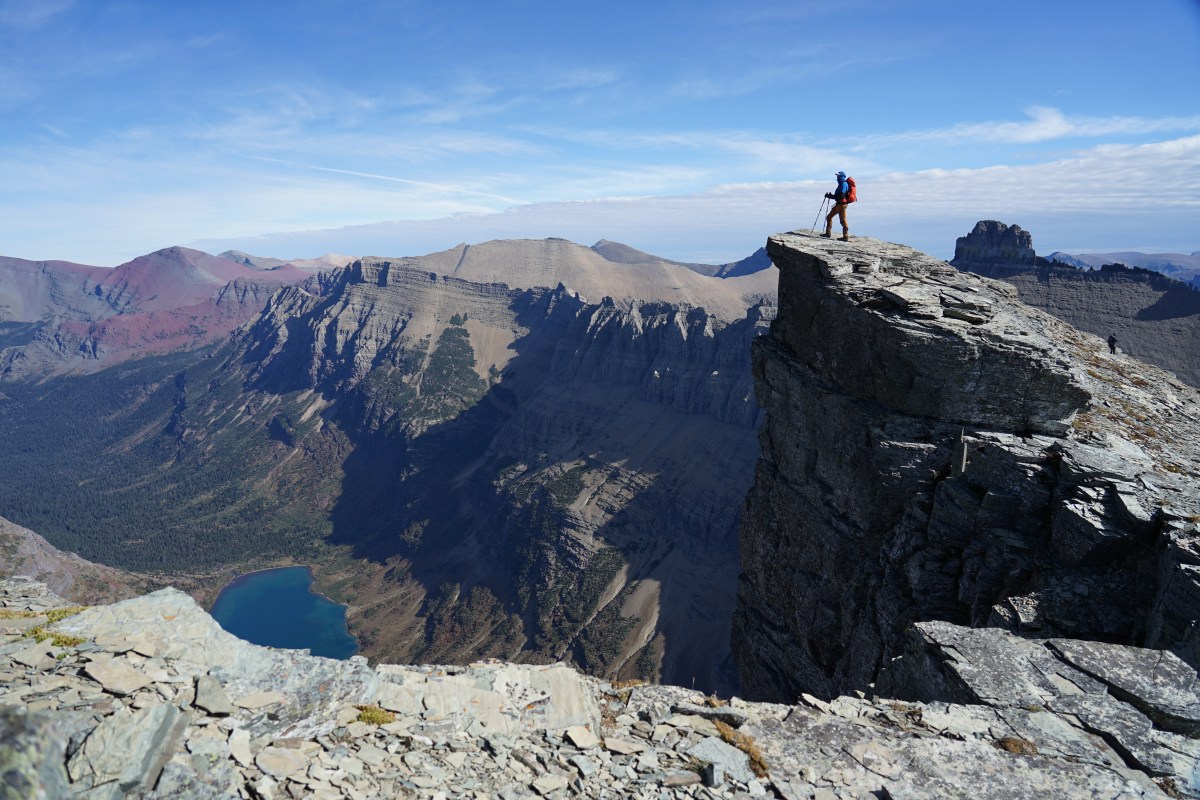
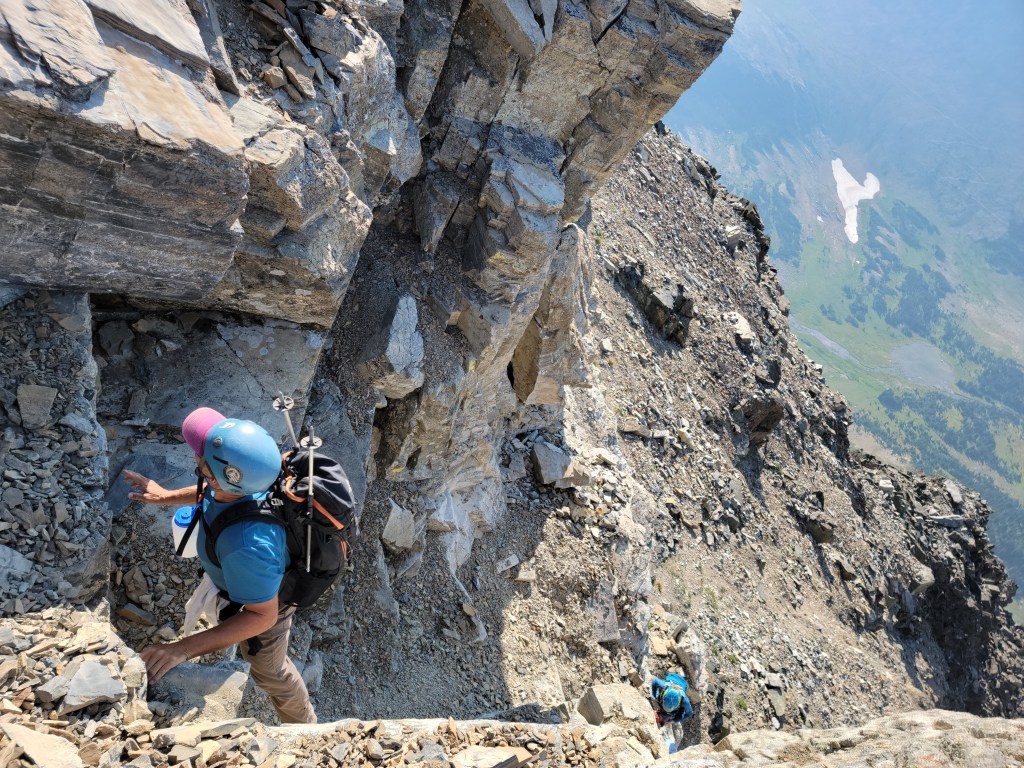
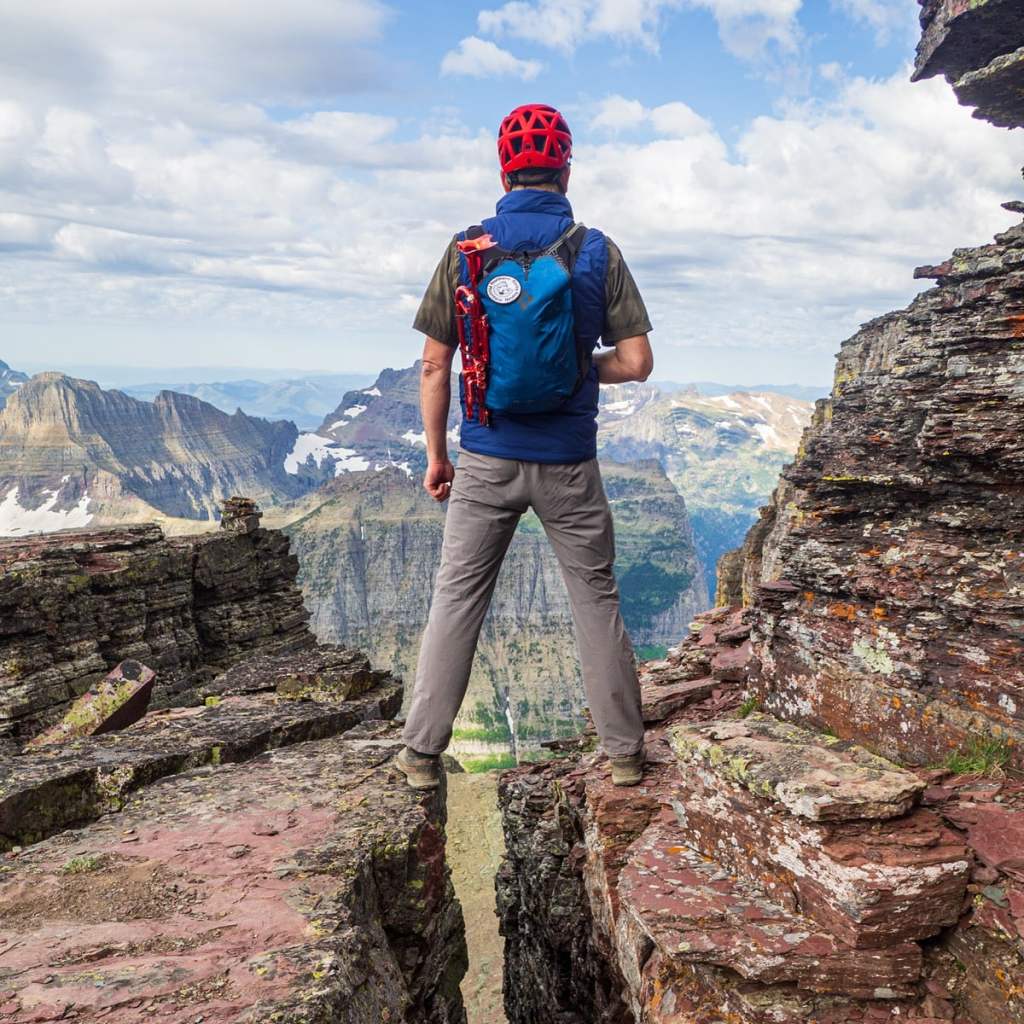
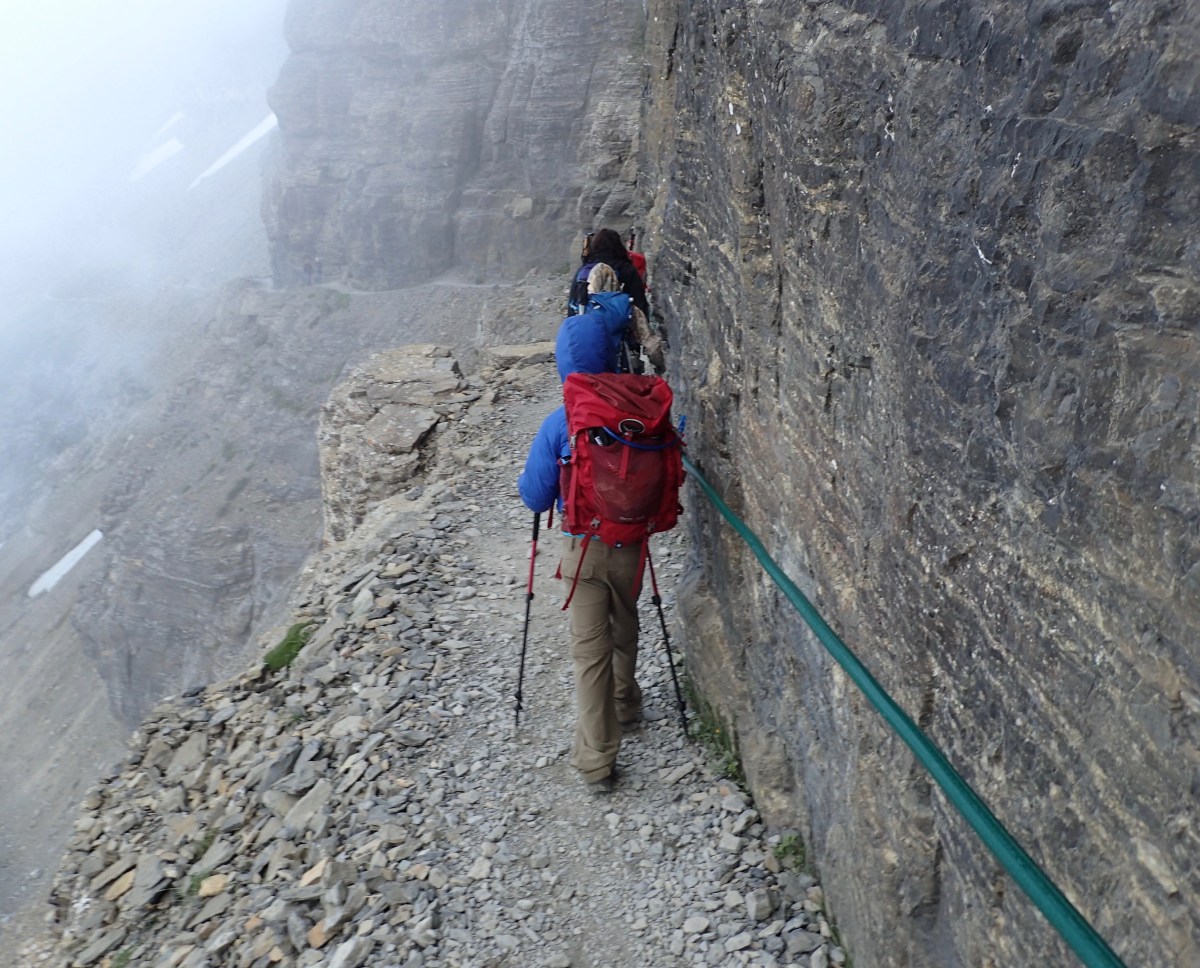
A climber carefully navigates a narrow, exposed section
The next few parts will have content to help you be a safe and successful climber. This is not a guide book, nor is it to be considered an exhaustive manual of everything you need. It’s just me, imparting some experience, to share the joy of climbing in Glacier National Park. Please continue on to read part 2.
Now that you’ve read the overview, purchased a few guide books, and decided climbing in Glacier is for you it’s time to start planning a climb. I can’t stress enough the importance of starting with peaks and routes that are within your fitness level and climbing experience. Don’t bite off more than you can chew or you might not have a good time. Even worse, you could have a bad outcome.
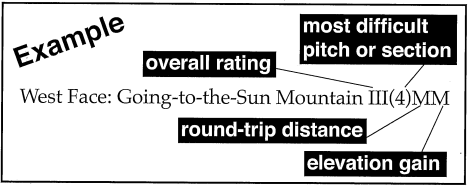
Let’s look at difficulty ratings. The Glacier Mountaineering Society has developed a system to quantify/qualify the difficulty of a particular climb. This is the standard by which the vast majority of us assess an adventure we might be pursuing. If you don’t know what distance and elevation gain you can handle I recommend you start with an easy climb such as Mount Oberlin and see how it goes for you.
GMS Climb Classification System
Class I (1) Easy = Trail hiking
Class II (2) Moderate = Low angle scrambling.
Class III (3) Difficult = High angle scrambling, moderate cliffs, considerable exertion. Rope might be necessary for beginners. (Most of the basic climbs in the park. I like to think of this class as where you need three points of contact to climb)
Class IV (4) Very Difficult = Higher angle cliffs, increased exposure. Belaying rope often required. (I like to think of this class as requiring four points of contact)
Class V (5) Severe = High angle cliffs, severe exposure. Protection placed by leader. Technical climbing experience necessary.
Class VI (6) Extremely Severe = Direct aid technical climbing. Overall rating in the classification reserved for only the biggest technical climbs. (example North Face of Mt. Siyeh or East Face of Mt. Gould)
Distance
Amount
Elevation
Amount
(S) Short
1 – 6 miles
(S) Short
<3,000′
(M) Medium
6 – 12 miles
(M) Medium
3,000′-4,500′
(L) Long
12 miles +
(L) Long
>4,500′
Helmets
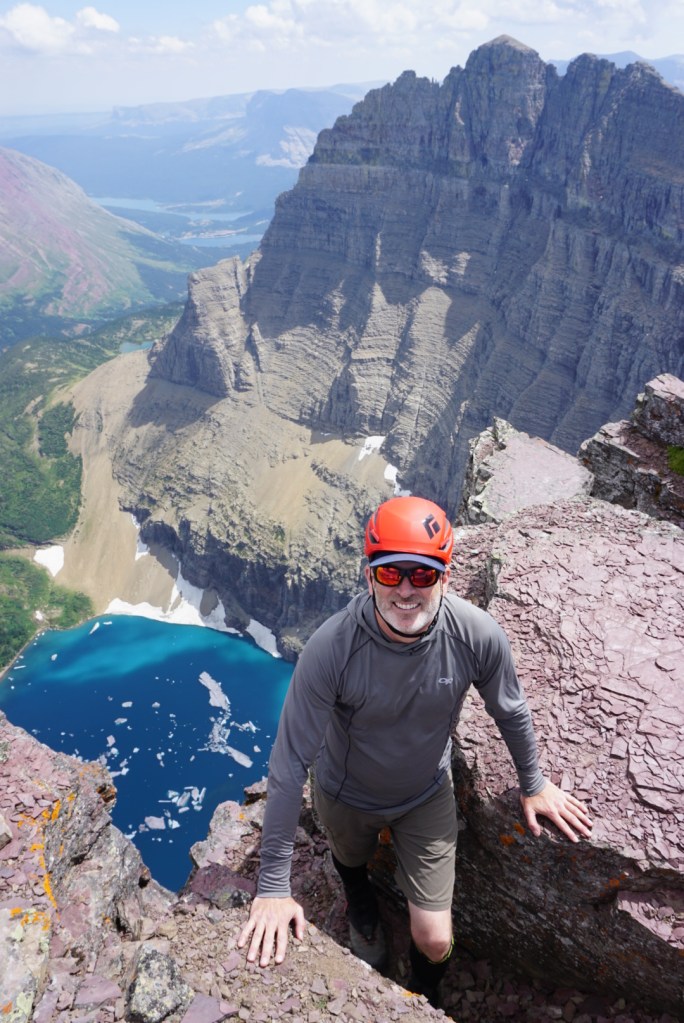
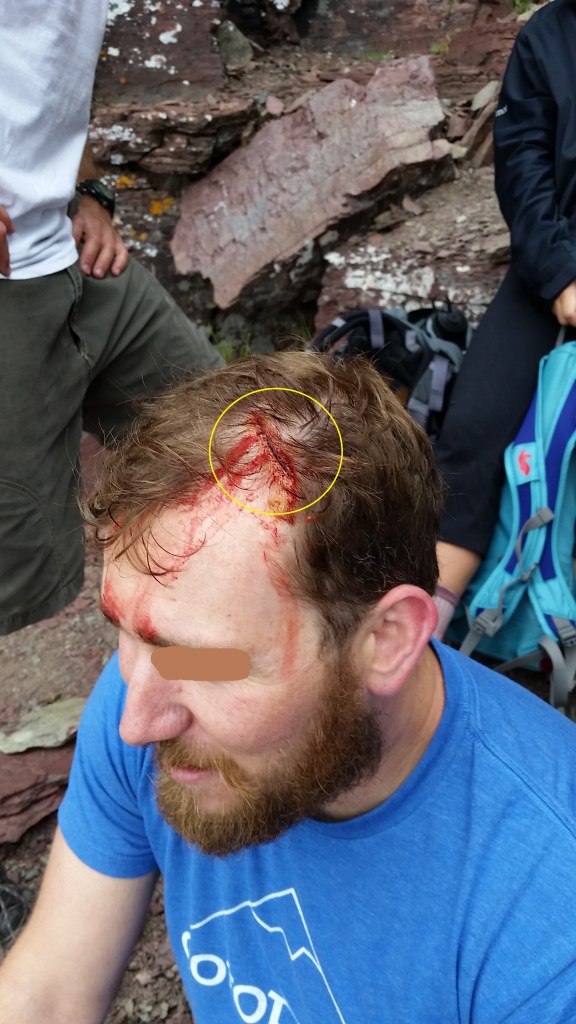
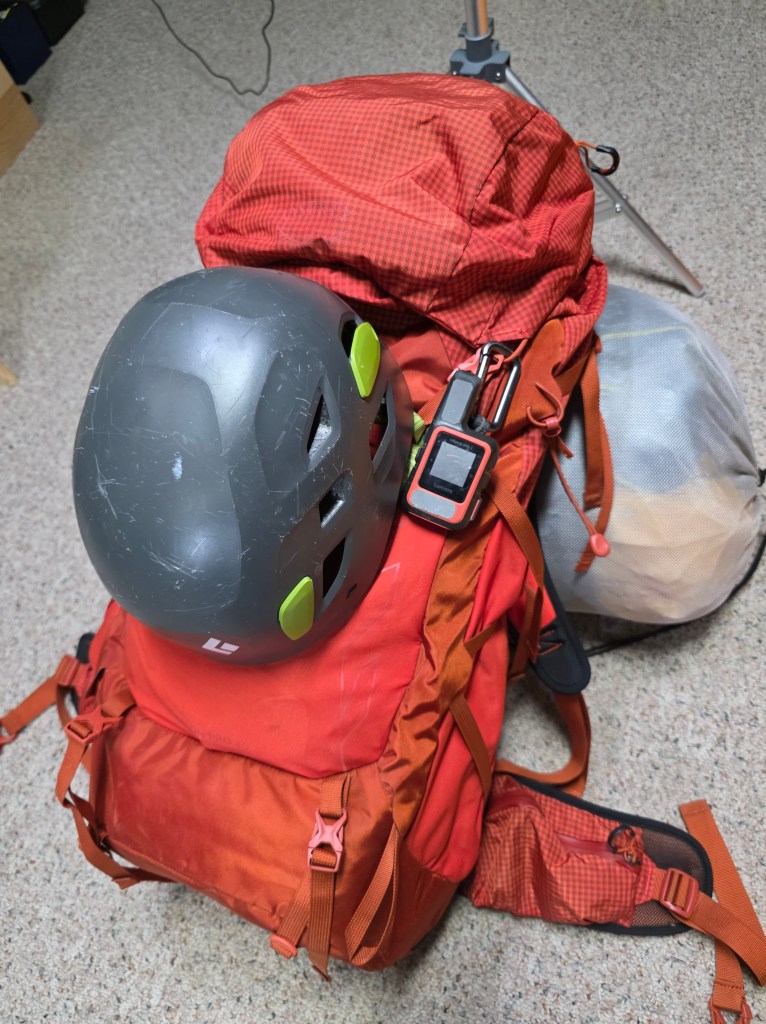
Take a helmet. Wear a helmet. Make helmets COOL again! Helmets are a good idea (mandatory if you climb with me) on anything Class III or higher, or Class II if you are next to cliffs where rockfall is possible (such as traversing below Reynolds to get to the route on the back side). Helmets help protect from rockfall (caused by fellow climbers, goats, or mother nature). They come in handy when ascending ledges as you can easily strike your head on rocks as you are moving up (see photo). Lastly, you could easily slip on wet or loose rock on inconsequential terrain but strike your head on a rock.
The Climbing Day-Pack
Hope is not an action plan…
Loading your pack can get you really hyped for your adventure. A climbing pack is a little different than a hiking pack. It’s a good idea to have a checklist so you don’t forget something important. You’ll want a well-fitting pack of 25L to 40L. Prepare for the worst. Below is a list of items I have in my pack every time I go off-trail. I’m also including a checklist I find helpful.
The Ten Essentials (survival tools in case you get stranded or injured)
Navigation: Maps, GPS, InReach, Compass
Headlamp + batteries
Sun/Wind Protection: Sunglasses, Sunscreen, Hat, UPF Clothing, Buff
First Aid: This could be a topic of its own, but start with the basics
Knife: Sometimes a multi-tool is handy. Also some repair gear
Fire: Fire starter, matches/lighter, tinder
Shelter: Light bivy in summer, Insulated bivy in the shoulder season
Extra Food: Calorie dense foods to survive an extra night
Extra Water: Plan an average of 3 liters/day and ability to filter more
Extra Clothing: Layering is key. Cover your head and hands as a priority
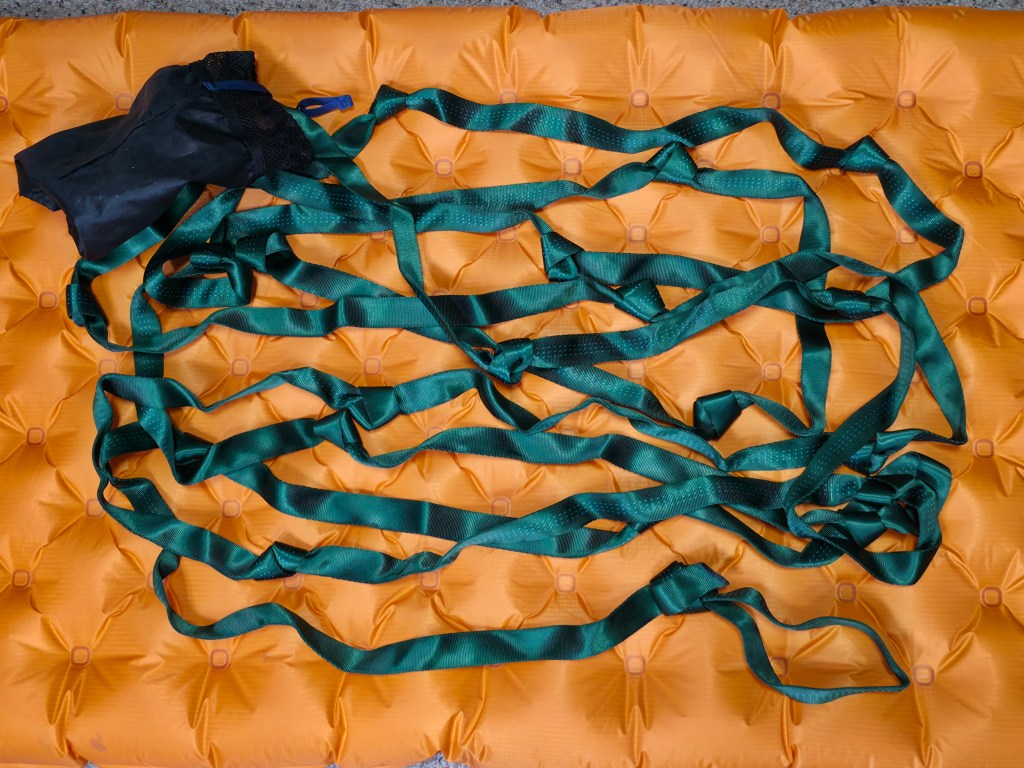
30′ Webbing Hand Line (to help someone up or down a difficult short pitch)
Trekking Poles (can also help with shelter, splinting, carry-outs)
Bear Spray
Insect Repellent
Chapstick
Toilet Paper, wet wipes, ziplock to pack out TP, trowel to bury poo
Rain cover for pack
6′ of Duct Tape
Umbrella (great for shade, rain, and hazing goats)
Gaiters (to keep scree out of boots & keep pants/socks dry from wet grass)
A webbing hand-line has knots a climber can use to climb up or down short pitches where holds are sparse. The belayer wraps the end around a rock and uses friction to hold the climber
Footwear: I prefer an approach type boot with high ankle support. Good grip is very helpful. This also affords protection of the ankle from tumbling rock
Food Choices
Rapid Energy: candy bar, fruit, energy gel
Endurance Fuel: Cliff type bars, jerky, nuts
Satisfying: a nice summit sandwich and a celebratory shot of whiskey
Electrolytes: I prefer LMNT. 1/3 of my H2O consumption is with electrolytes
Don’t forget to pack a little extra in case you have to spend the night
Optional Gear You May Find Useful
Binoculars
Fishing Gear
Nice Camera and Tripod
Pack Chair or Seat Cushion
Micro-spikes or Crampons
Mountaineering Axe
Snowshoes
Anemometer
Flora and Fauna info cards
A climber on Mount Gould above Gem, Salamander, and Grinnell Glaciers
You might think all of this gear would weigh a ton and take up too much room. If you pack wisely and use modern light-weight gear you can end up with a compact, efficient, and robust pack at under twenty pounds. So, you’ve got a peak and route planned and your bag is packed. Now it’s time to go out and climb! See part three for climbing techniques and tips…
You’ve looked over some peaks and found one that fits your physical abilities and climbing experience. Your friends are stoked and everyone’s packs are loaded with the essentials. Now it’s time to actually head out and start the adventure.
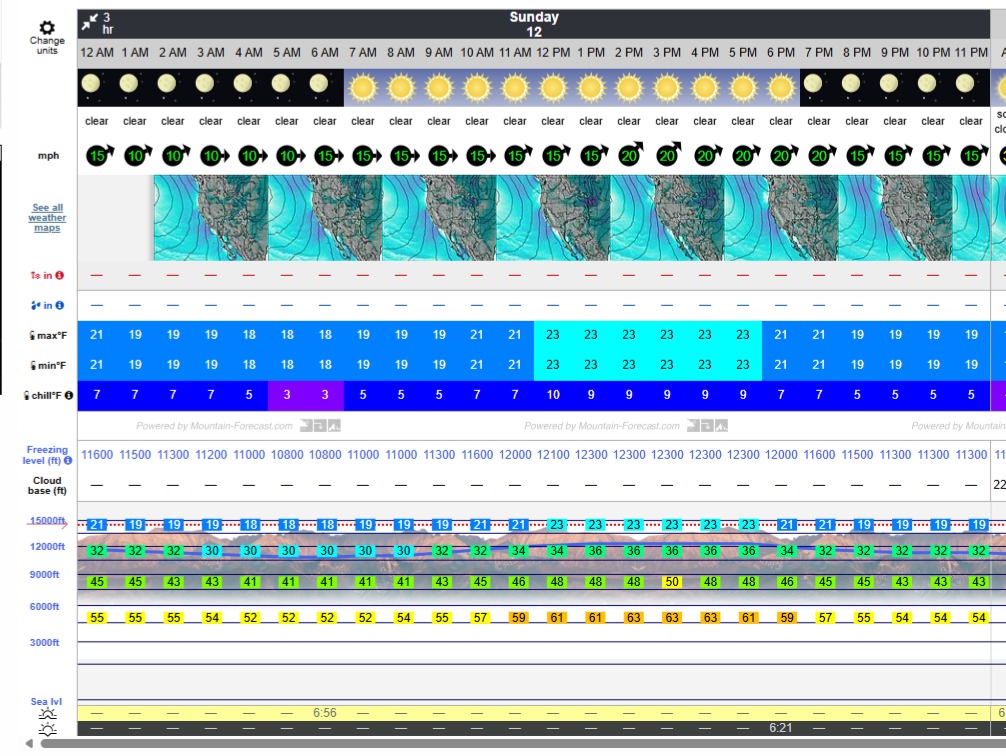
Did you check the weather forecast? I recommend looking at two weather opinions. Plan for the worst of them. NOAA.GOV is a decent site for basic forecasting. I also use MOUNTAIN-FORECAST.com This is a particularly useful site for climbers. Mountain Forecast will give you the temperature, frost line, and wind speed for three different elevations on a mountain. Recognizing a 20 degree temperature difference from the trail head with 30mph winds at your summit will help you make informed decisions on clothing choices. It can also help keep you aware of potential hazards such as verglas (a thin layer of ice on rock).
An example of mountain-forecast.com display
You’re almost ready to get to the trail head. Just one more very important thing left to do… write up your itinerary and leave it with a friend. In the unlikely event of a mishap (remember, always plan for the worst) a climbing plan will help bring rescue personnel to you faster and with the appropriate resources. It doesn’t have to be a novel, but the more information that is available on your itinerary, the better prepared an emergency response can be.
Names and contact info of everyone in your party (include InReach info)
Description of clothing and pack colors (I always recommend bright clothing)
Trail head name and departure time
Vehicle description(s) at trail head
Planned route. Include any expected hazards
Turn-around time (set one and stick to it!)
Planned exit time and location
List of contact names and numbers in case of emergency
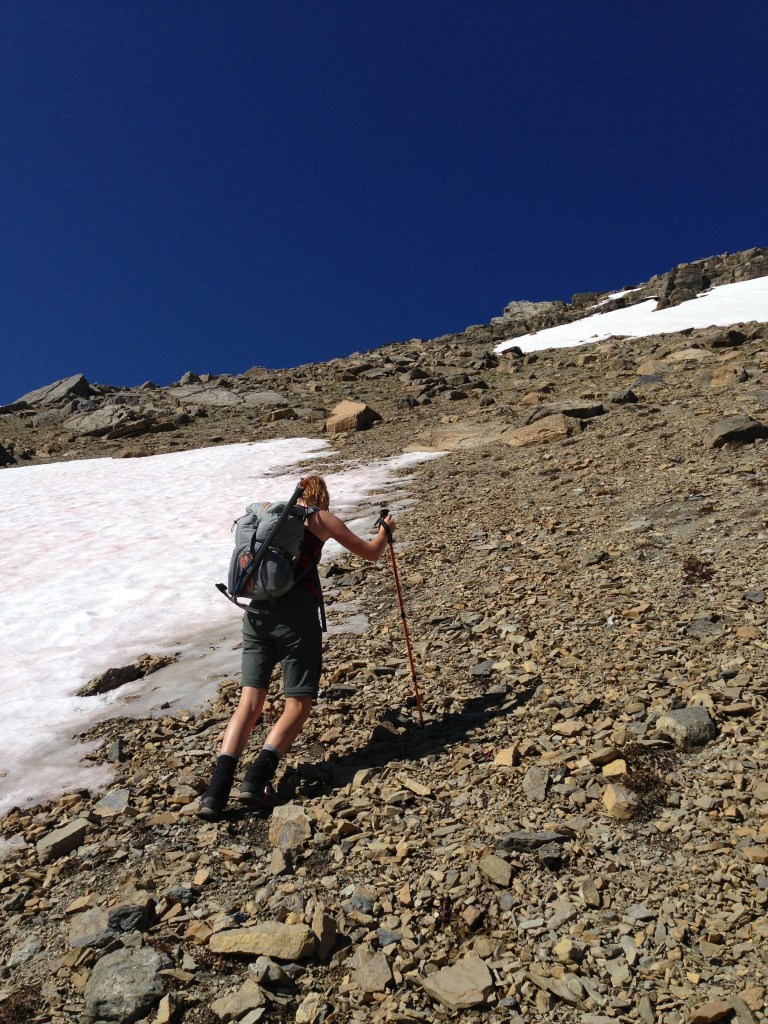
You’ve hit the trail and started your adventure for the day. At some point you will head “off-trail” and make an ascent toward the peak. You’re likely to encounter scree (a layer of small loose rocks). This is a good time to put on gaiters and bust out the trekking poles. Try to avoid scree and stick to solid rock on the way up. Scree makes for a much more enjoyable descent. You’ll soon learn to love “scree skiing.” Take this opportunity to scout the route above you.
Soon enough you will be in classic GNP cliff bands and ledges. Now is a good time to put on that HELMET. This is the most enjoyable part in my humble opinion. I love getting hands on rock and scrambling through ledges and gulleys. There are a few things to keep in mind during this part: 1. Route Finding, 2. Spacing, 3. Rockfall, 4. Pace
Route finding within cliff bands can be challenging. It can be difficult to see what’s directly above you. If you choose a route up that gets you “cliffed-out” you will have to go back down a bit and find another route. Heaven forbid you get so cliffed-out you can’t even descend at all. Keep in mind that you want a route that will also be easy to descend. Ascending and down-climbing are different beasts. If you encounter an area of difficulty that is greater than the route description… you are probably off route and should be heading in a different direction.
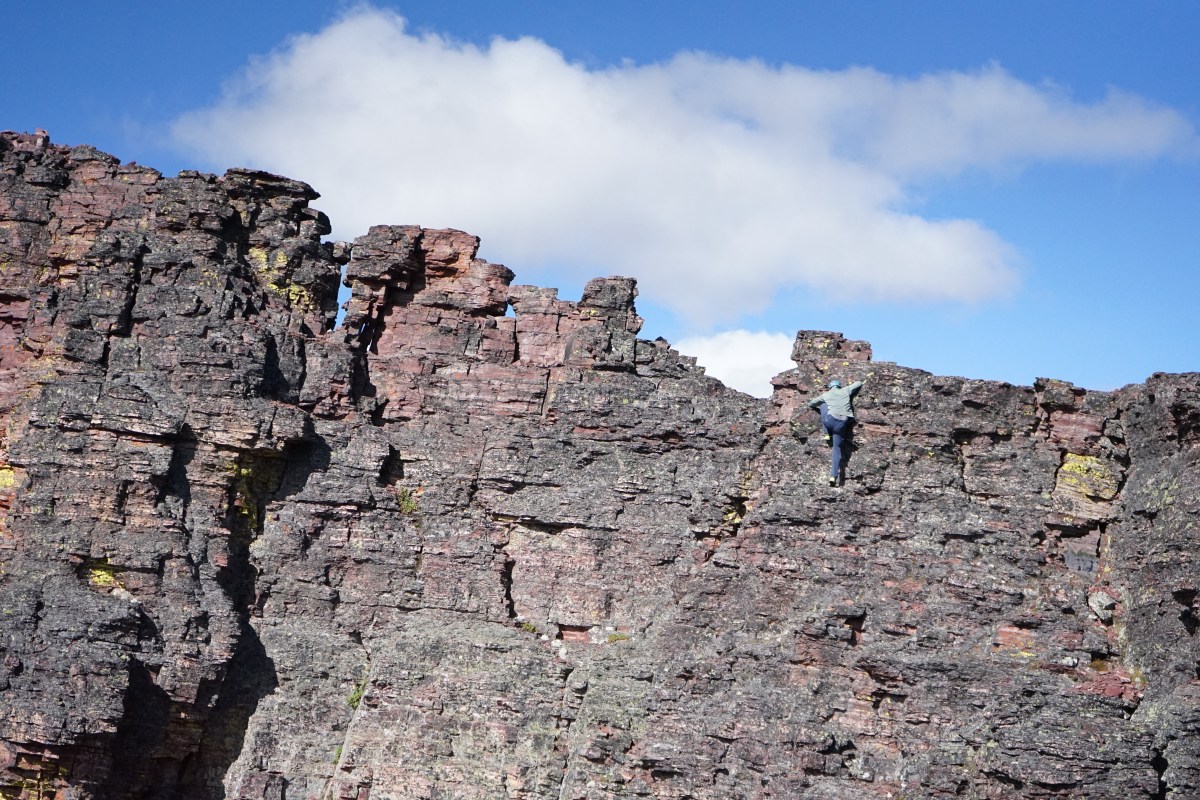
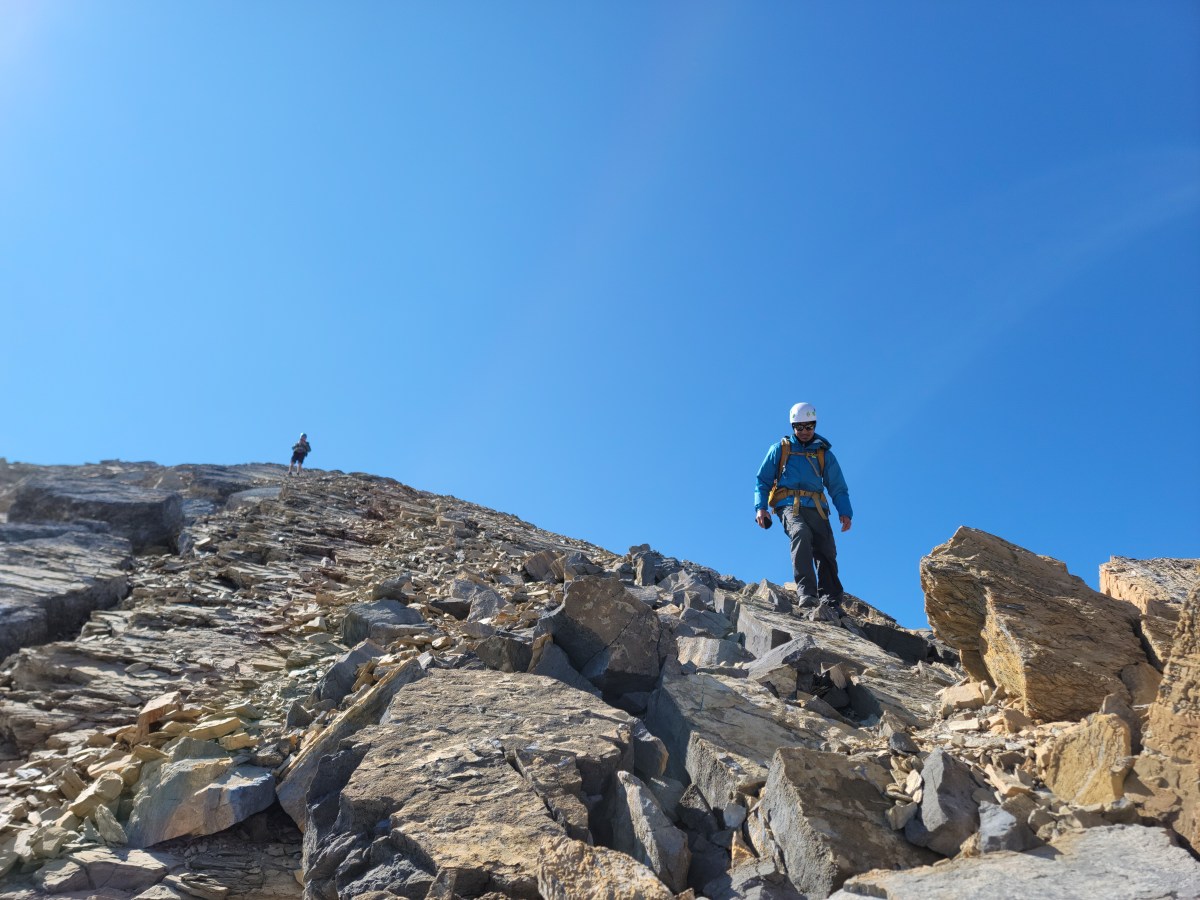
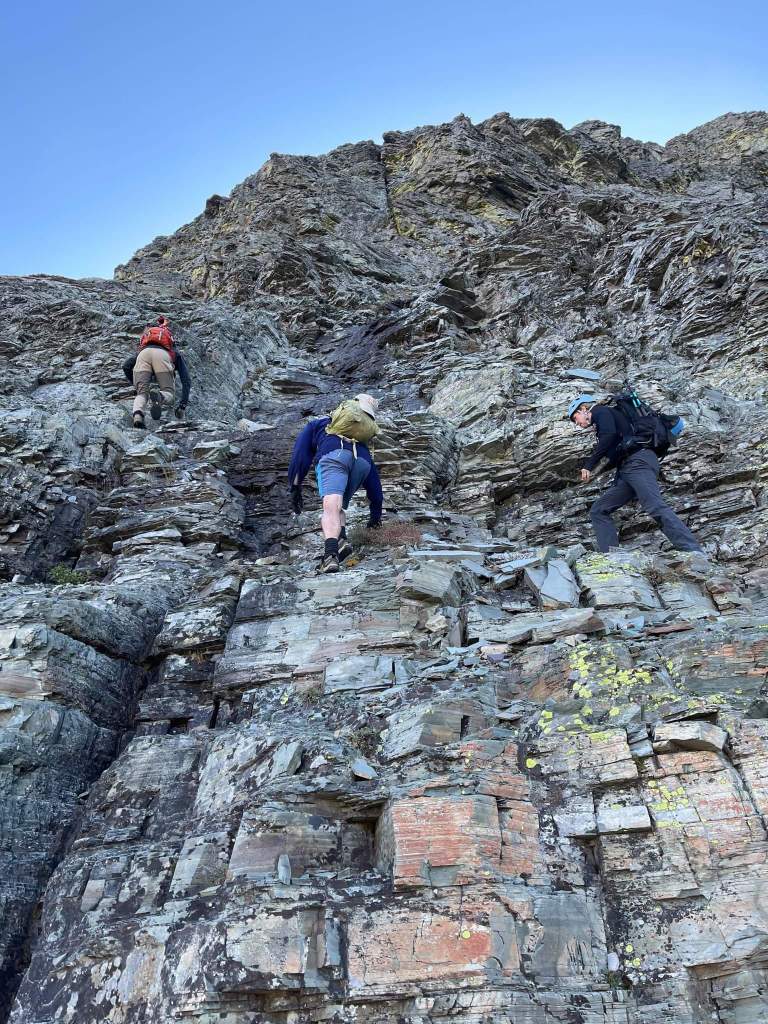
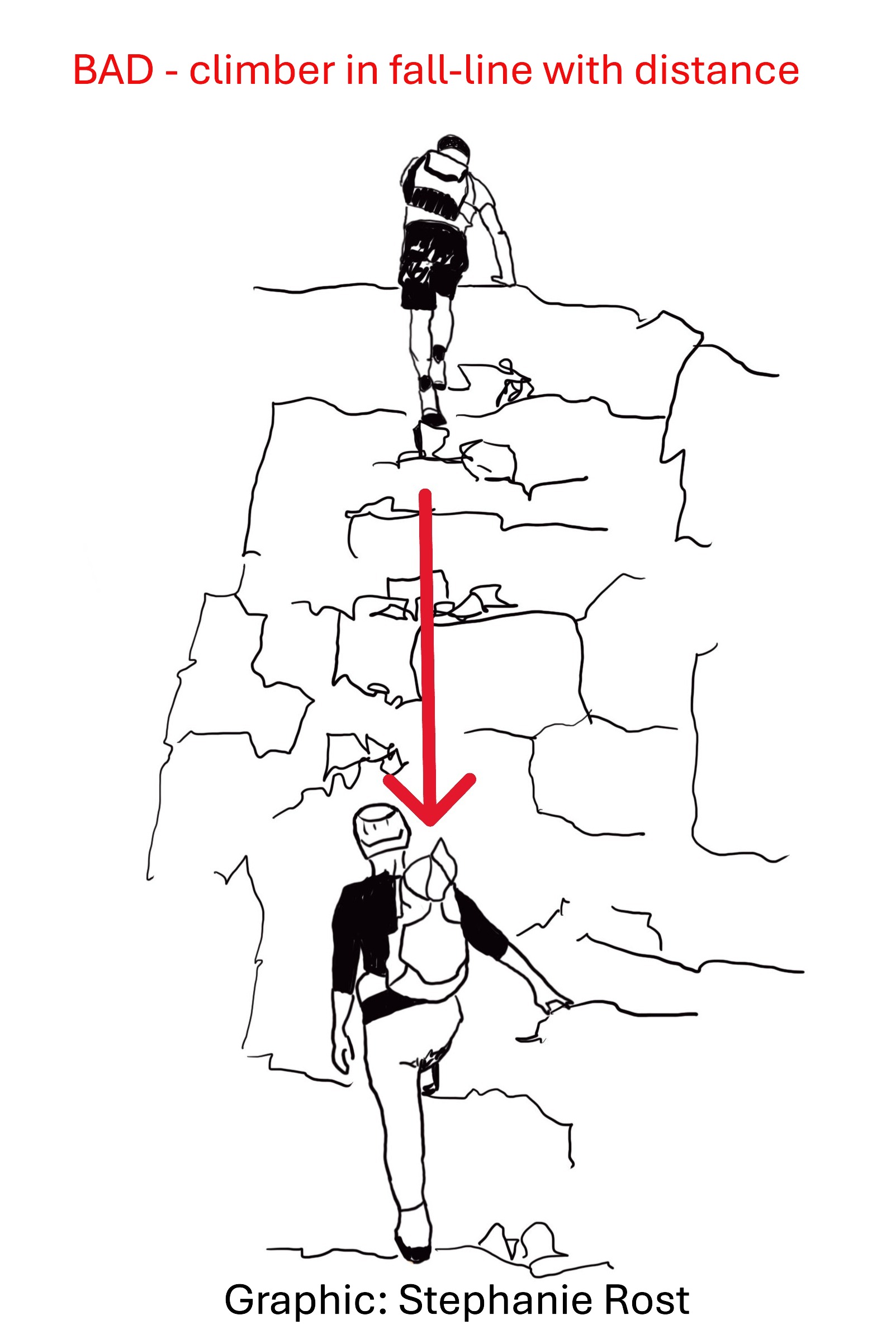
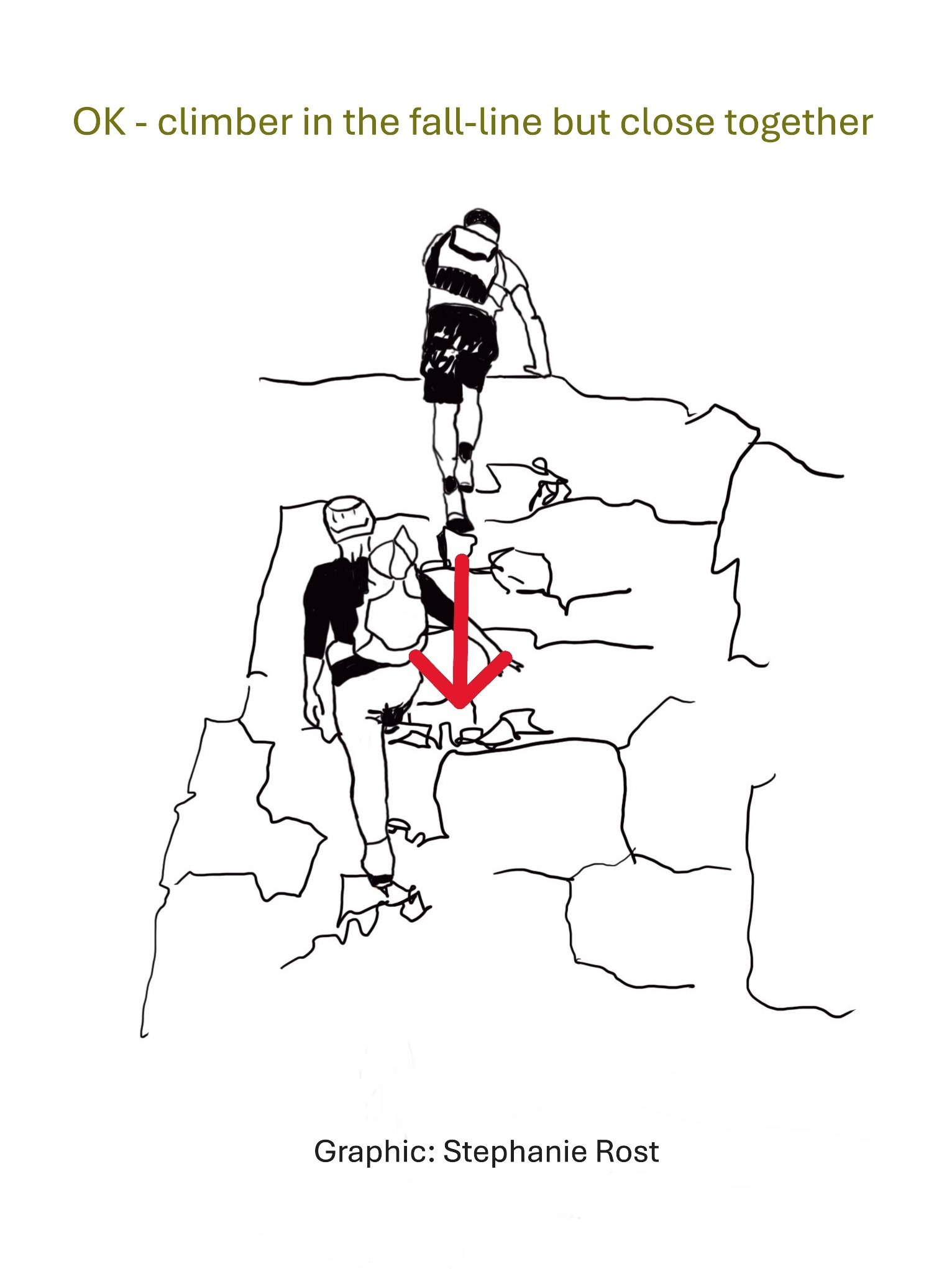
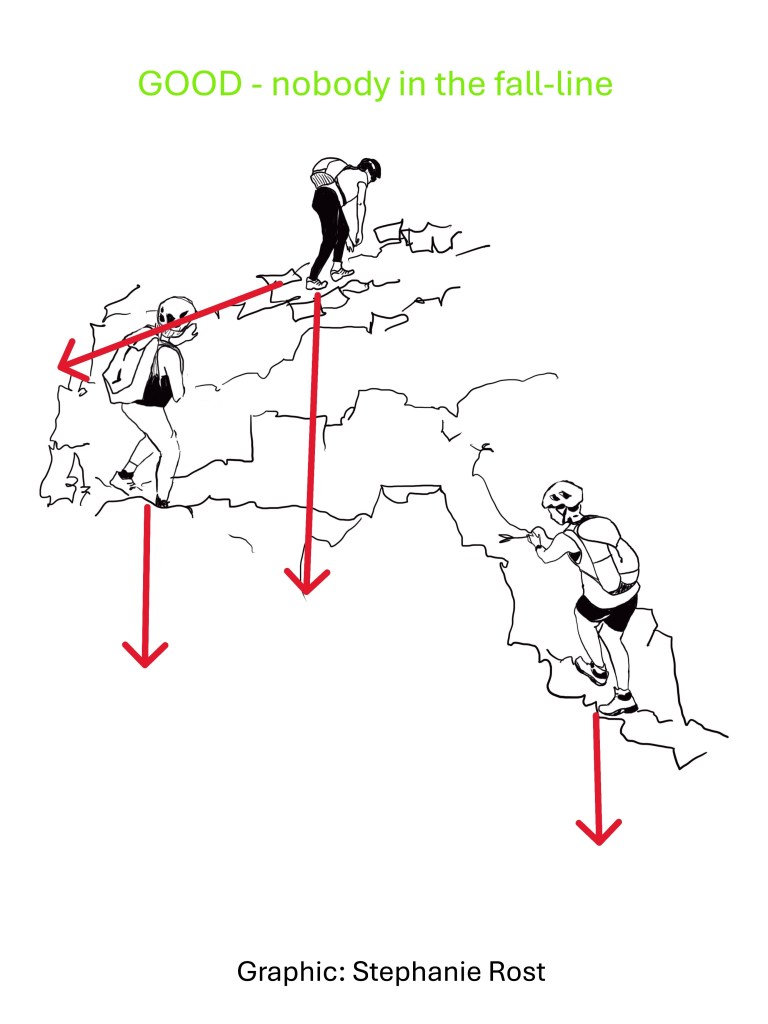
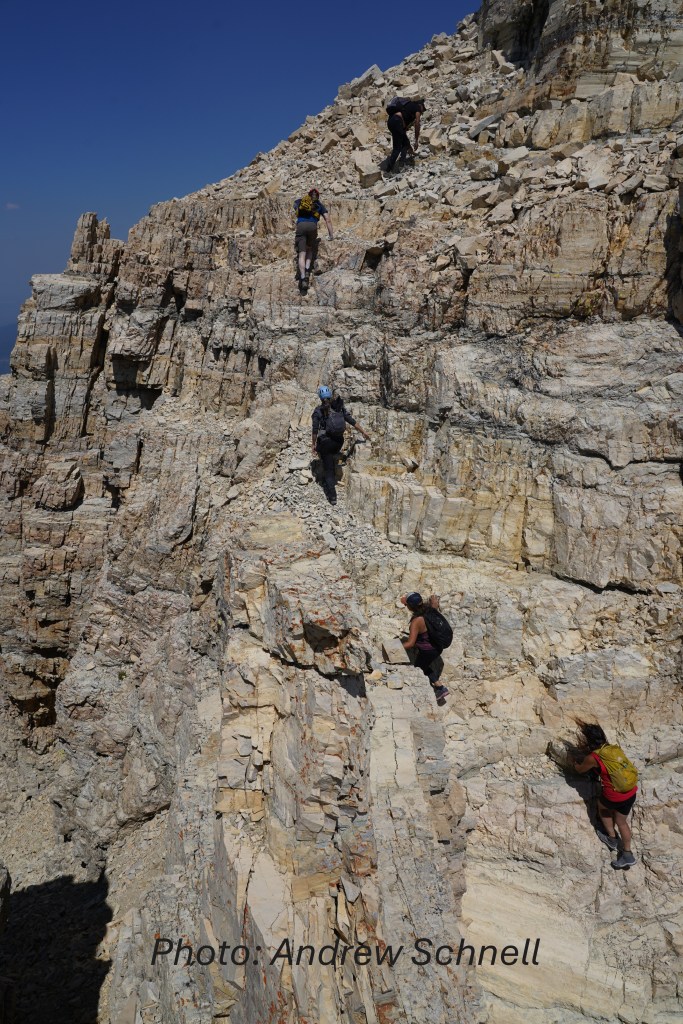
Spacing of climbers on steep or vertical terrain is a critical component of safe climbing. This is where every member of the team needs to be paying attention. The rock quality in Glacier Park is horrible and you WILL knock rocks down. Understanding gravity and the “fall-line” will help keep your team safe. The goal with spacing is to either keep all climbers out of the fall-line or stay so close together that a tumbling rock would not have any consequential speed.
What do you notice here? How is the spacing?
Keep an eye on your team. Are they lagging behind? Do you notice apprehension about exposure? Are they taking undue risks? Are they staying hydrated? These are things to consider when assessing whether or not to continue with a climb. Never be afraid to speak up and voice a concern. Some times the best decision is to simply call it a day and turn around.
When it comes to the pace of the climbing team I like to use a benchmark of 1,000′ per hour. If your team is slower than that it’s time to do some math and figure out if you will make it to the top before your turnaround time. Along these lines I also have some recommendations for team endurance:
Every hour of heavy exertion or 1,000′ elevation gain (click arrow):
Take a quick break…
Eat something, drink something
I suggest ~200 calories. Include some carbs so you don’t BONK
Reassess team fitness and dynamics
Reassess weather
Congratulations, you made it to the summit! Now it’s time to head down to the trail head. This is the time for the highest risk of an accident. Your team is possibly mentally and physically fatigued, maybe even dehydrated. Help each other out with reminders on safety.
Did you make it back to the trail head? Most likely you did and it’s time to celebrate with a burger or pizza, and an ice cold beverage. Of course the Apres Climb choice of a burger versus pizza has historically been a close battle. But what if something went awry and, for example someone on your team broke an ankle? Are you prepared to self-rescue? I will leave you with this dilemma so you can mentally rehearse the many “what if?” scenarios you may encounter on a climb.
For me… I look forward to a greasy cheeseburger and a pint of scotch ale.
People are often asking me gear questions, probably because they know I’m a gear junkie and I spend a lot of time in the park. The most common questions are about my choice of pack and what I take with me for day trips. So I’d like to tell you my thoughts on this very dynamic and ever changing list.
Emily and Alex on the summit of Mt. Gould
First and foremost you need a good pack that fits well. A properly fitted pack will distribute the weight appropriately, prevent skin abrasions, prevent sore shoulders, and won’t make you off balance. I recommend trying on packs before buying. You should put weight or gear in the pack when you try it on. Have someone knowledgeable about proper fit (a friend or store salesman) inspect the pack while trying it on. Walk around with the weighted pack and make sure it feels comfortable. If it doesn’t fit well or you feel it pulling back on your shoulders right away…that’s not the pack for you. Continue reading “The Day Pack…”
TAKE PLENTY or be prepared to filter. On hot days🌡, exposed trails without shade, and when exerting you might need up to 1L/hr to stay hydrated. I take 3-4L and a filter on every day hike and generally that’s adequate. ☀️ (It usually takes a minimum of 6 rangers to evacuate someone from a trail. One year we had 12 medical evacuations in 12 days on the Highline Trail from dehydration)
Thunderbird Pond and Thunderbird Peak
Part 2; LAYERS
On any given day the park can see rain, sun, snow, sleet, graupel, gale force winds etc.. be prepared for any and all of these. Layering is always the best choice. Choose materials that wick moisture and breath well. No cotton or jeans, EVER. So, top to bottom: *A sun hat ☀️to cool you or a light beanie to warm you. A “buff” type layer can do both. *Sunglasses *Sunscreen can also help with windburn. *Base layer shirt that is thin and wicks moisture away. If thin enough a long sleeve is good for sun protection and won’t over heat you. Next layer is light insulation such as thin fleece, something for just a little added warmth on a chilly day. Third layer is a bit thicker like Polartec or moderate fleece. Top layer is for wind and light moisture protection (softshell). *Shoulder seasons and winter ⛄ a puffy is often needed. Puffies (lightweight but highly insulated air trapping jackets) are useful when you stop moving but are cumbersome when you’re active. Down is ideal because it has the most warmth-to-weight ratio. But down is not a good active layer because if you sweat and the down gets wet you lose all of the insulative properties❄ *For rain, snow, and high winds🌬 you need a hard shell outer layer.🌧 Technology in modern jackets allows them to be waterproof, breathable, and light. (Pit zips are your friend!). *Now you have several layers of which you can use any combination to adjust for conditions and comfort👍 *Thin gloves are nice for wind protection. They also help prevent blisters when using trekking poles. A second waterproof pair for rain is nice to have. *🚶♂️Pants should be light, stretchy, and breathable. Don’t overdo insulation here because legs stay warm when moving and your core is where most insulation should go. Shorts are fine if you know the conditions will be warm and consistent during your hike. But I recommend a pair of pants to throw on if needed. Rain pants are helpful in continuous or heavy rainfall but can make you feel like you’re in a sauna if not well ventilated.
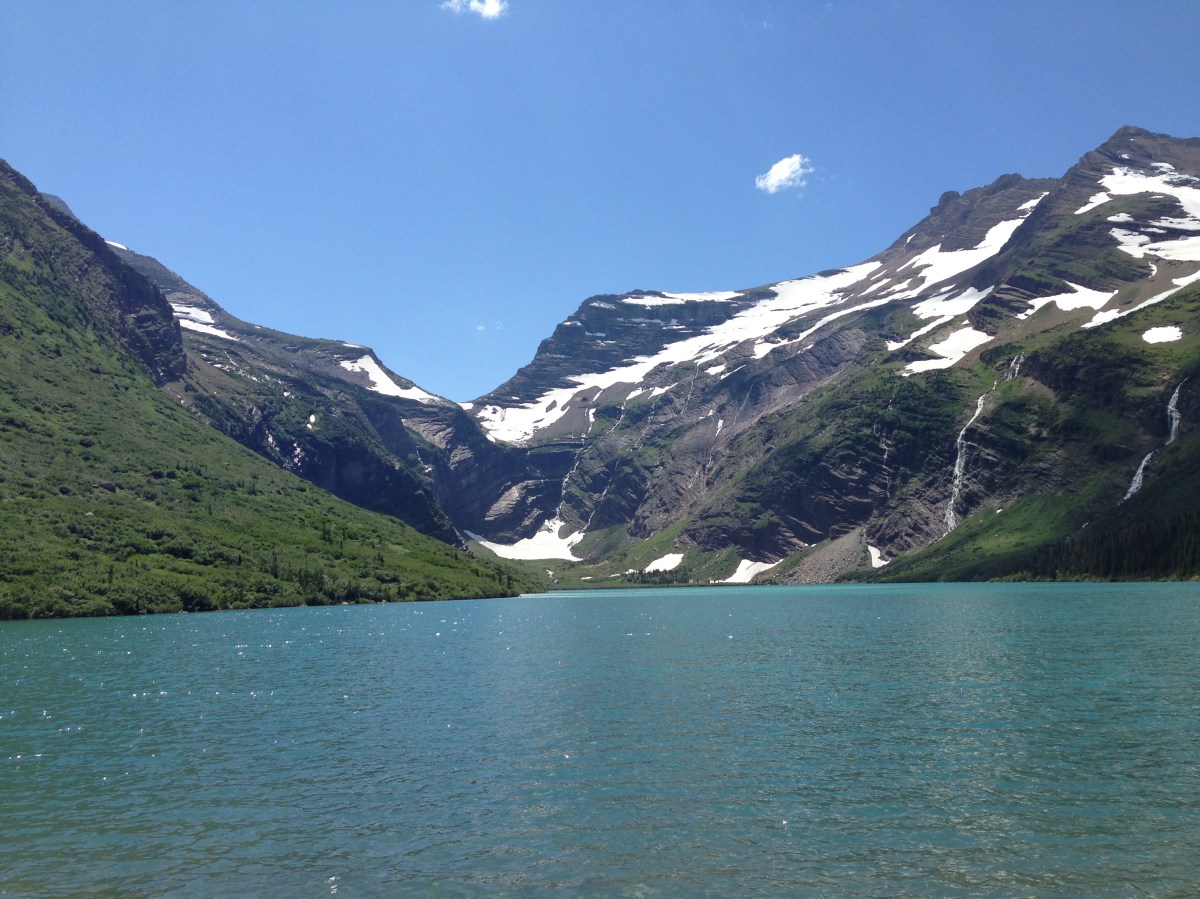
Gunsight Lake
Part 3; FOOTWEAR
I’ll ruffle a few feathers here. Training and experience has led to my opinions and advice, and you may take it or leave it😎
Please see Part 1 where it mentions the many resources it takes to affect a rescue when unprepared. You don’t want to be that person🚫 I suggest divorcing yourself from preconceived ideas that comfortable footwear is the best choice. In GNP the trails are icy, muddy, snowy, rocky, uneven, full of roots, and generally inconsistent. Functional and supportive footwear is a good choice. ⚠️Sandals, flip-flops, Chacos and the like may lead to injury and rescue🚁
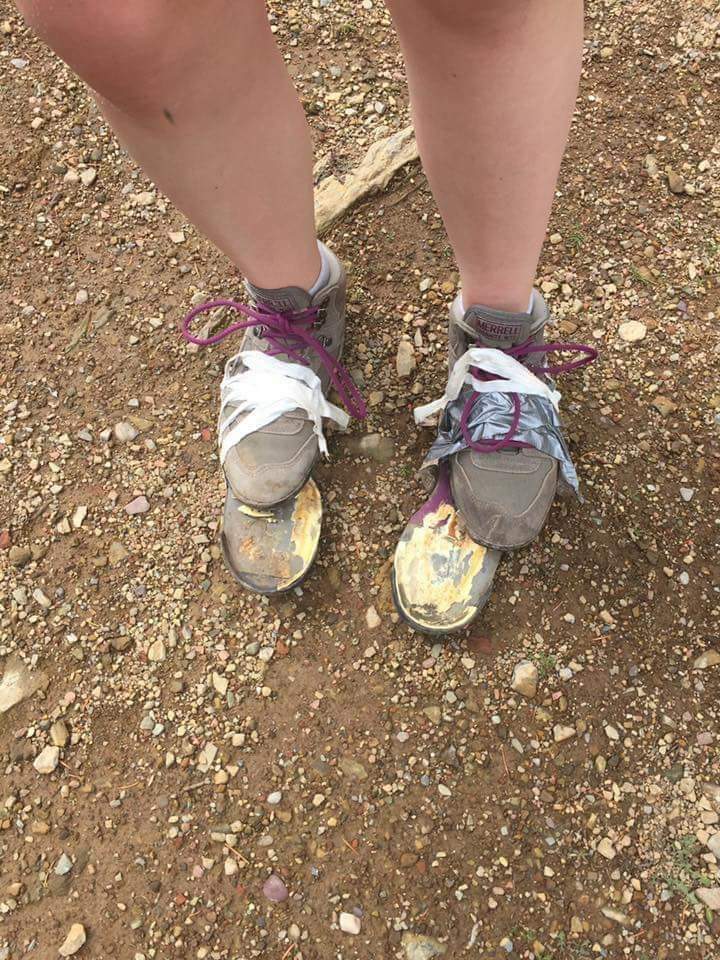
Glue on the soles was old and cracked
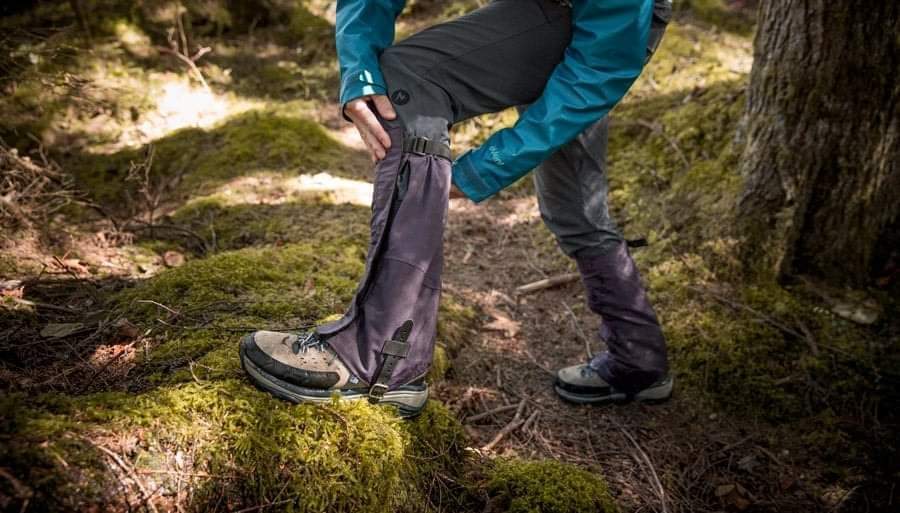
*Support: 🥾coverage of the entire foot to protect toes, mid-foot, and top of foot from impact (rocks etc.). Mid-ankle or high-ankle to protect from impact and minimize the chance of an ankle-roll type injury *Functional: Tread that has some grip. Consider material that has some water repellancy or waterproof if conditions dictate (waterproof doesn’t breath and gets very warm). *Socks: 🧦so many choices… no cotton. Find a material and thickness that doesn’t overheat your feet and protects from blisters. Consider a liner sock. Your feet will thank you if you bring a fresh pair for the hike out🙌 *Gaiters: wet pants from rain💦 or brushing against wet vegetation will wick water down your socks and into your boots. This will lead to discomfort and likely, blisters 👎. Gaiters are a nice barrier to prevent this👍
Gaiters are useful for rain, snow, and scree
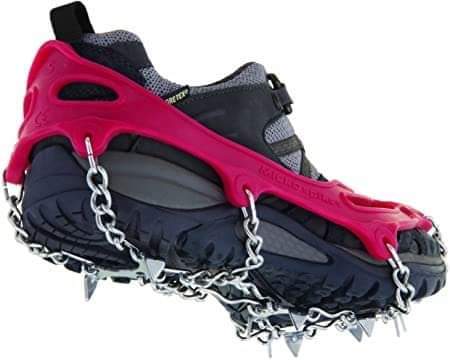
*Traction: in the shoulder seasons and winter ❄ the trails can be icy. YakTrax type slip-ons work well for flat trail. If there is any up or down slope you will want microspikes. If there is deep snow⛄ you will want snowshoes. And if the snow is steep you will want snowshoes with a heel lift.
Microspikes can prevent a slip and fall
*Blisters: as SOON as you feel a hot spot 🛑 take a minute to cover that spot with a friction barrier such as mole skin, a band aid, duct tape, something to minimize the friction against the skin. If you wait too long you will be miserable😢
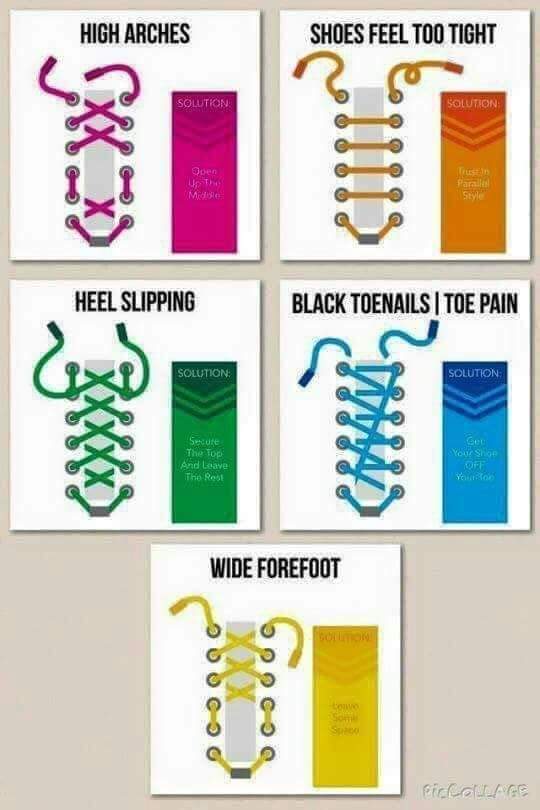
Lacing techniques could solve problems
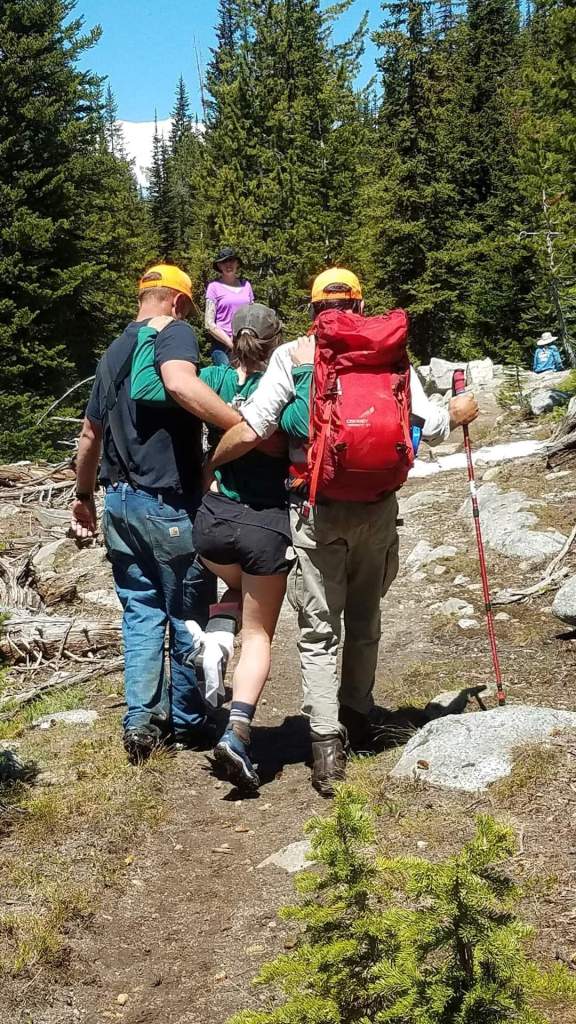
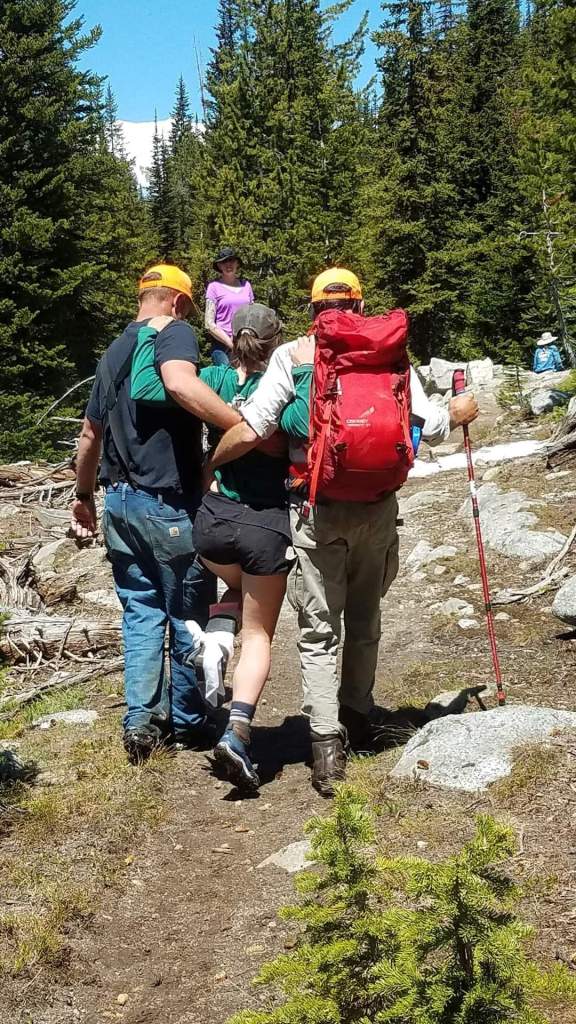
*See the above image for lacing technique to help with certain issues *There are few true orthopedic emergencies. You shouldn’t need to get a helicopter ride out for a rolled ankle or other minor injuries. Learn in advance how to self extricate or how others can help with extrication (see photo for one example)🧠
Helping a hiker with a busted ankle
Part 4; CAPABILITY AWARENESS
People are always asking for hiking suggestions. If you want the BEST feedback be prepared to provide specific parameters. Know the abilities/limits of yourself and those in your group in advance💪
Know where you’re going and what to expect.
*Distance: know how many miles, round trip, you can physically handle. *Elevation: know how much vertical gain and loss you can tolerate.🚶♀️ Generally uphill ↗️stresses your cardio while downhill ↘️stresses your knees. *Pace: understand your typical pace ⏱ in mph on flat ground, uphill, and downhill. *Route: part of the Ten Essentials is being “prepared.” Know the stats🗺 (mileage, elevation gain/loss, obstacles) for any planned outing in advance. Combinations of uphill, downhill, gear weight, and mileage will alter your pace. *Factors: understand there will likely be things in GNP that will DECREASE your endurance from that of your baseline. These factors include weather🌞🌧🌬❄ hydration, fatigue from travel, elevation above sea level, alcohol, sleep deprivation, and pack weight to name a few.
This knowledge will help you plan appropriate hikes that get you back to base before dark and without exhaustion or rescue 🤪
Can you handle vertical gain? Loose rock? Heat or cold?
Part 5; TEMPERATURE REGULATION🌡
This is a companion note to the layers thread.
*Always start a trail cool or cold. If you start warm you will quickly need to stop and shed layers. “Be bold, start cold” *In winter conditions 🌀try not to sweat much. Moisture will make you colder. *The quickest, easiest way to adjust temperature is via hands and head 🤲🦲. If you’re cold throw a beenie or buff on your head and put on some gloves. If you’re warming up, take off the hat or remove your gloves. If you’re overheating 🔥dip a ballcap or buff in a creek and put it on your head. Try holding a snowball❄ (if accessible) in each hand.
Fall days can be hot, or cold!
Part 6; TEN ESSENTIALS
The “Ten Essentials” is a generally accepted list of items one should bring with them while hiking, backpacking, and mountaineering. Having these systems in place could help prevent a bad outcome should things go wrong (and they might). I always carry these, typically in a sack labeled “10 Essentials”. Items can be adapted to suit specific trip attributes.
1. Navigation: map, compass, or GPS (Many options, and knowledge of how to properly use them. Can you tell someone where to rescue you? Can you find your way out if you don’t see a trail? Signaling with a mirror or whistle is nice)
2. Headlamp & Extra Batteries
3. Sun/Wind/Weather Protection: sunscreen, sunglasses, hat, buff, clothing etc.
4. First Aid: from foot care and bug bites to lacerations and bleeding (I will share my kit items later)
5. Knife and Duct Tape: (to help with gear repair, fire construction, etc.)
6. Fire: matches or lighter + firestarter (I use cotton balls and vaseline)
7. Shelter: protection from the elements should you have to remain in place for a while or overnight. (I use a space blanket type bivy in the summer and an insulated one in the winter)
8. Extra Food: plan to spend the night.
9. Extra Water: plan to spend the night. (Filter?)
10. Extra Clothes: plan to spend the night. (What could overnight temps and conditions be?)
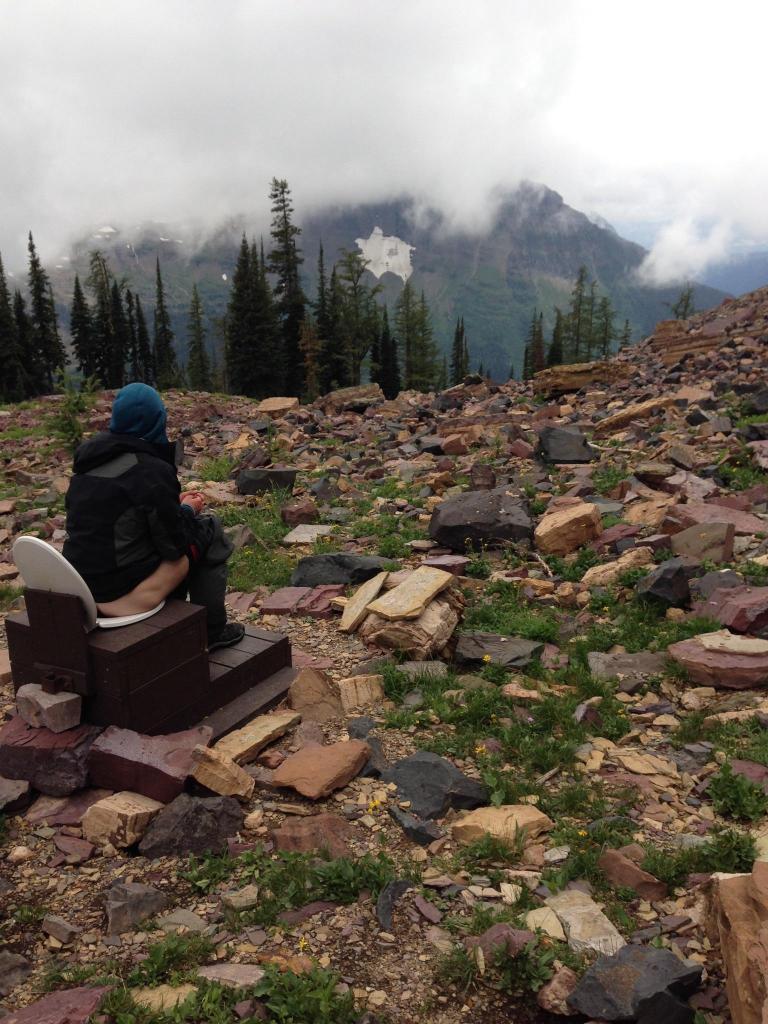
10.5 Ok this is my own thing and while not necessary for survival it IS important… Toiletries: Ziplock baggies, toilet paper, feminine needs & trowel (So you can bury your excrement and pack out your paper including feminine products)
An infamous pooper at Boulder Pass
The best preparation is to expect the unexpected! I hope to see you out there on the trail. Feel free to follow me on IG @GlacierCountry and check out my post about the “Day Pack” for Glacier Park
The mountains are calling and we must go… no matter how we get there! Although they are actually worth seeing from more than one perspective!
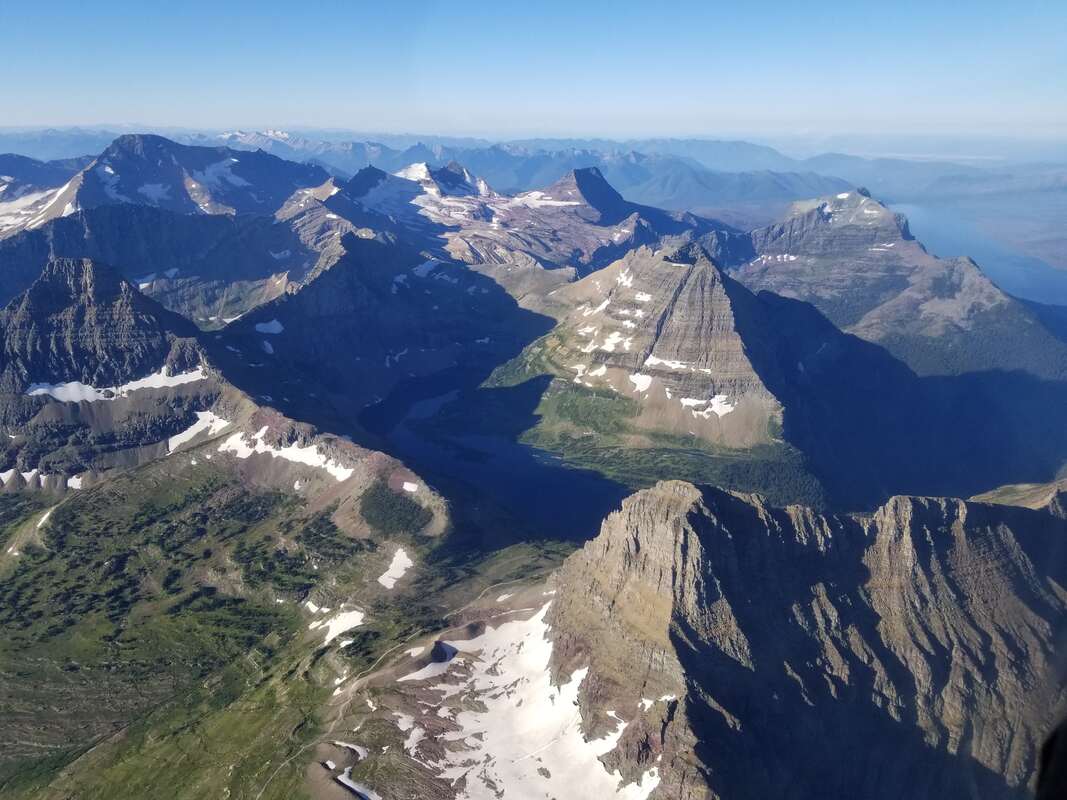
The 3D view from an aircraft provides a fantastic big picture of the area: its historical topography, its bearings (situation awareness)… its grandiosity. It’s also a much easier way to visit; almost like viewing it from a couch.
However, stepping foot on the trails feels like being a part of the mountains; an extension of them! Hiking through and over the mountains is a great feeling for me. I love the experience, being in nature, disconnecting from everyday life, the exercise, the challenge, the views, the smell, the ability to stop at any moment and, yes, the wild animals even though I prefer to see them from a good (safe) distance.
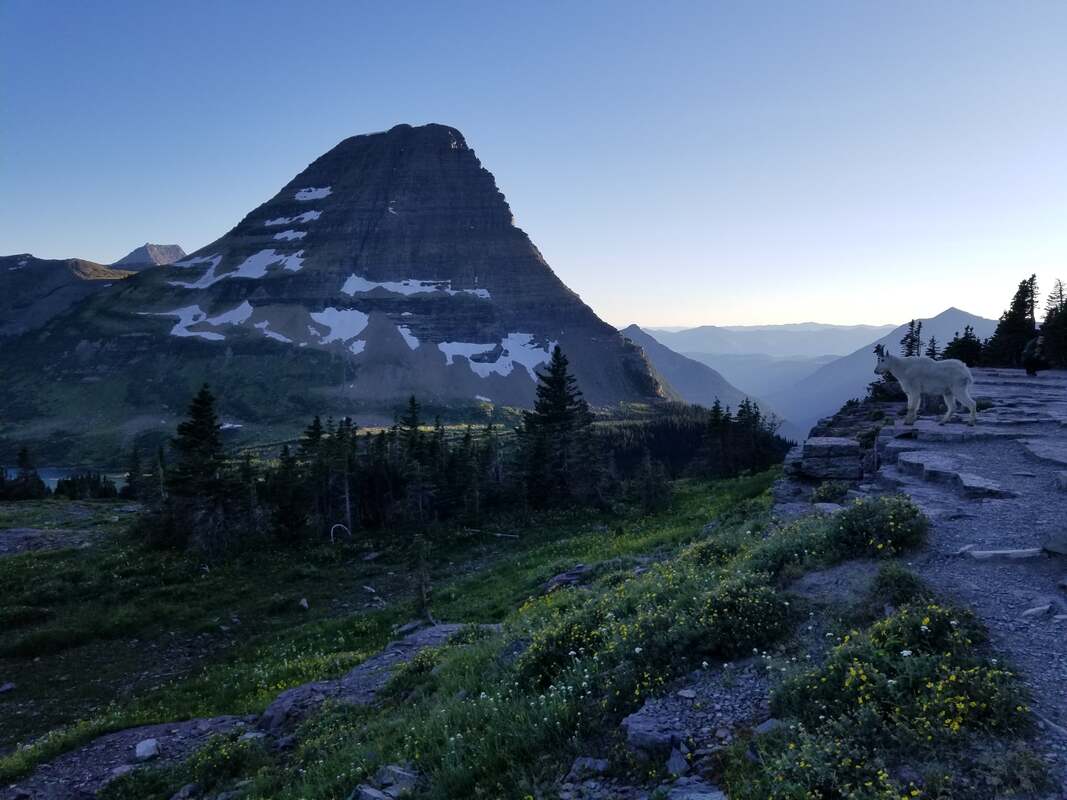
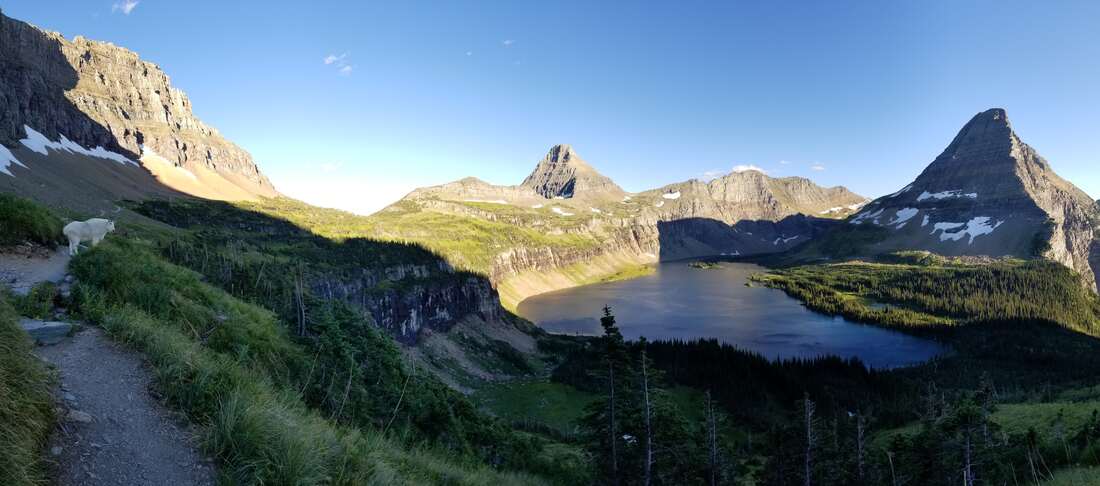
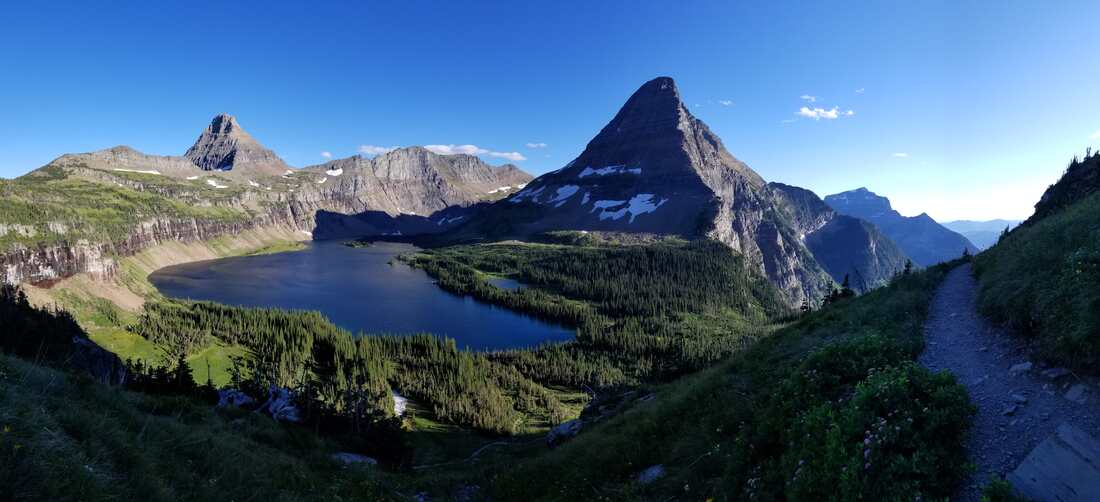
Let’s use a few examples from Glacier National Park to explain further. (Note that some of the aerial and ground pictures are from two different summers.) I’ll start with Hidden Lake, one of Glacier’s easiest and most popular hikes from Logan Pass.
While one cannot see Logan Pass, you can picture it just south of the lower left corner of the picture. From there, one can follow the trail (partially paved and can be seen in the picture) to view Hidden Lake and its beautiful valley. The aerial view provides a great shot of it and its general area, including Sperry Glacier in the immediate distance. However, being on the trail allows you to be a part of the landscape. It puts you right in the middle of it all but does not provide views of the area beyond the valley. It’s also not uncommon for mountain goats to be enjoying this same beautiful area as hikers. Unfortunately for some though, this trail is often closed due to “bear activity.” In this case, it means bears chasing mountain goats up and down the valley, left and right of the trail.
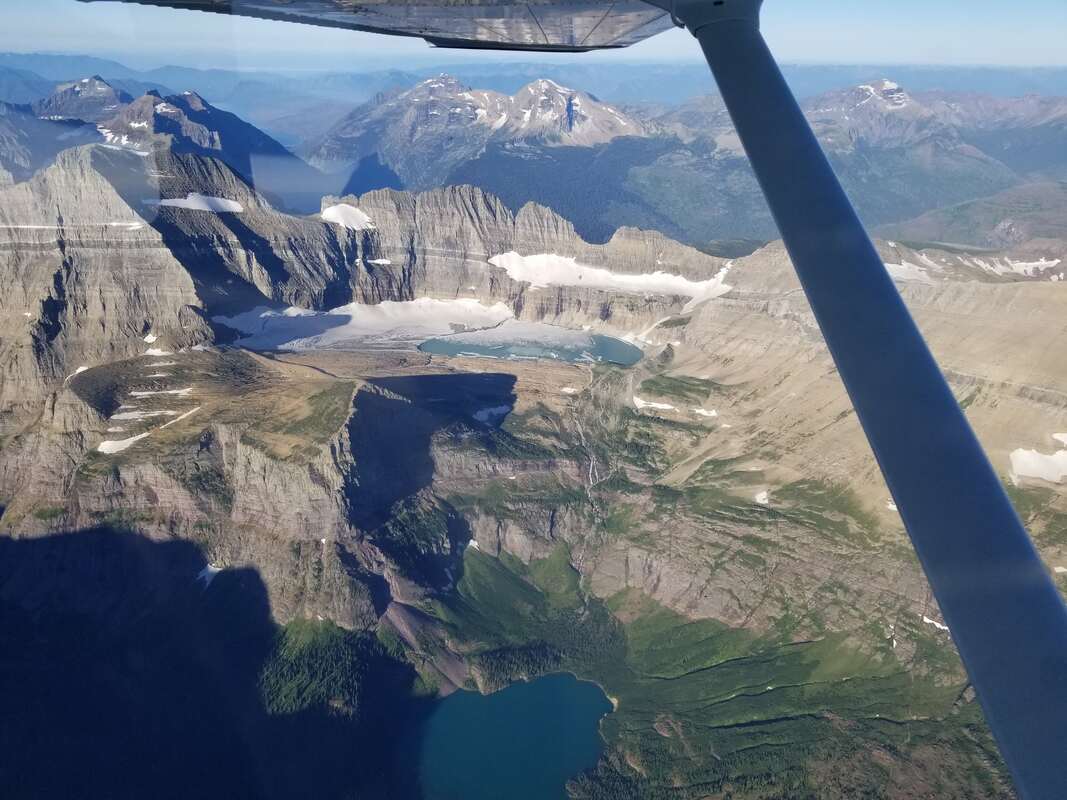
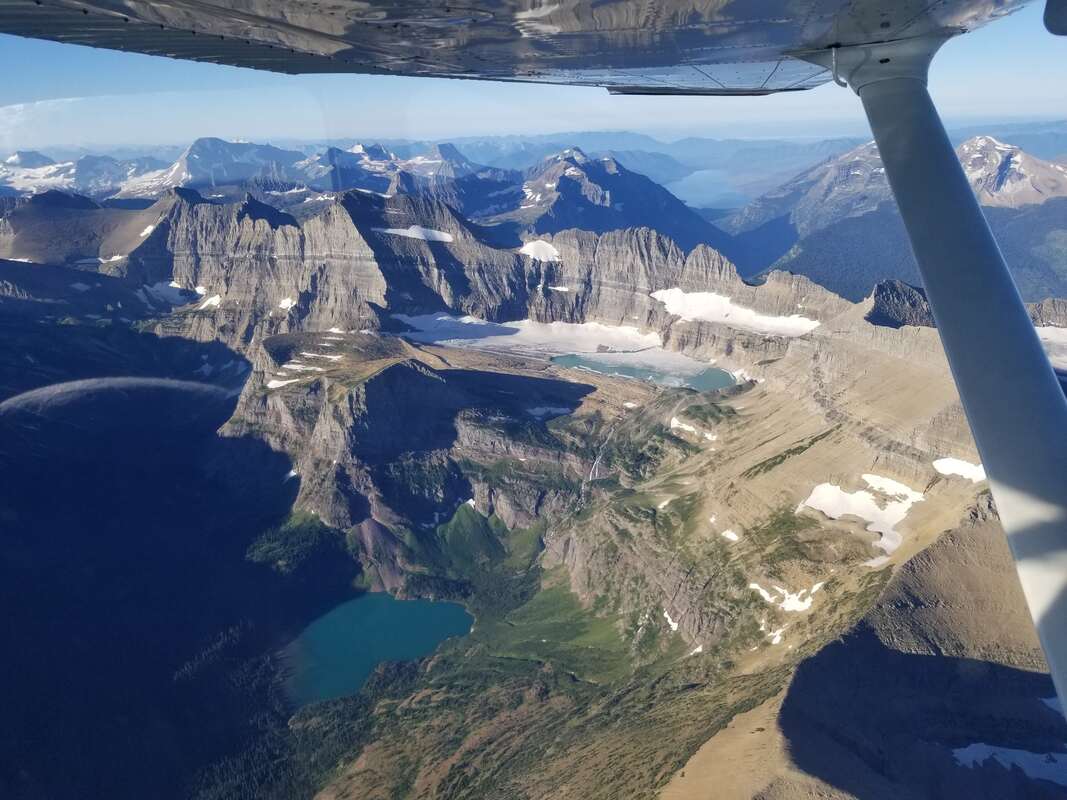
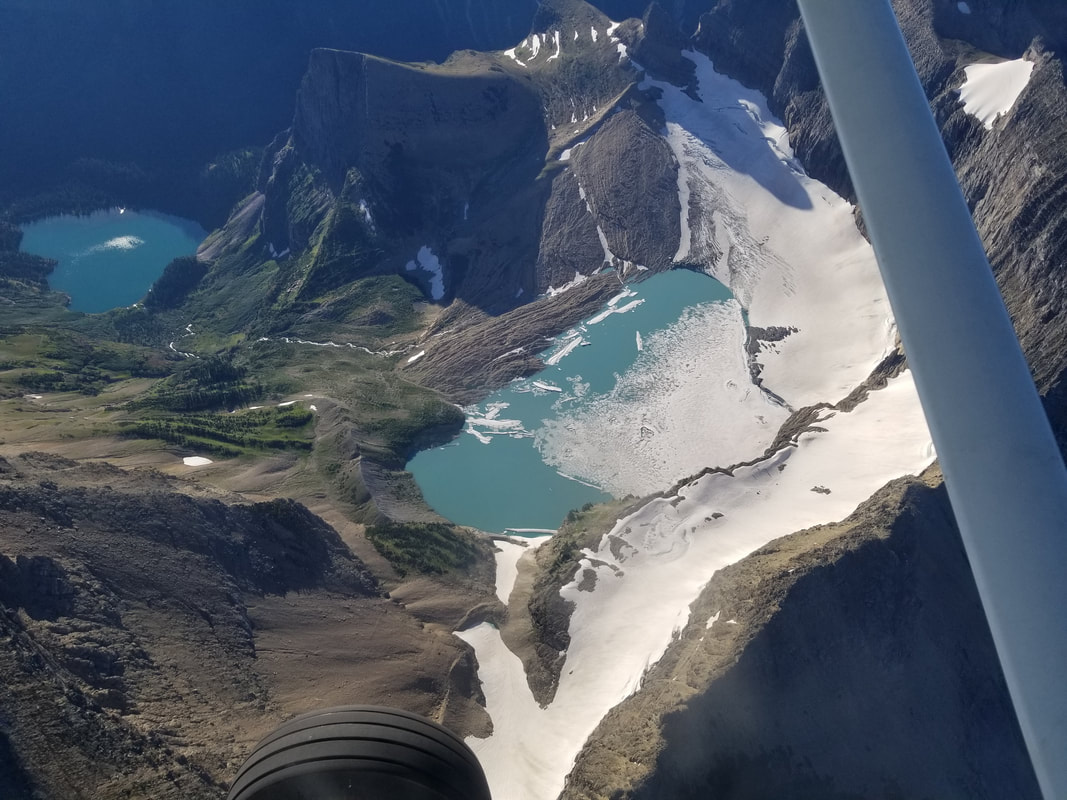
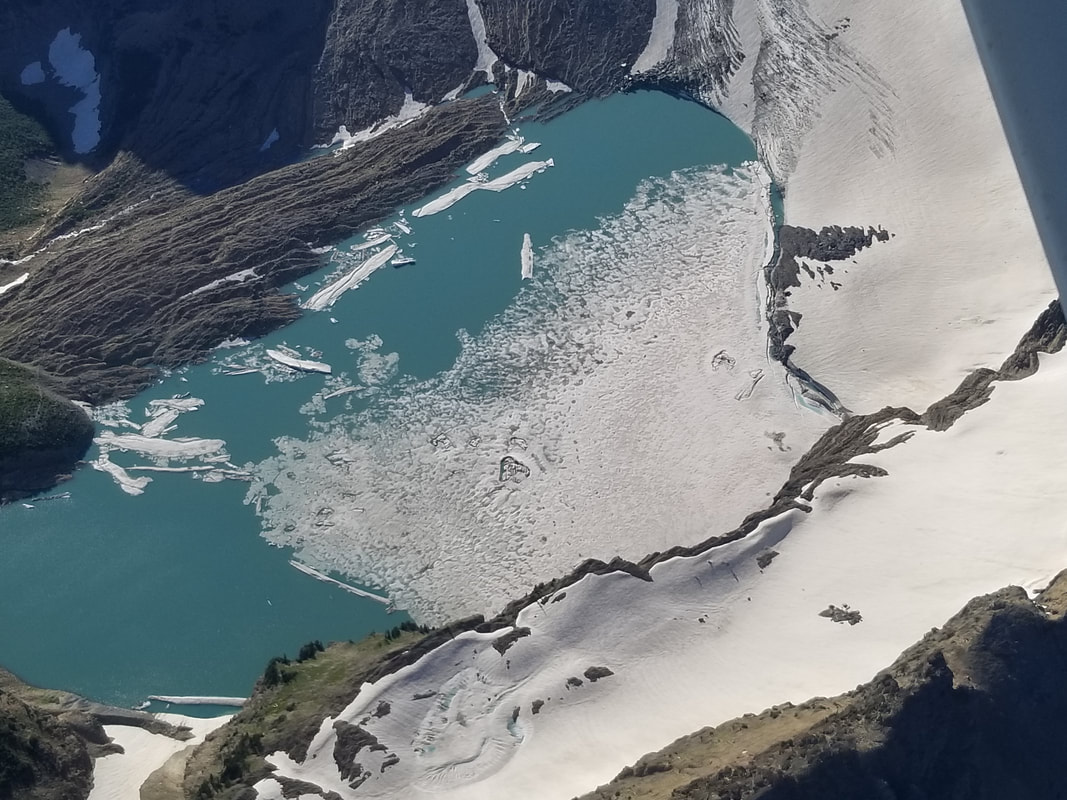
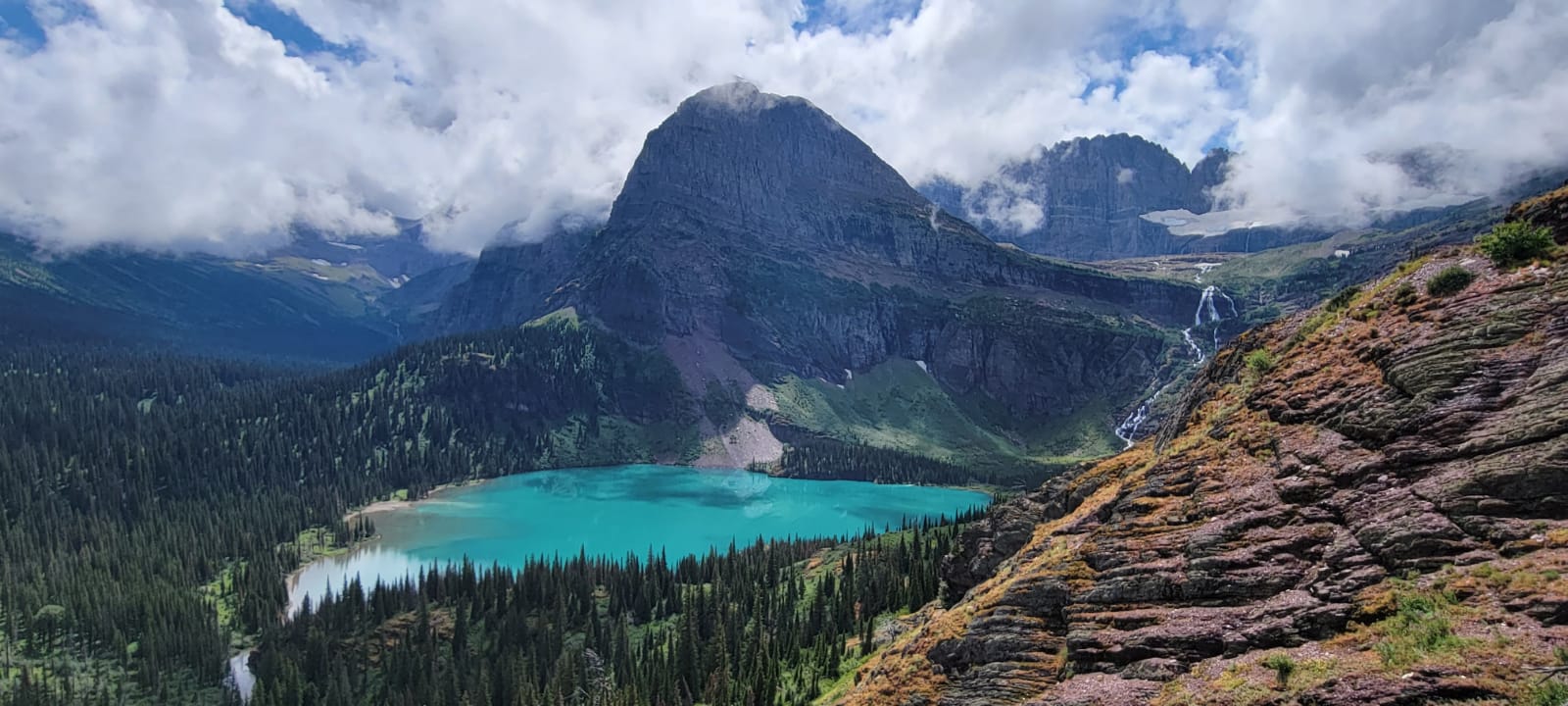
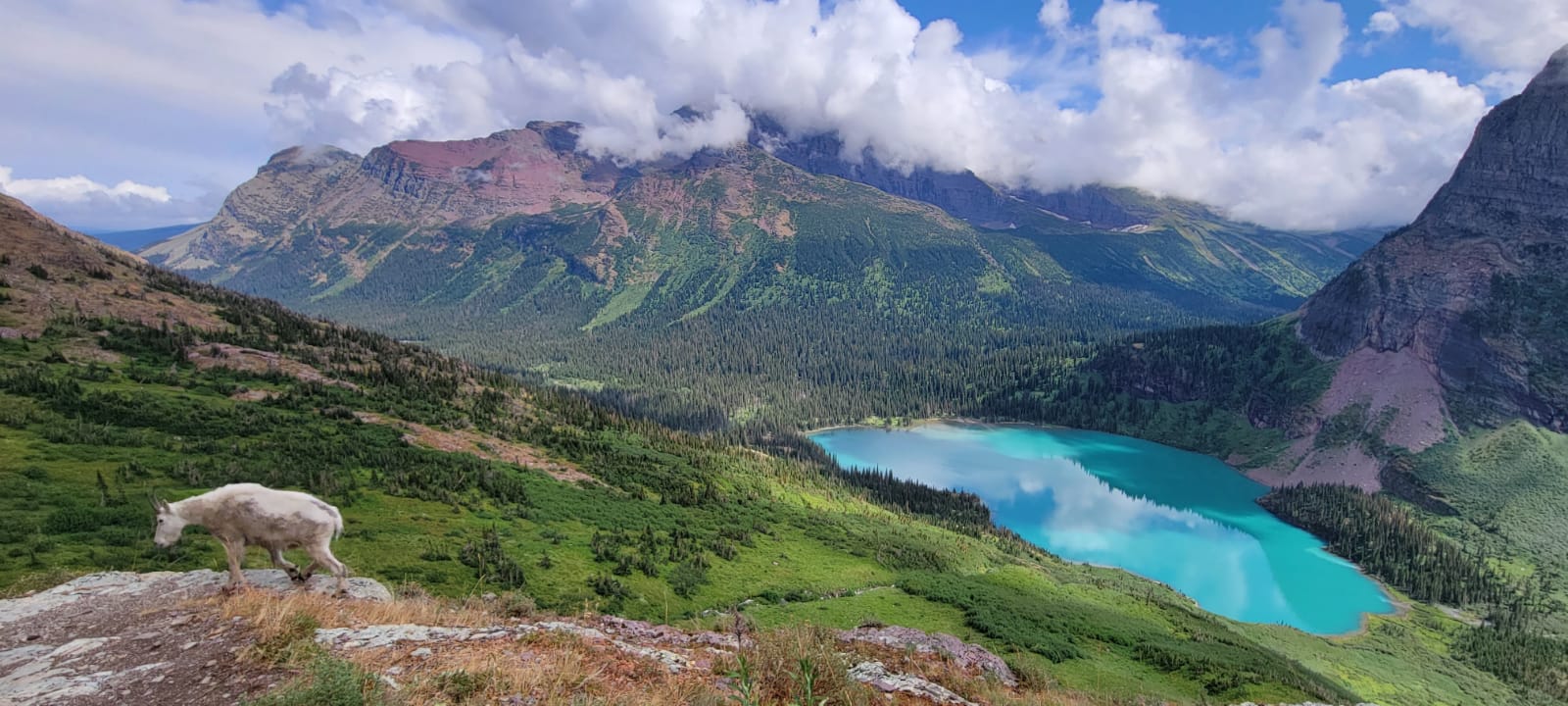
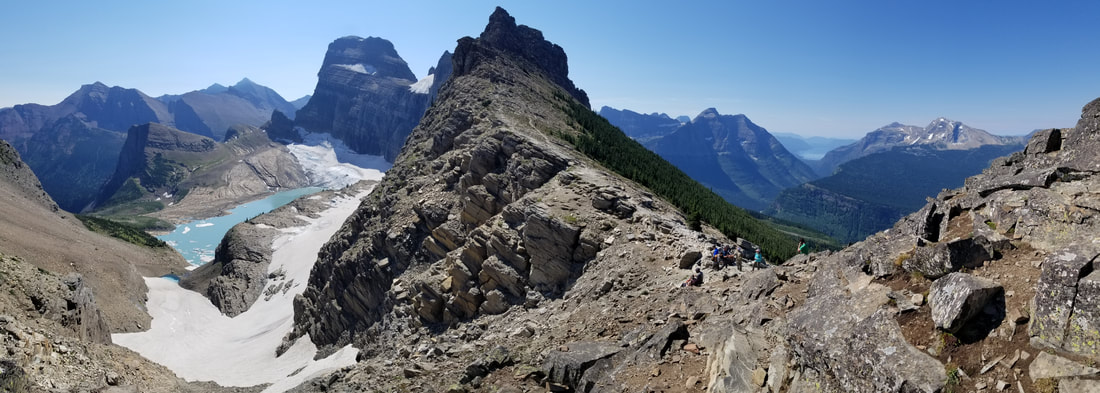
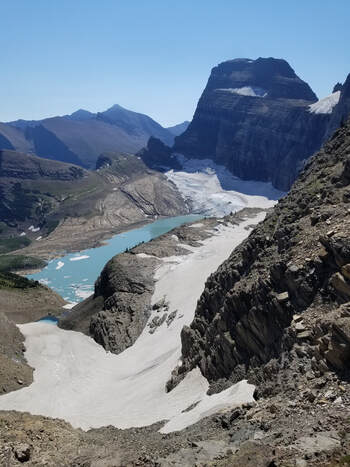
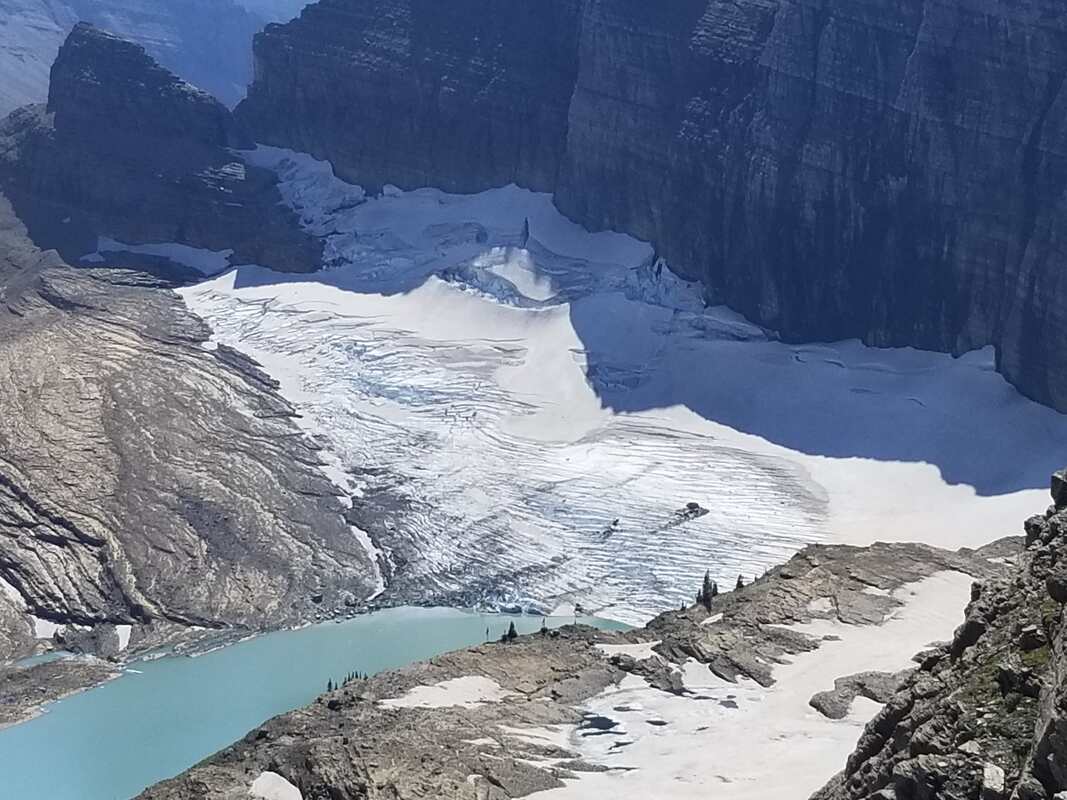
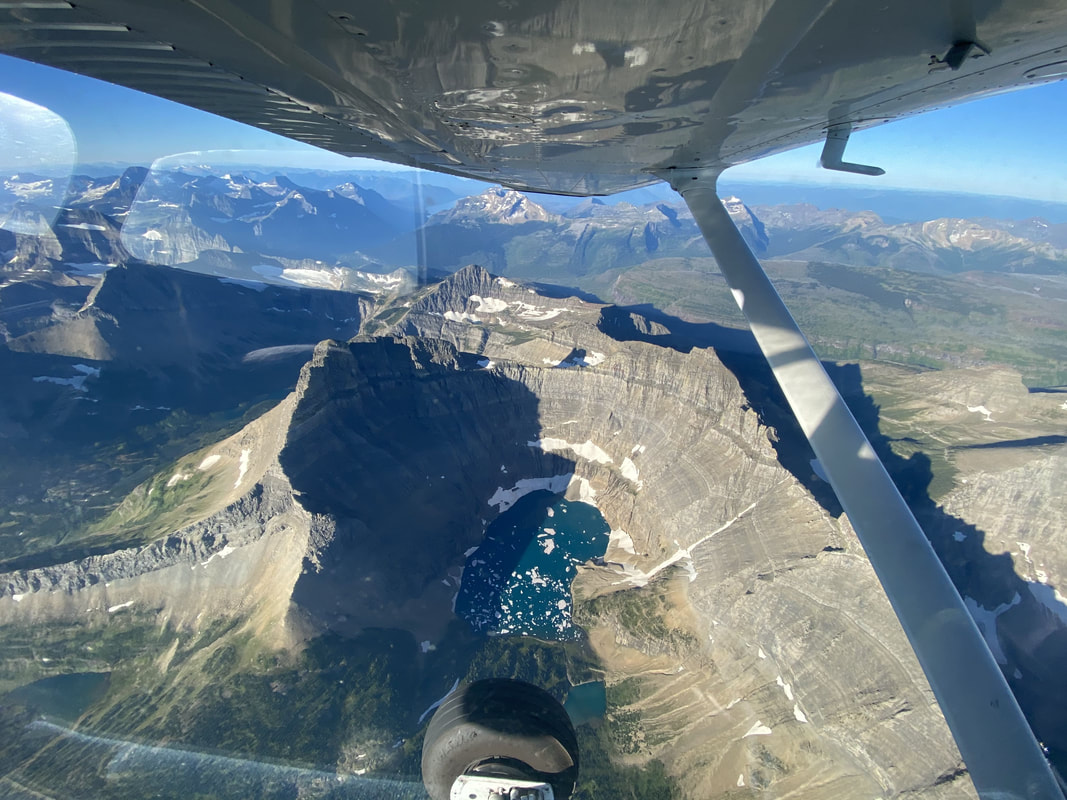
Continuing with famous trails… Grinnell Lake and Grinnell Glaciers are amongst visitor favorites. The hike to the lake is fairly easy, especially if shortened by taking a boat across Swiftcurrent Lake and another one (part of the same ticket) across Lake Josephine. But the hike to the glacier is moderate. Flying over the area clearly shows the difference between Grinnell Lake and Grinnell Glacier. Many first-time visitors question this because they think Grinnell Lake is the one on top, when it’s the one at the bottom. The lake up top is simply part of the glacier that is melting and receding.
One of my first thoughts when hiking to the Glacier was that the waterfalls were not as evident from the air as they were from the ground. My second thought was that the Angel Wing (the mountain west of the waterfall) is much bigger in actuality than the flight portrayed (even with the shadow). I still would have liked to hike up to it, but it was pretty rainy and stormy when we arrived at the Glacier so it’s on the list again for a future trip.
We could have never seen a ram this close or this good from any aircraft.
Hiking directly to the Glacier isn’t the only way to view the Glacier from the ground. The Highline Trail, also from Logan Pass, has a steep Grinnell Lake Overlook side trail (which may be scary to those afraid of heights), giving hikers a completely different viewpoint. One can look down onto the Glacier. This is the longest of the hikes discussed but it’s also one of my favorites.
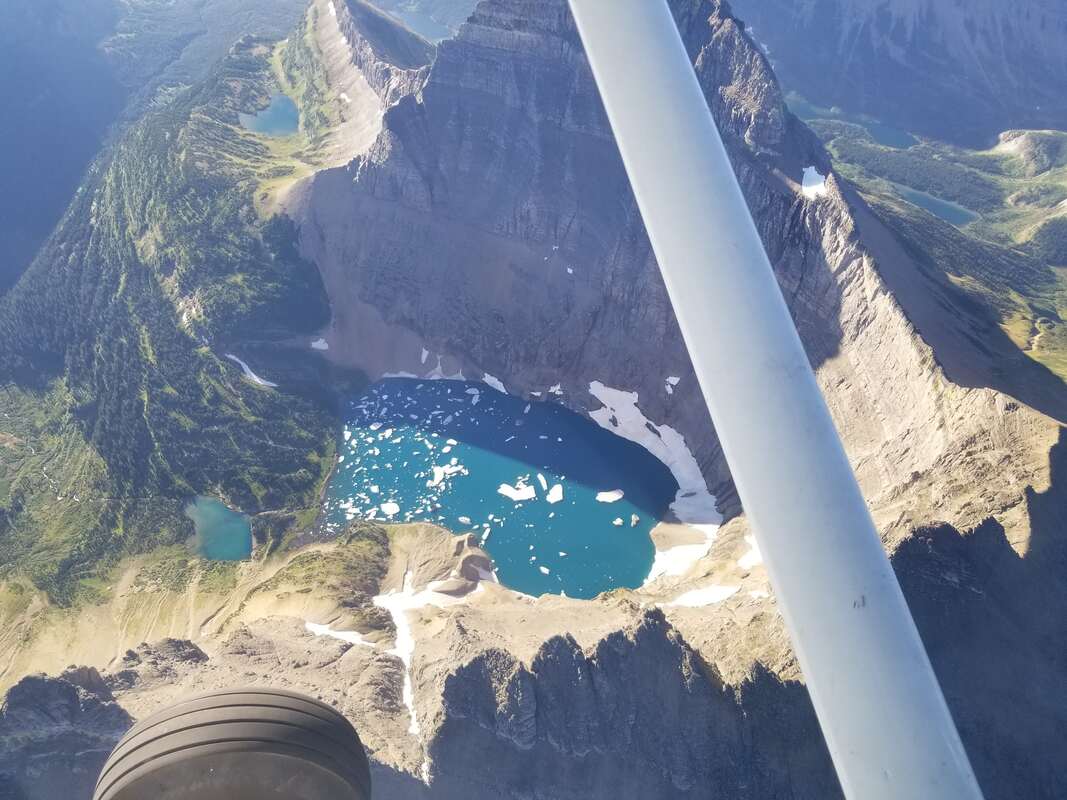
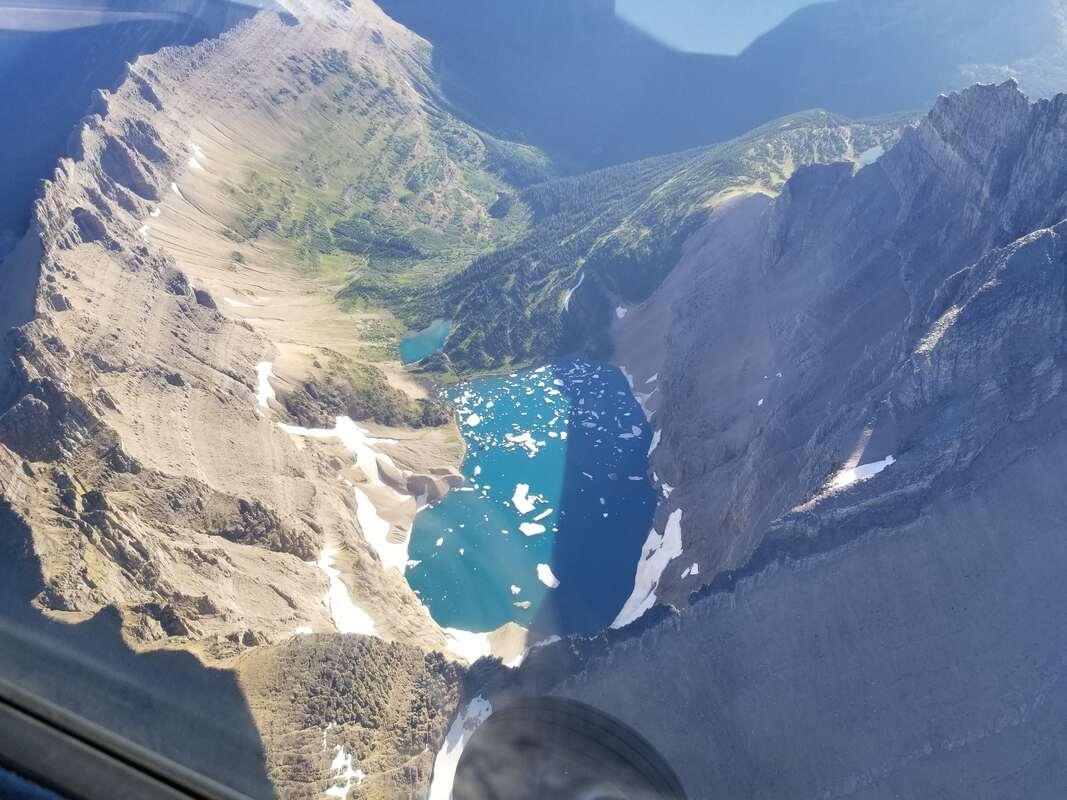
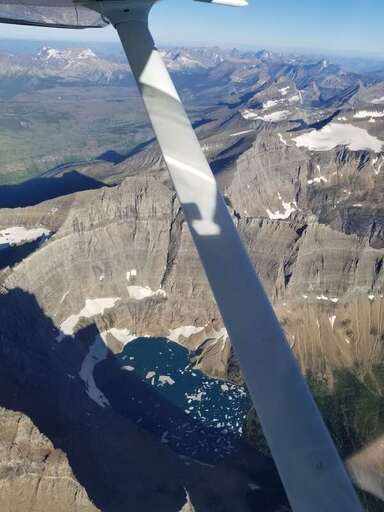
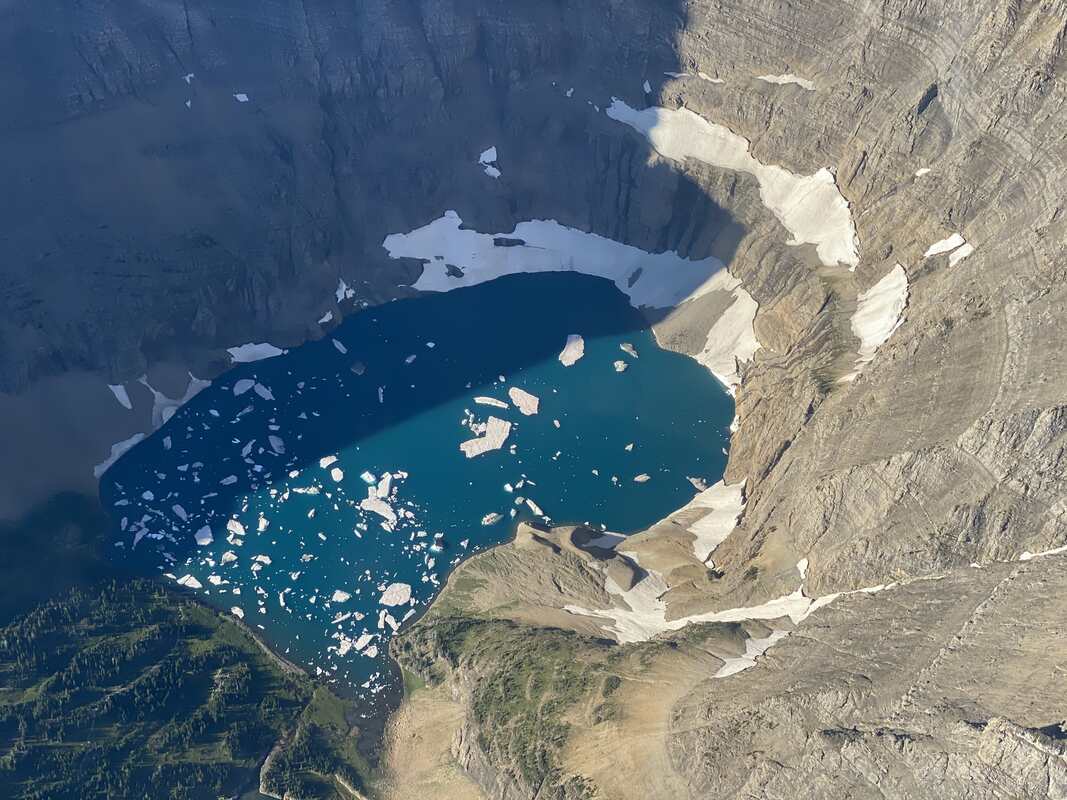
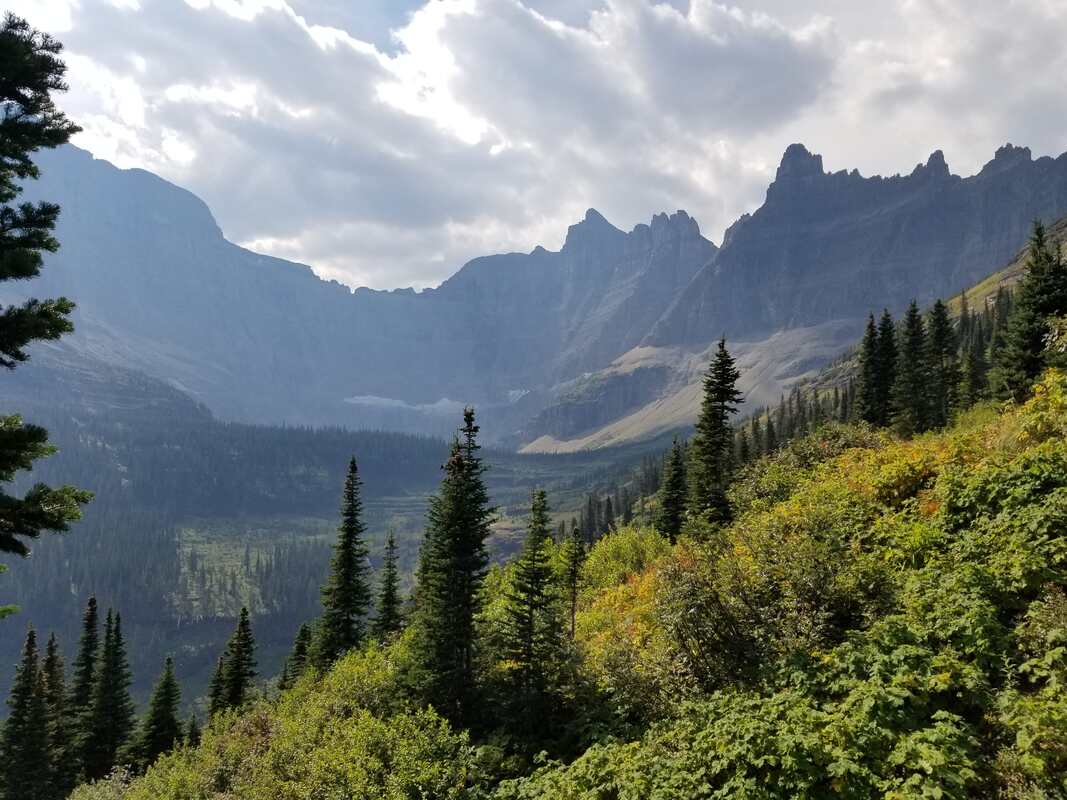
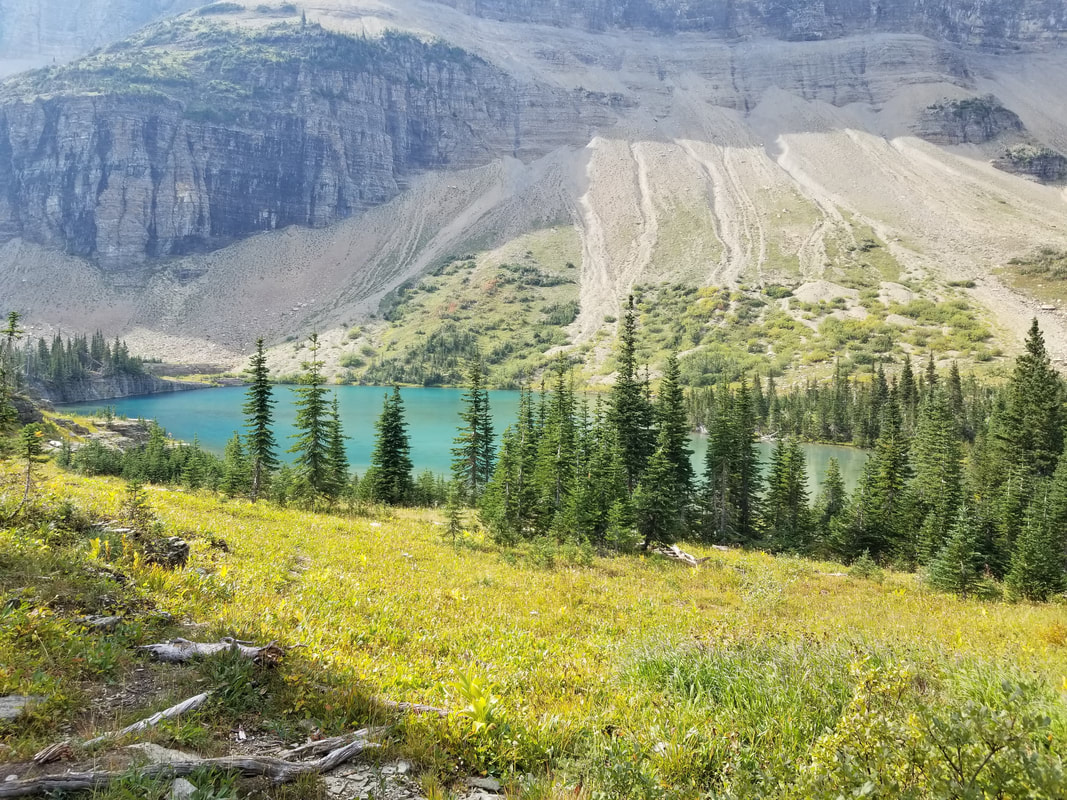
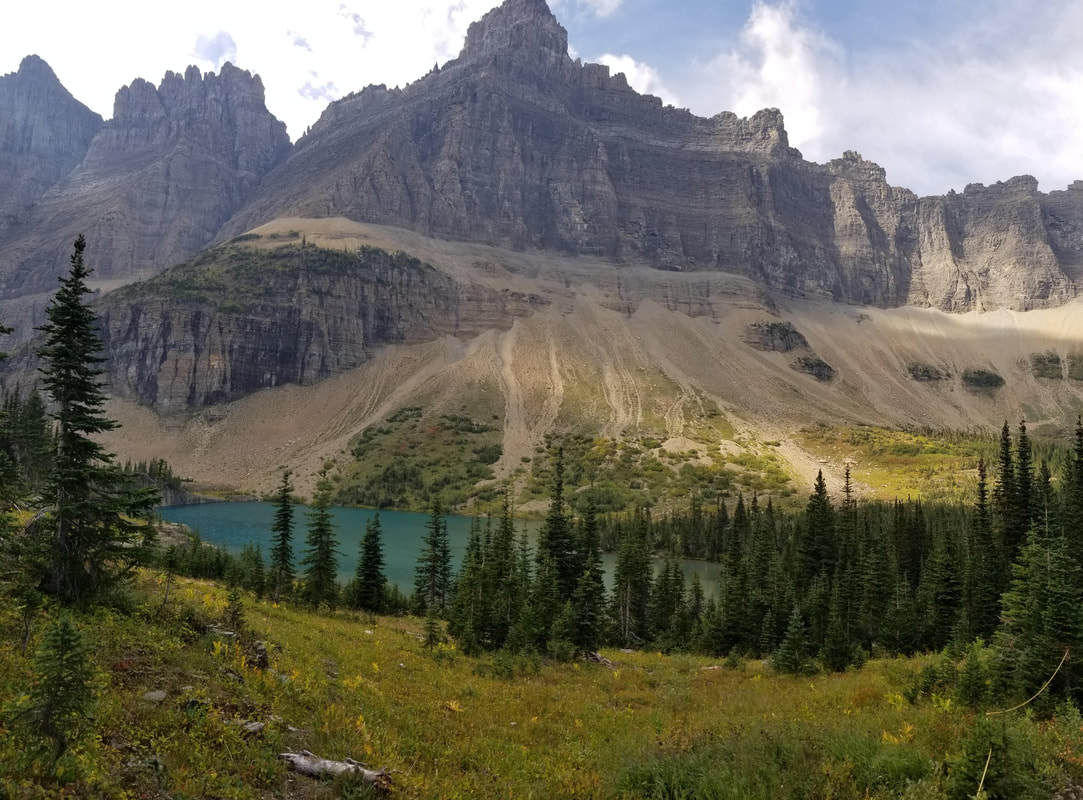
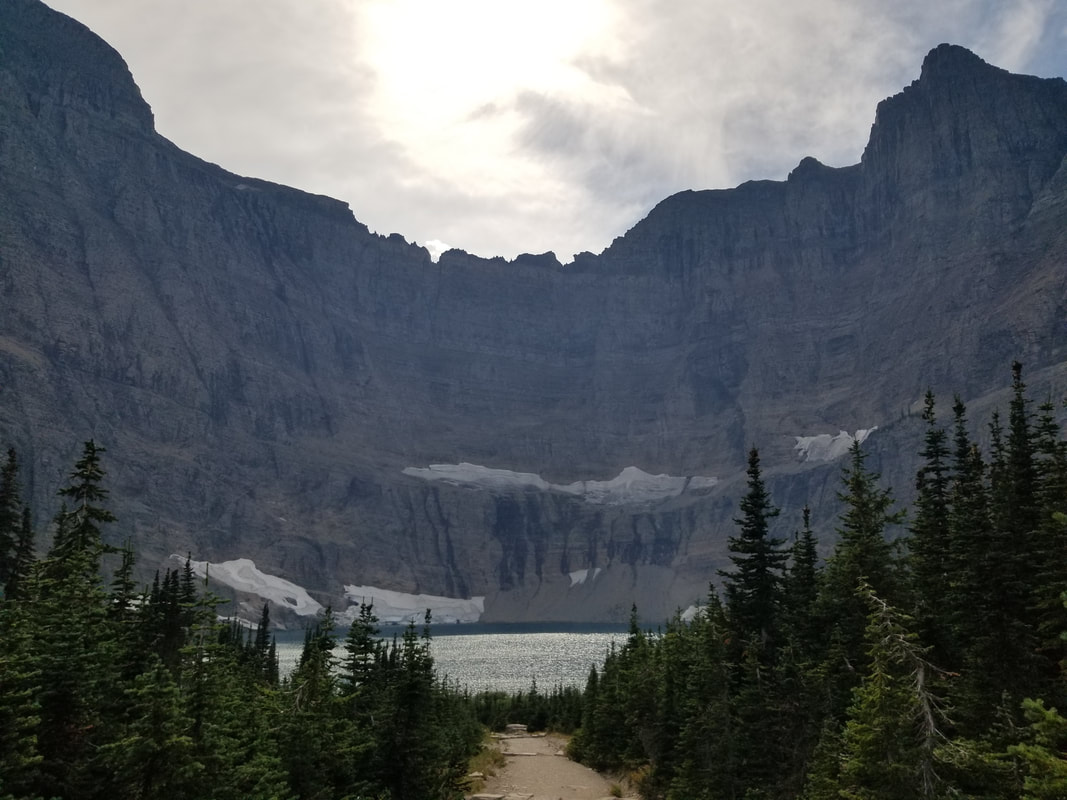
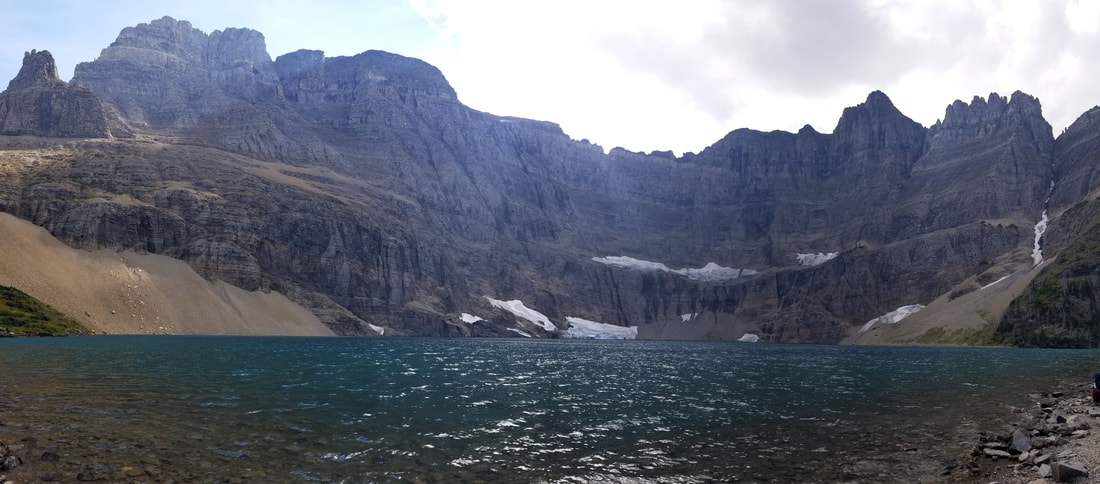
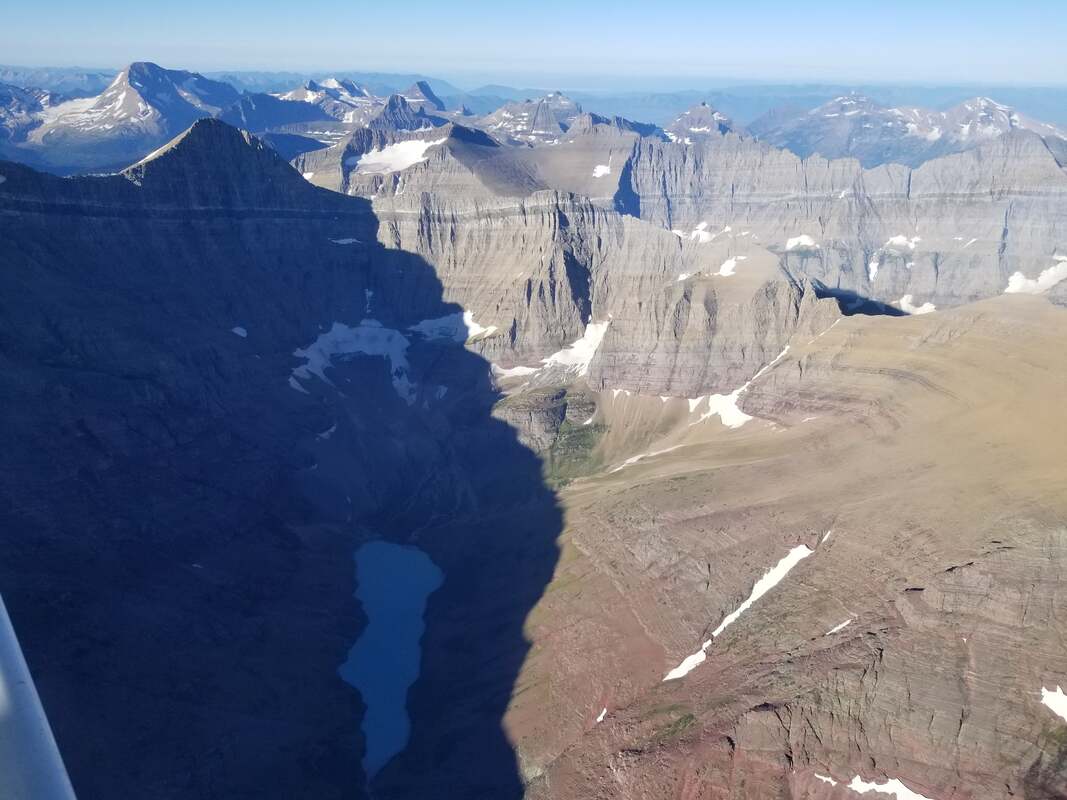
One of the reasons I enjoy flying over the mountains is to scout my next adventure. This was the case with Iceberg Lake. I loved the way the lake looked from the air, with its deep blue color and being surrounded by sheer glacier walls.
The sheer walls were honestly just as impressive, but in a different way, flying or hiking. Seeing their vertical nature from the air was impressive and seeing their rugged look up close from the trail was spectacular as well. My mom hiked it with me, making it even more special. It was a bit disappointing though that Iceberg Lake had no icebergs when we hiked it.
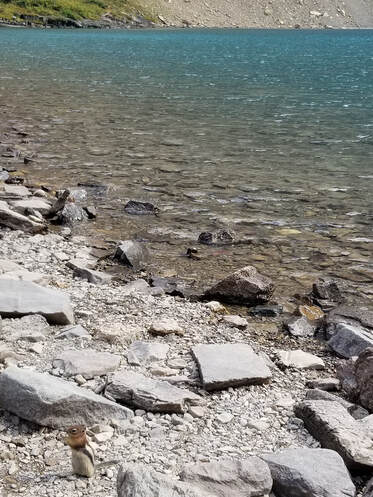
Oh and be careful with these little guys. They will eat your food and get in your backpack.
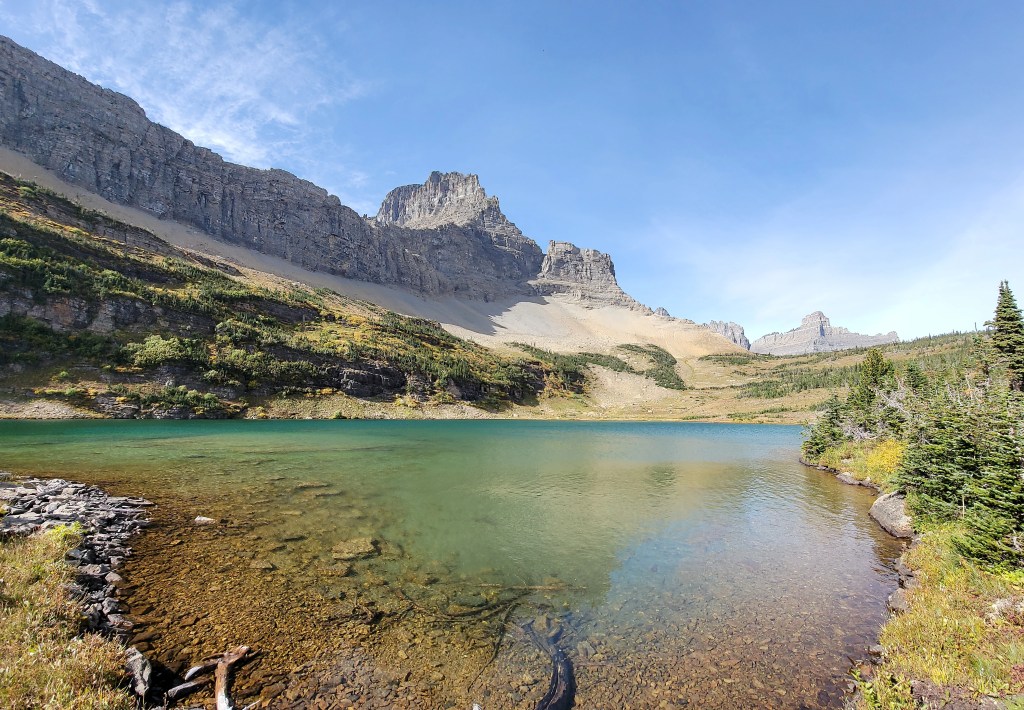
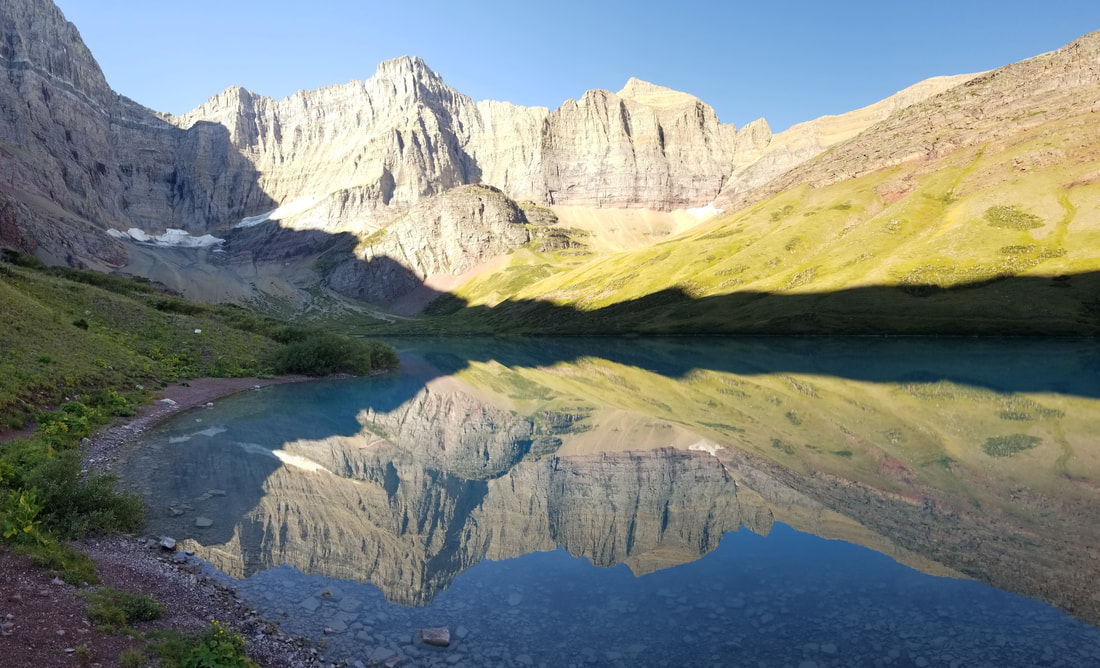
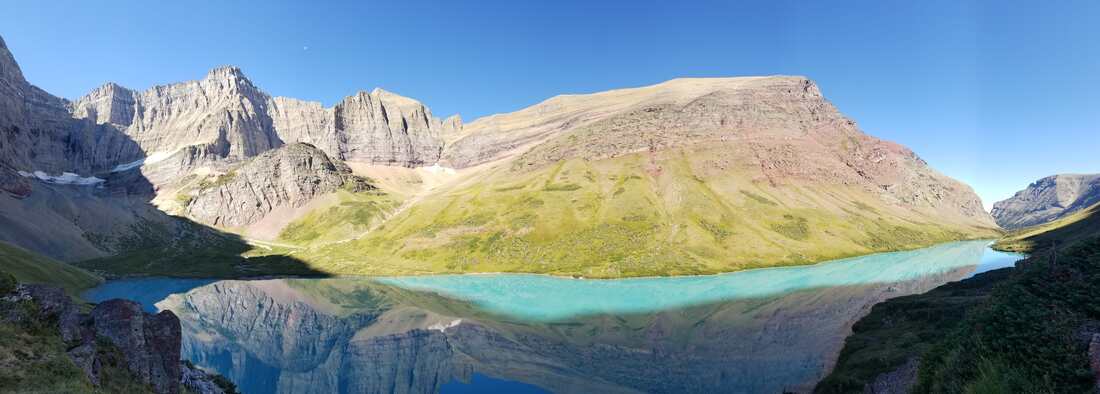
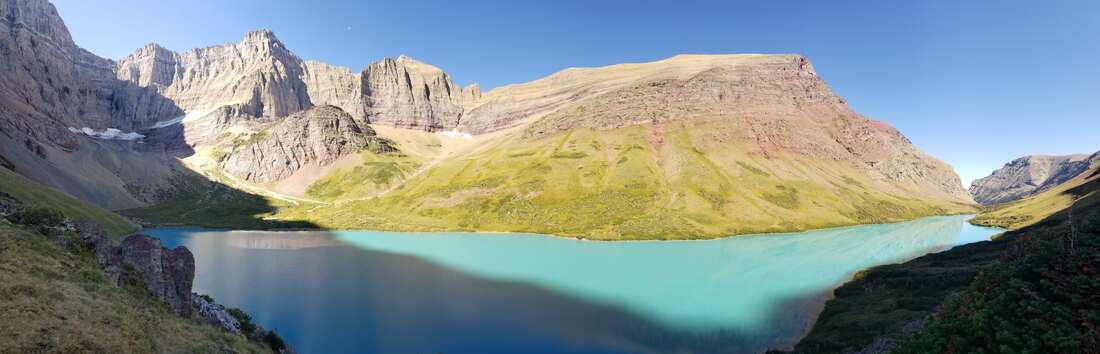
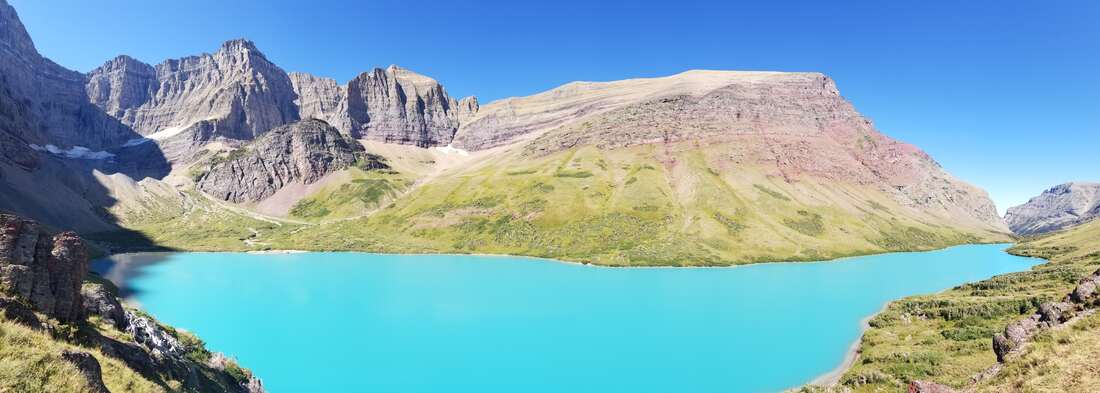
When I flew over Cracker Lake last year, it did not look as impressive to me as other lakes did, but it must have been because I flew too early in the day. The sun was not shining on its water yet and, as it turns out, Cracker Lake has the most beautiful water color of any lake I’ve visited or seen at GNP. It’s very different seeing it in the shade and the sun.
It was quite amazing to see the transition of water color on the lake as the sun rose up over the mountains. I had never seen anything quite like that before.
The details of things like the color of the rocks and the sediment in the water is something one cannot perceive from the air.
Glacier is also a great park to view moose, mountain goats (my favorite!), bighorn sheep, and bears of different types but it’s a bit hard to see them from an aircraft.
There’s no time to be bored in a world as beautiful as ours so get out and explore!
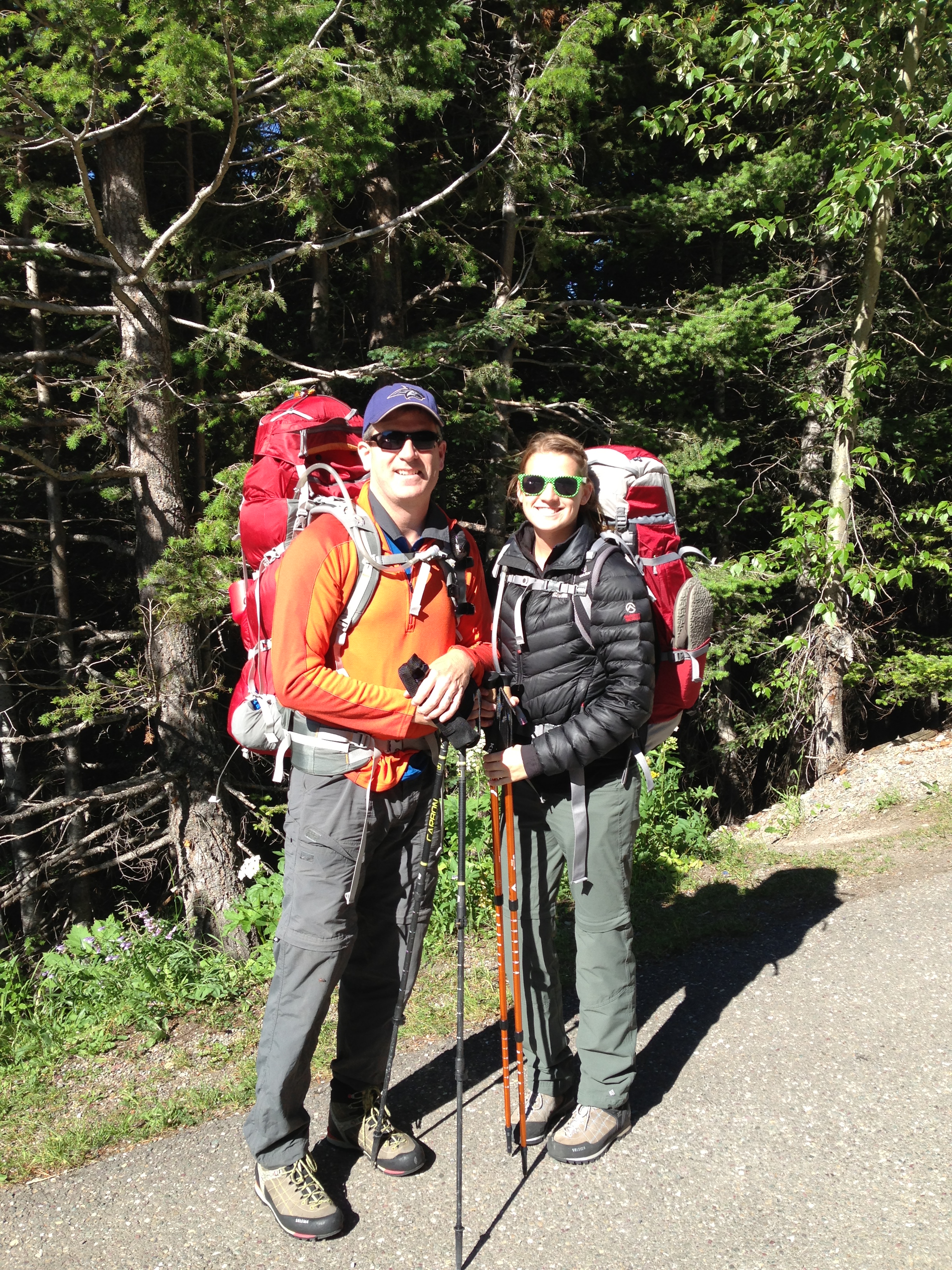
In July of 2013 my daughter and I set out on a camping and climbing trip to Gunsight Lake. We would meet my friend Dustin at camp on Gunsight Lake where we would base our climb of Mt. Jackson. The weather forecast was ideal and we were excited to get on top of some glaciers.
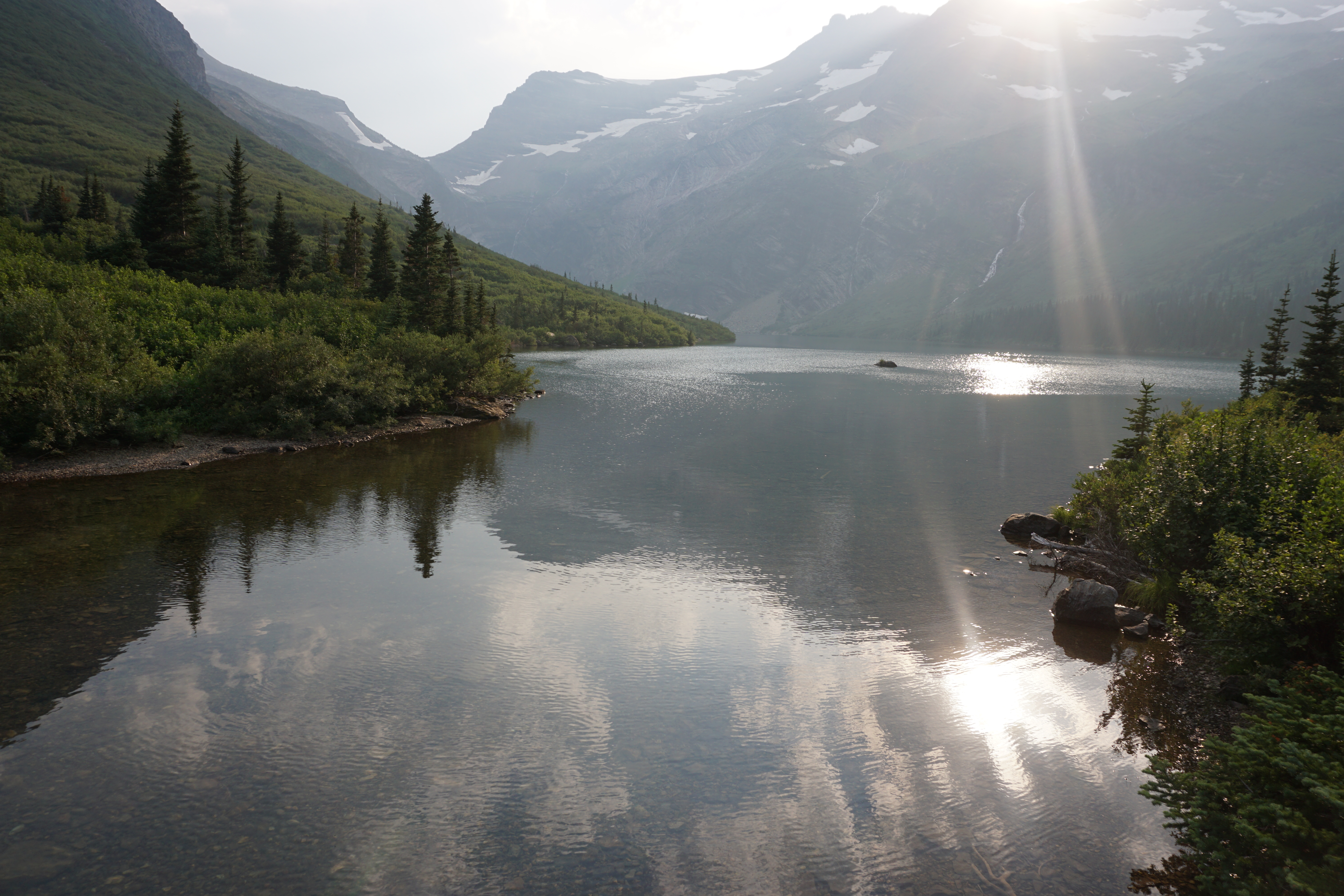
Gunsight Lake is a wonderful back country campground. It is set up like the other back country sites but the proximity to the lake and the views from the campground make this one of my favorite destinations. The hike in to the lake is only 6.5 miles and the elevation gain is a gradual 1500 ft. And there is plenty to see on the way in.
Ready to hit the trail for an adventure
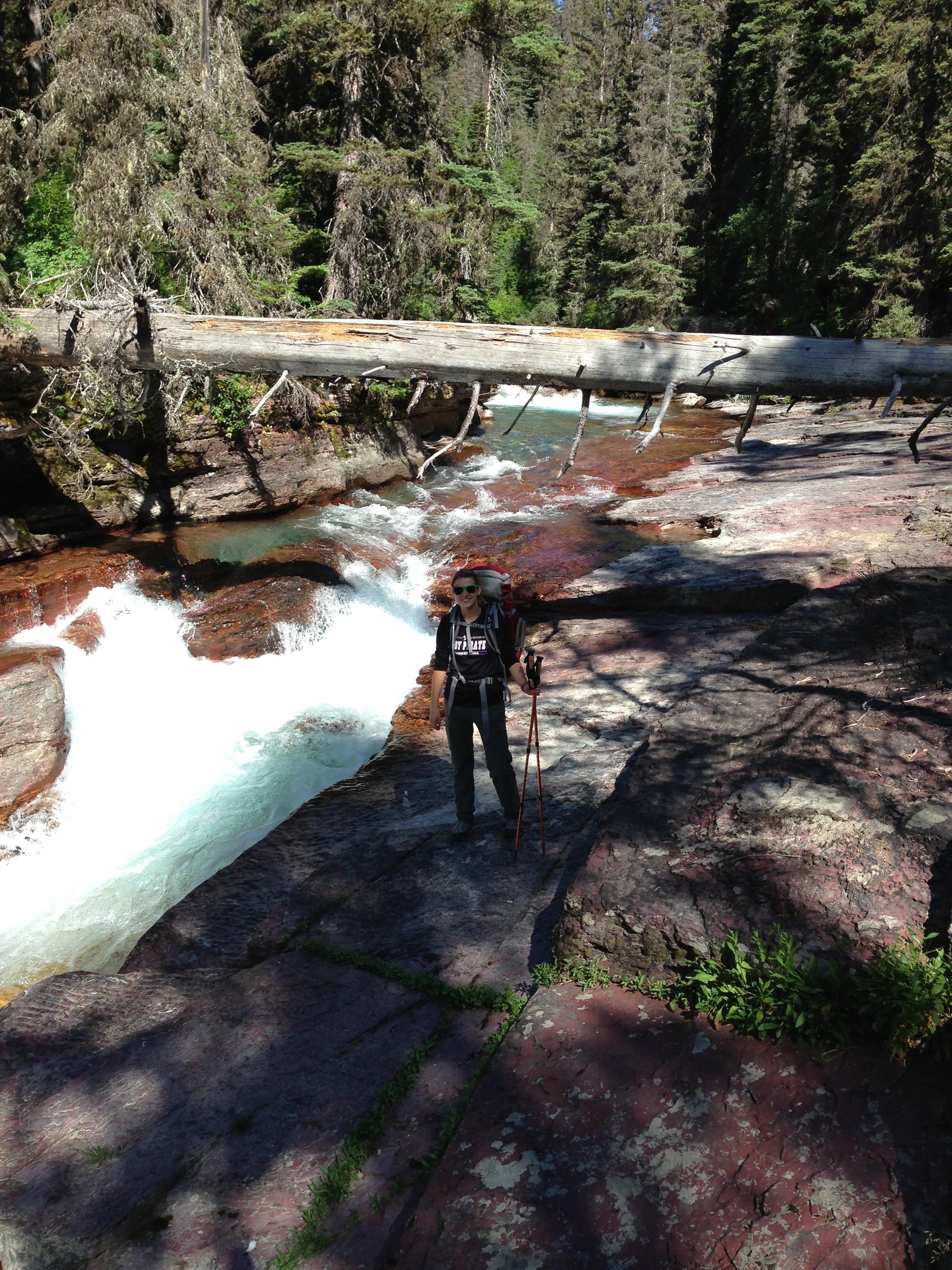
After a couple miles of slow descent from the trail head we found Deadwood Falls. Here the creek creates some impressive erosive features on the colorful rocks as it hammers it’s way through the surrounding walls. This is a popular spot for hikers to stop and take photos. Remember that drowning is the leading cause of death in GNP so always be careful around slippery rocks and moving water.
Deadwood Falls area
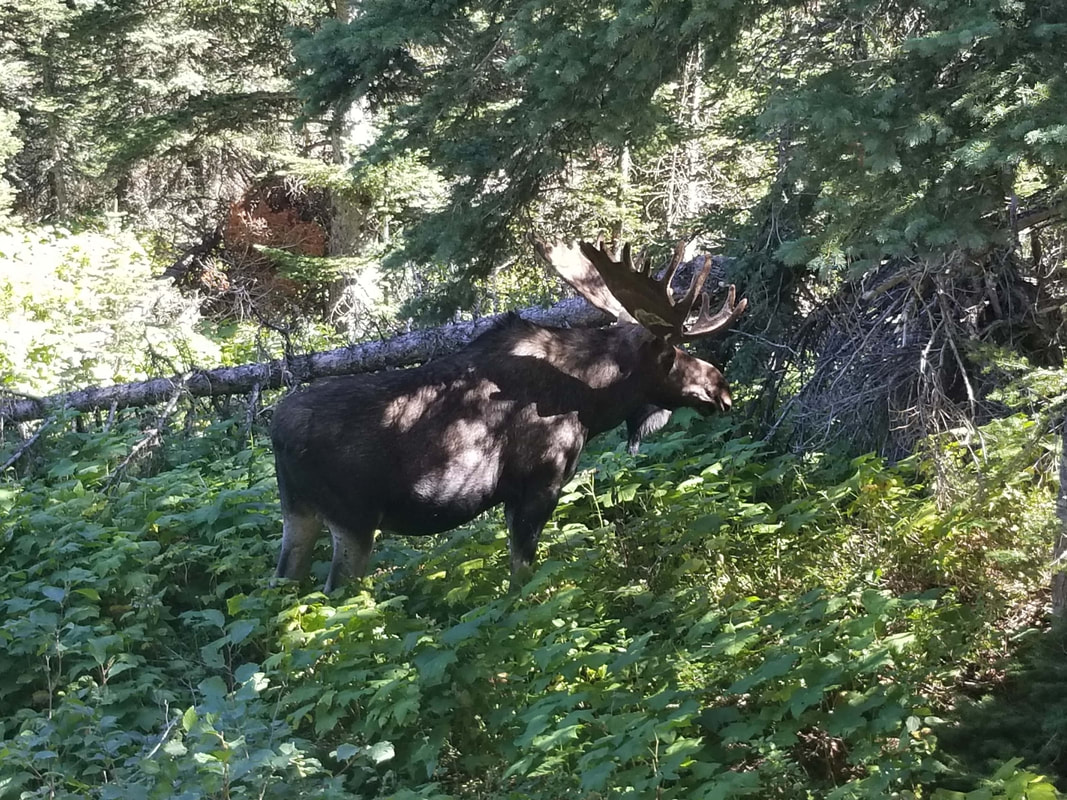
The initial descent ended when we reached the St. Mary River. Here we found wetlands and meadows ideal for wildlife viewing. This river basin is prime country for moose and bear and hikers usually have sightings of them more often than not. A few prominent peaks loomed around us including Citadel, Dusty Star, and Going-to-the-Sun.
This is Moose country! (Citadel Mountain)
About four miles in we found the trail branching off to Florence Falls. We decided that would be a good place to stop and eat lunch. From the main trail it was only about one mile to the falls and absolutely worth the extra effort. And no matter what you’ve packed for lunch it’s going to taste a million times better sitting next to those falls!
Florence Falls
First full view of Jackson Glacier along the trail (Mt. Jackson on the right)
Arriving at the lake on a hot July afternoon we were anxious to go for a swim and cool off. We quickly set up our tents and headed for the lake shore. The water was cold but not intolerable. We took a brief swim, basked in the warmth of the sun, and enjoyed the views of Mt. Jackson, Gunsight Mountain, Blackfoot Mountain, and Mt. Logan.
Who wants to swim?
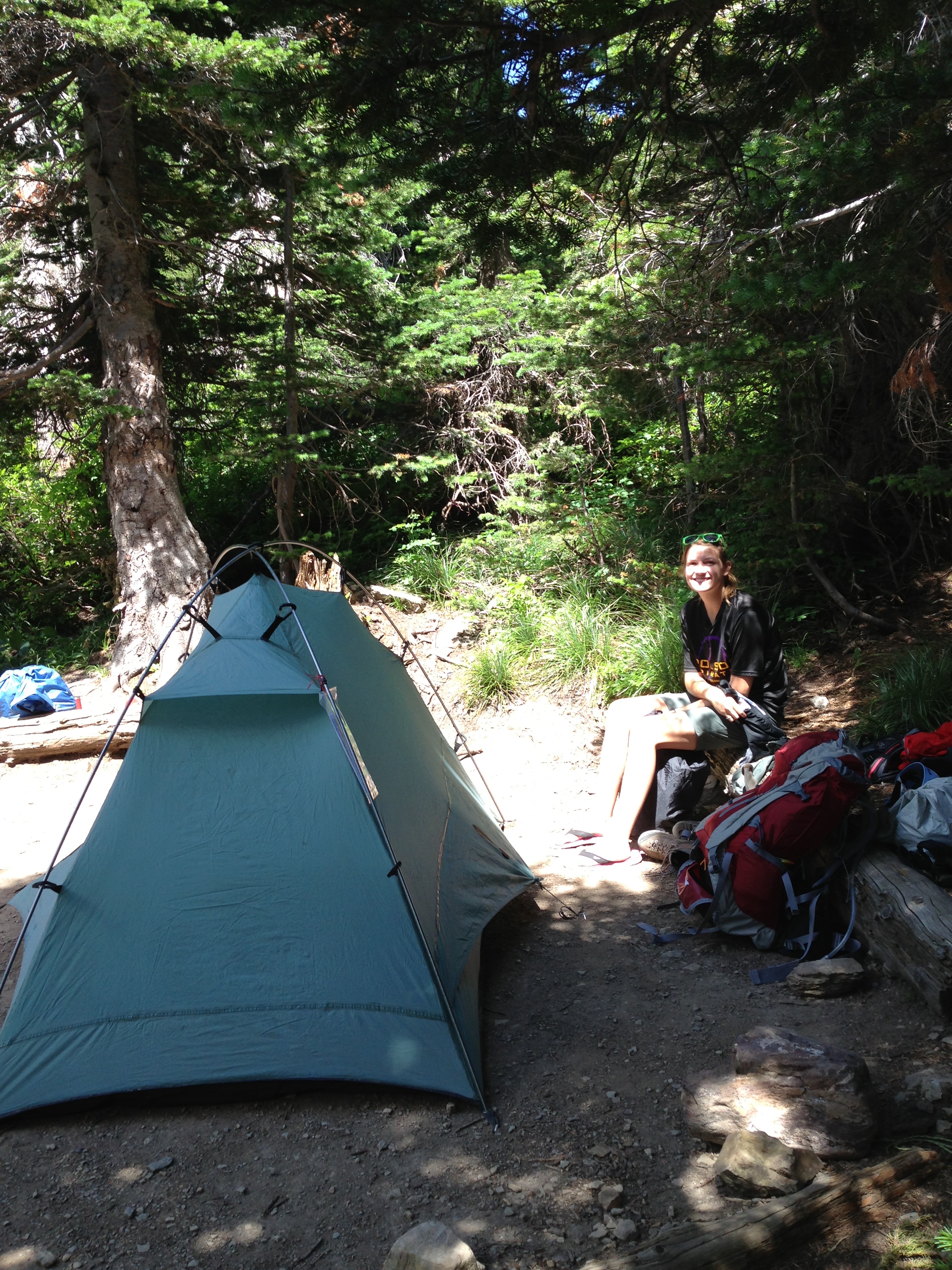
Our camp site right by the lake
We returned to camp and headed to the food-prep area to make our dinner. Another camper arrived to join us, short of breath and laughing. He had just chased down a deer that ran off with one of his trekking poles. He was able to recover the pole and show us the chewed up grip with deer slobber dripping off it. The deer and marmots here are notorious for being a nuisance like that. They love the salt on grips of poles and soles of shoes so NEVER leave anything out on the ground or within reach of tall deer. I have my own tattered pole handles and flips flops to attest to the determination of these critters.
The swim was refreshing
Taylor’s dinner at camp
We went to bed early because we had a big day ahead of us. We planned to climb Mt. Jackson, the 4th of the six 10,000 ft peaks in Glacier, behind Cleveland, Stimson, and Kintla. The climb from the campground would entail just under 5,000 ft elevation gain over a few miles to reach the summit at 10,052 ft. With bellies full of complex carbohydrates we slept soundly with visions of glaciers, mountains, and sparkling waters filling our dreams.
Crossing the foot of the lake
Beginning the off-trail portion
The next morning we awoke early and headed across the suspension bridge on the trail over to Jackson Glacier. From there we branched off-trail and began the ascent of the mountain. My daughter got a little spooked at some of the exposure so when we took a break at 8,400 feet she remained on the ridge while Dustin and I continued to the summit. The remaining 1,500 ft was an easy class 2 and 3 scramble to the top.
Steep snow and scree
The descent later
It was thrilling to be on the top of Mt. Jackson. On the top we had spectacular 360 degree views. We had also gained a view of the Harrison Glacier. While we were taking summit photos we heard the incredible sound of a monstrous ice chunk cleaving apart from Jackson Glacier and crashing down the cliffs below. Unfortunately we were only able to hear the event and not see it. I would say the sound was similar to a sonic boom followed by continuous thunder with a jet flying overhead, all in about 10 seconds total.
The name of the mountain was changed from a tribal term in 1891 by G.B. Grinnell. The previous name was “Sixikaikoan” which meant Blackfeet Man. According to Jack Holterman in his book Place Names of Glacier National Park this may be the peak that inspired Grinnell with the term “Crown of the Continent” as this is the only 10k peak on the continental divide.
Our break at 8,400′
Ridgewalk to the summit
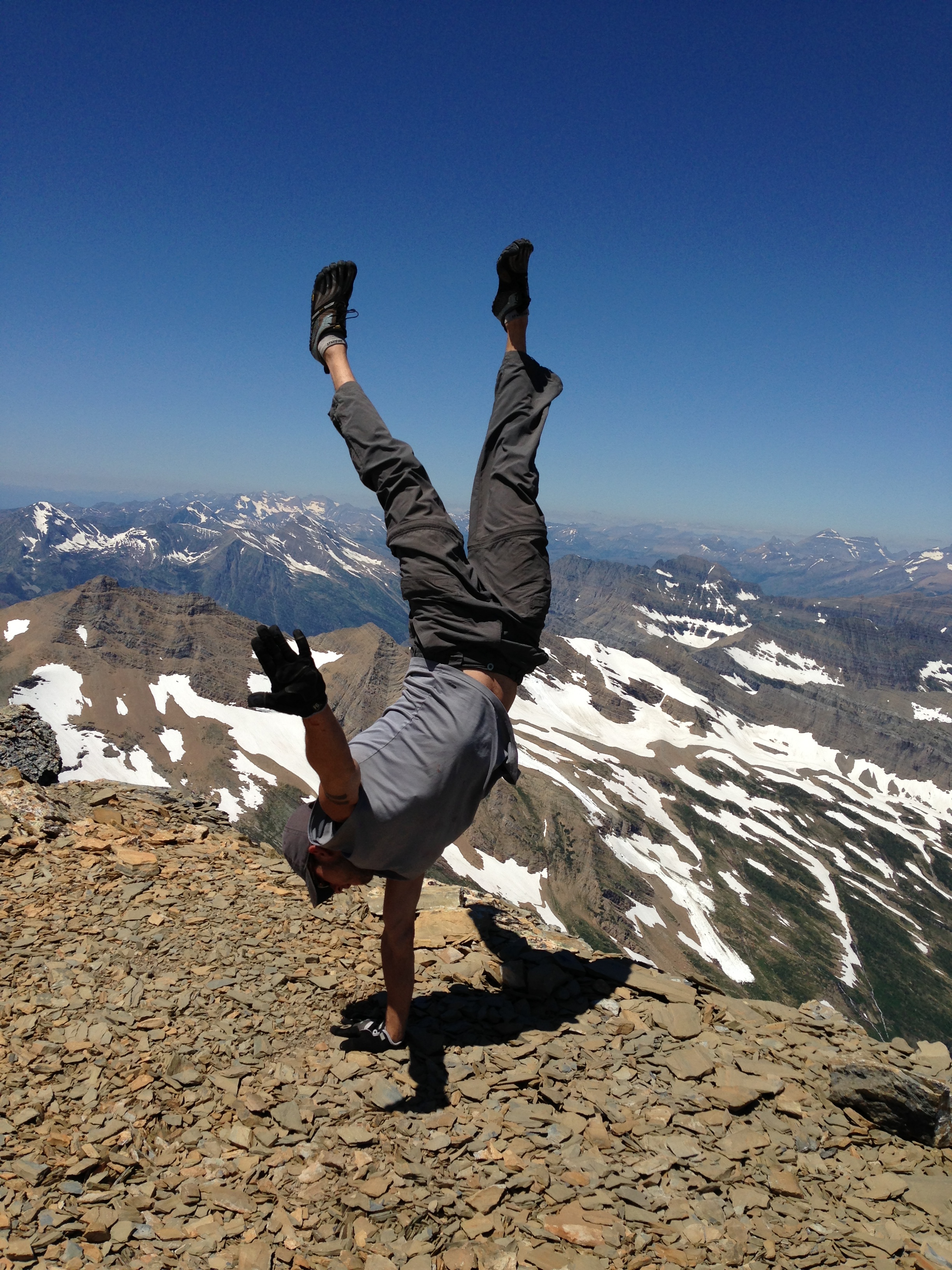
Celebratory summit hand stand
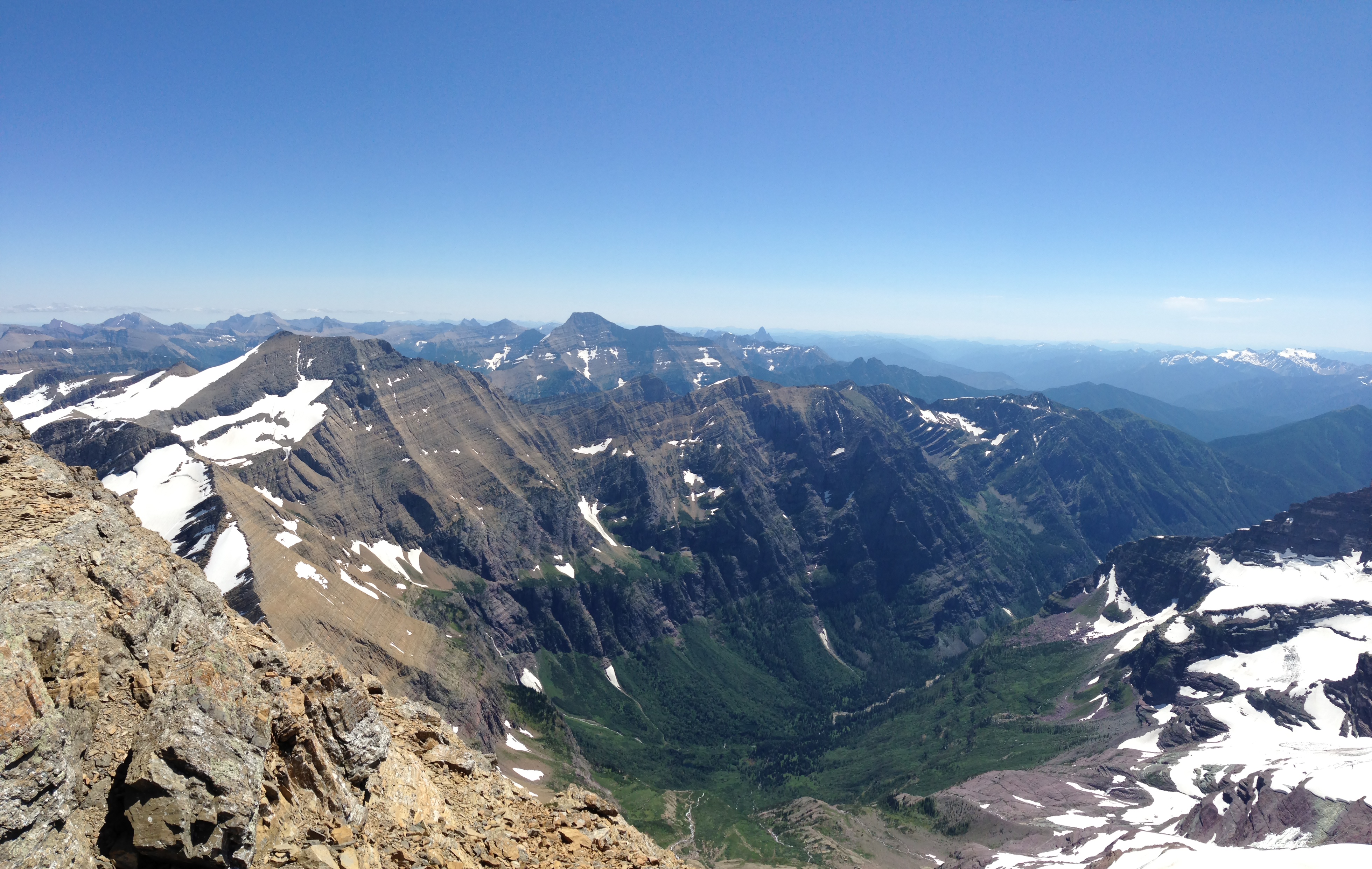
Summit view looking SE
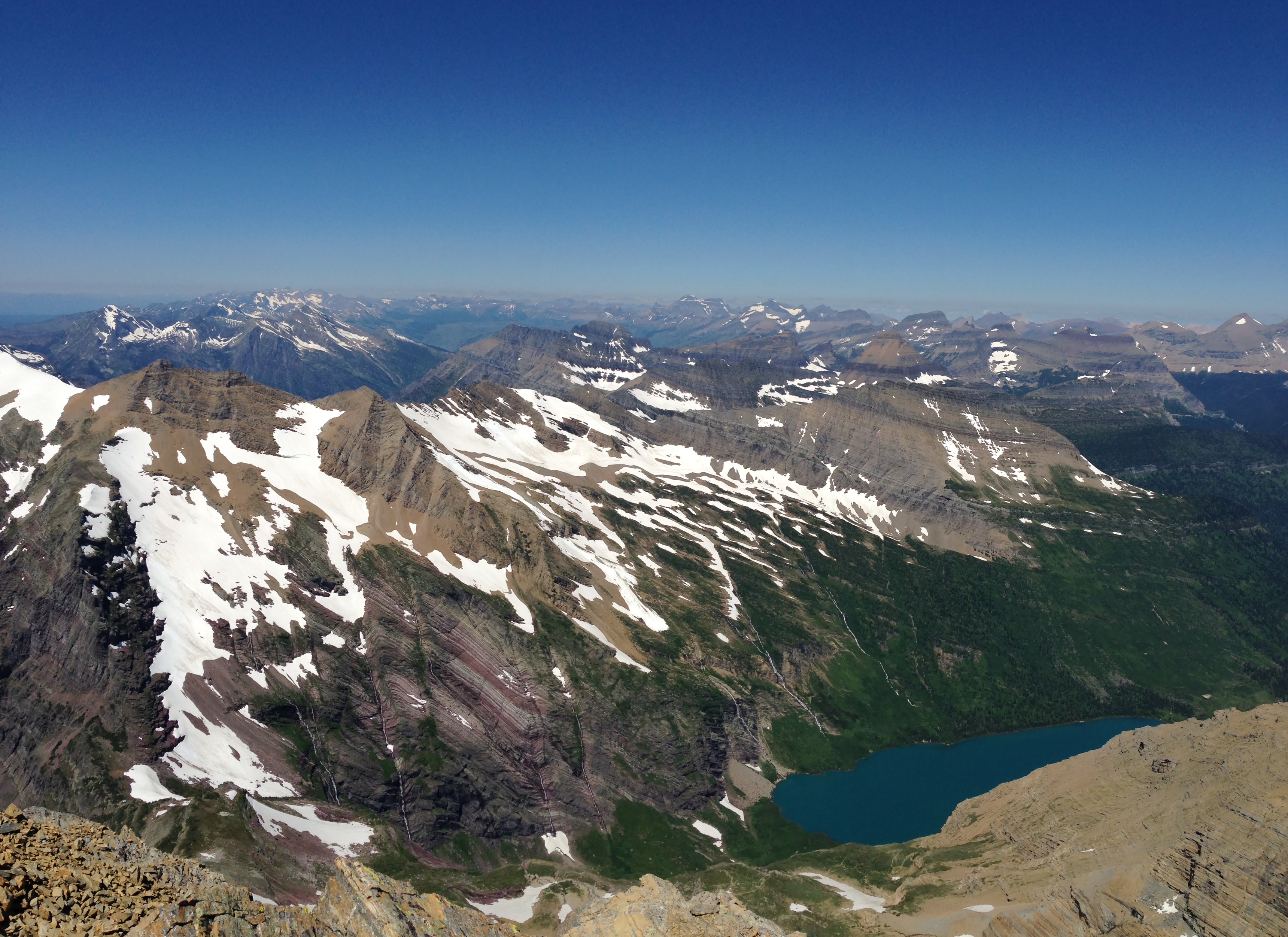
Summit view looking NW over Gunsight Lake
Gunsight Lake is a fantastic destination for a day hike, overnight camp, or as part of the Gunsight Pass trail that goes from the Jackson Glacier Overlook to Sperry Chalet and down to Lake McDonald Lodge (about 20 miles total). This hike can be done from either direction depending on your itinerary. There are waterfalls along the trail and long cascades near the head of the lake. Flora and Fauna are also typically abundant. Don’t forget your bear spray, bug spray, fishing pole and camera.
Morning view from the bridge
Views from the trail
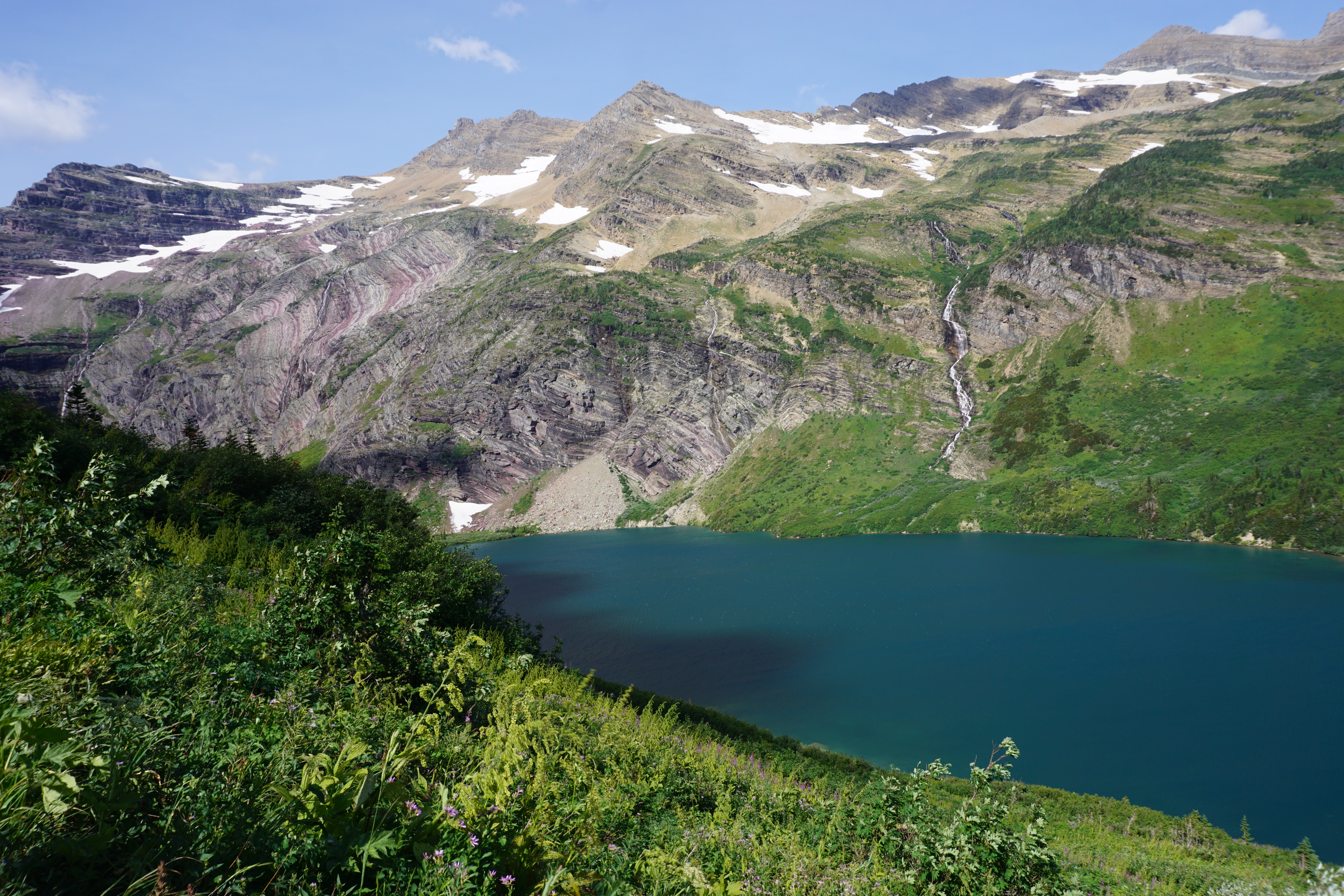
Gunsight Lake from the Gunsight Pass trail looking west
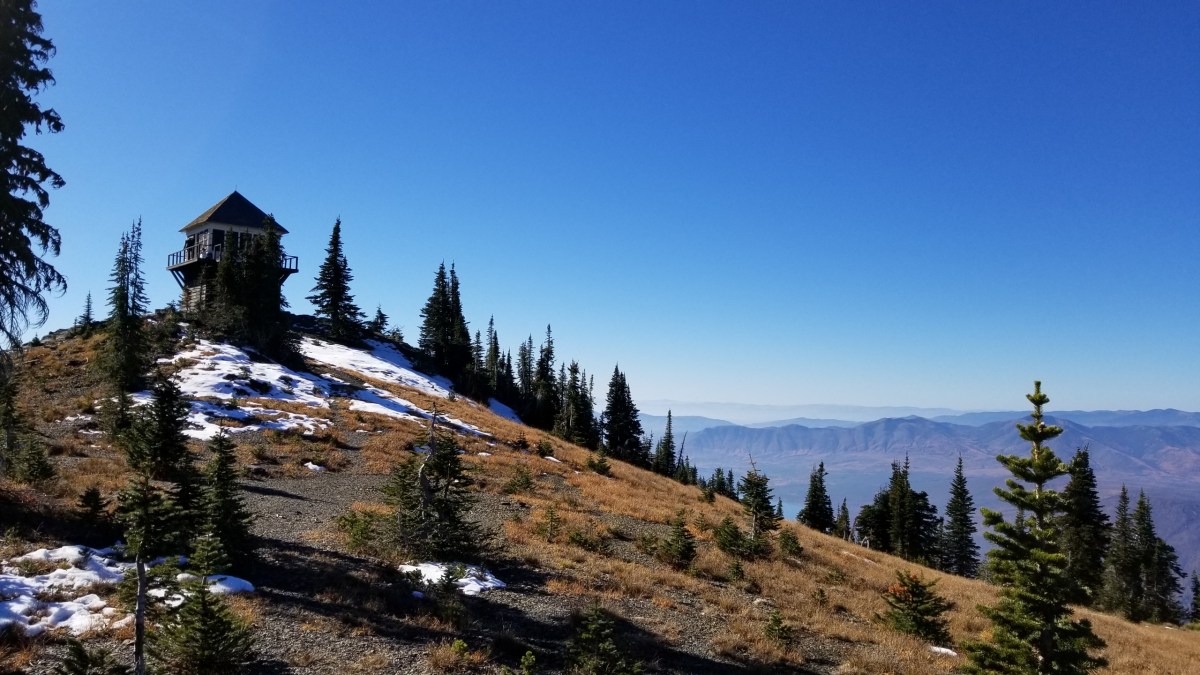
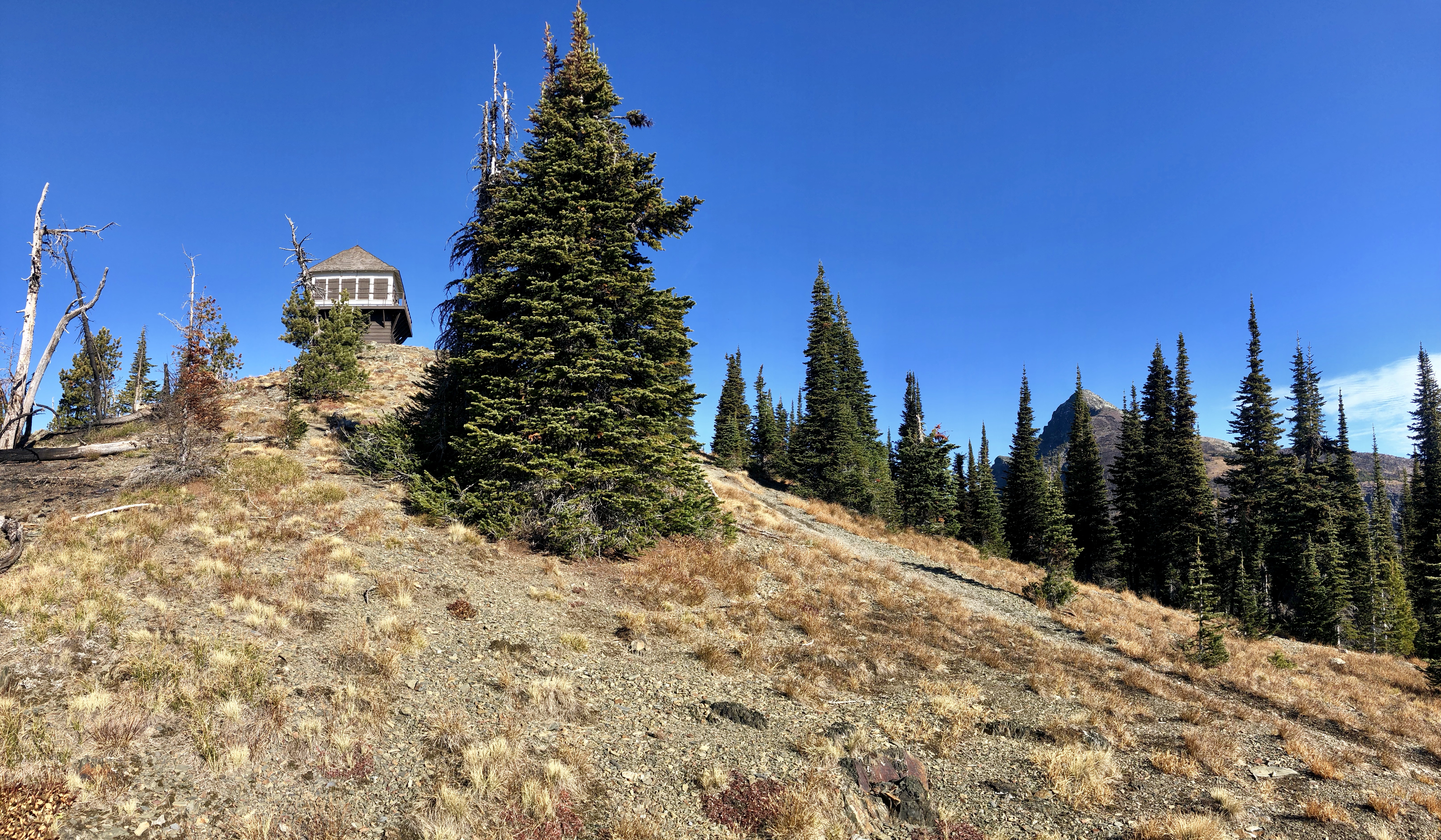
Built in 1928-29 and manned full-time until 1971 this lookout stands at 7,487 ft
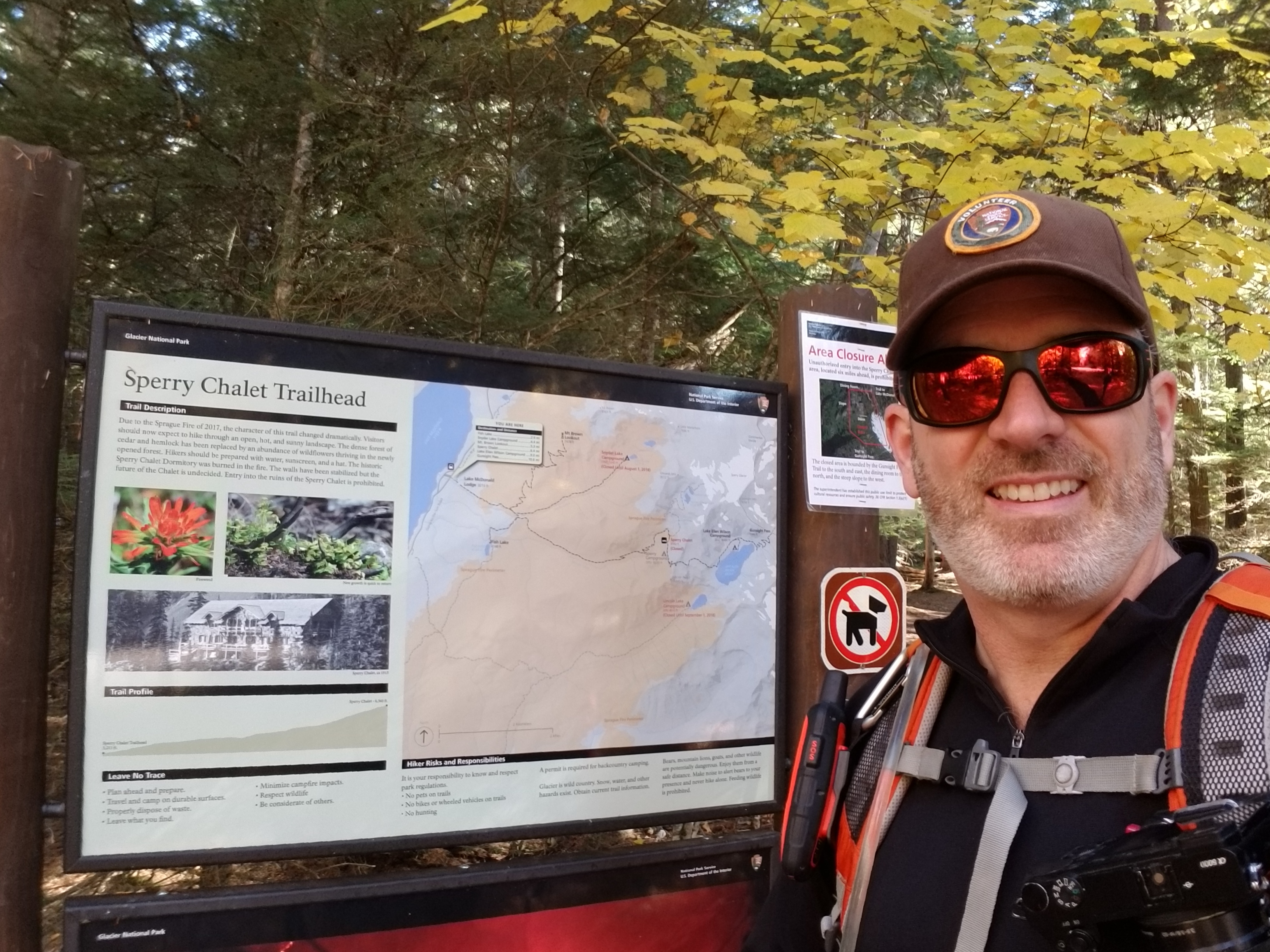
The Mt. Brown Fire Lookout is a fantastic feature in the Lake McDonald Valley. You’ll find spectacular views, migratory birds, flora and fauna, and currently you can see just how close the Sprague fire came to destroying this historic structure. This hike however, is not a casual hike and should only be attempted by those in excellent physical condition.
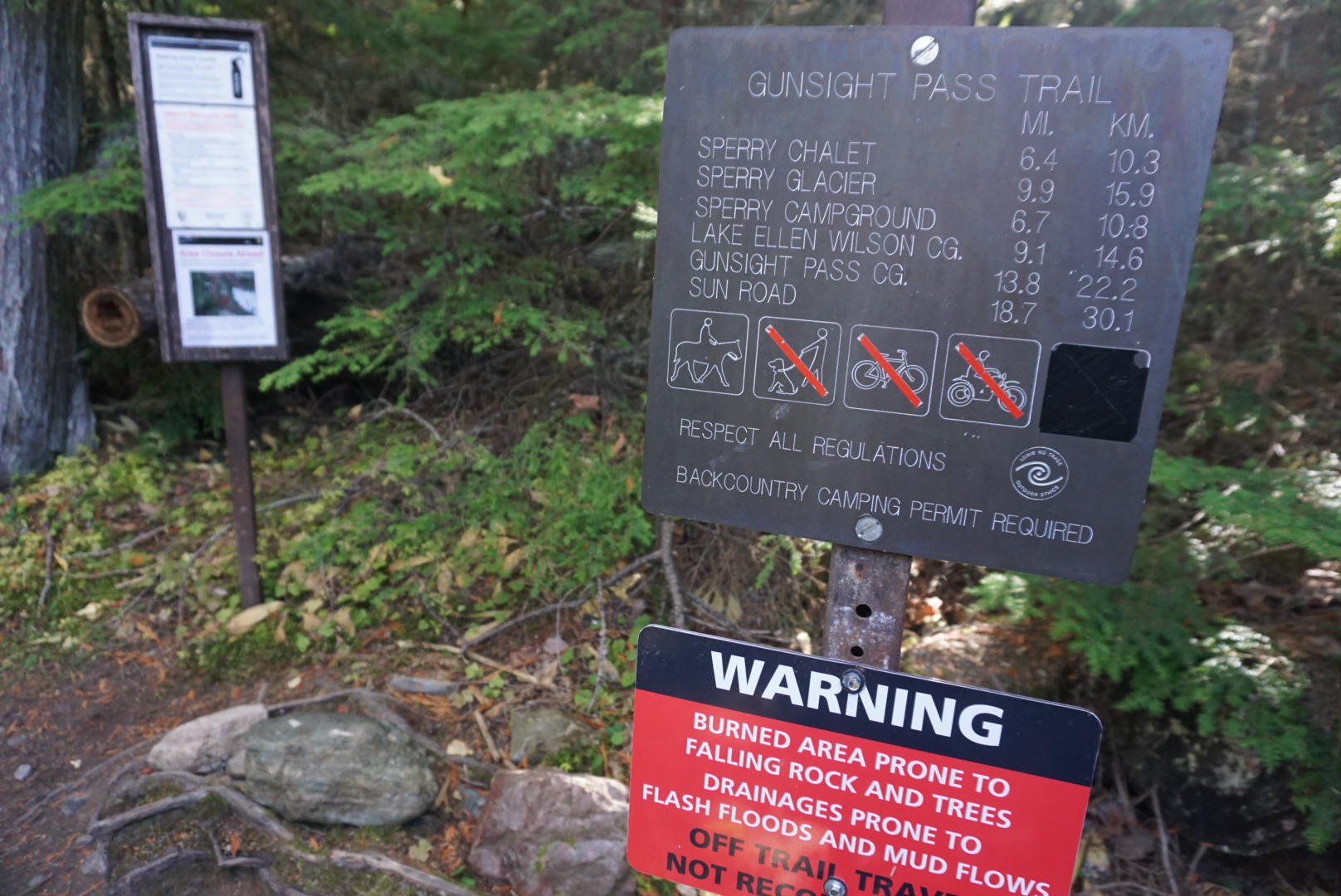
The sign does NOT mention the lookout
The Mt. Brown trail boasts the most elevation gain of any official trail in the park at 4,325 vertical feet. This is accomplished in only 5 miles so be prepared for a continuous uphill slog! Find the trailhead directly across the road from the Lake McDonald Lodge parking area. The shared trailhead also branches off to Snyder Lakes, Fish Lake, Comeau Pass, and Sperry Chalet.
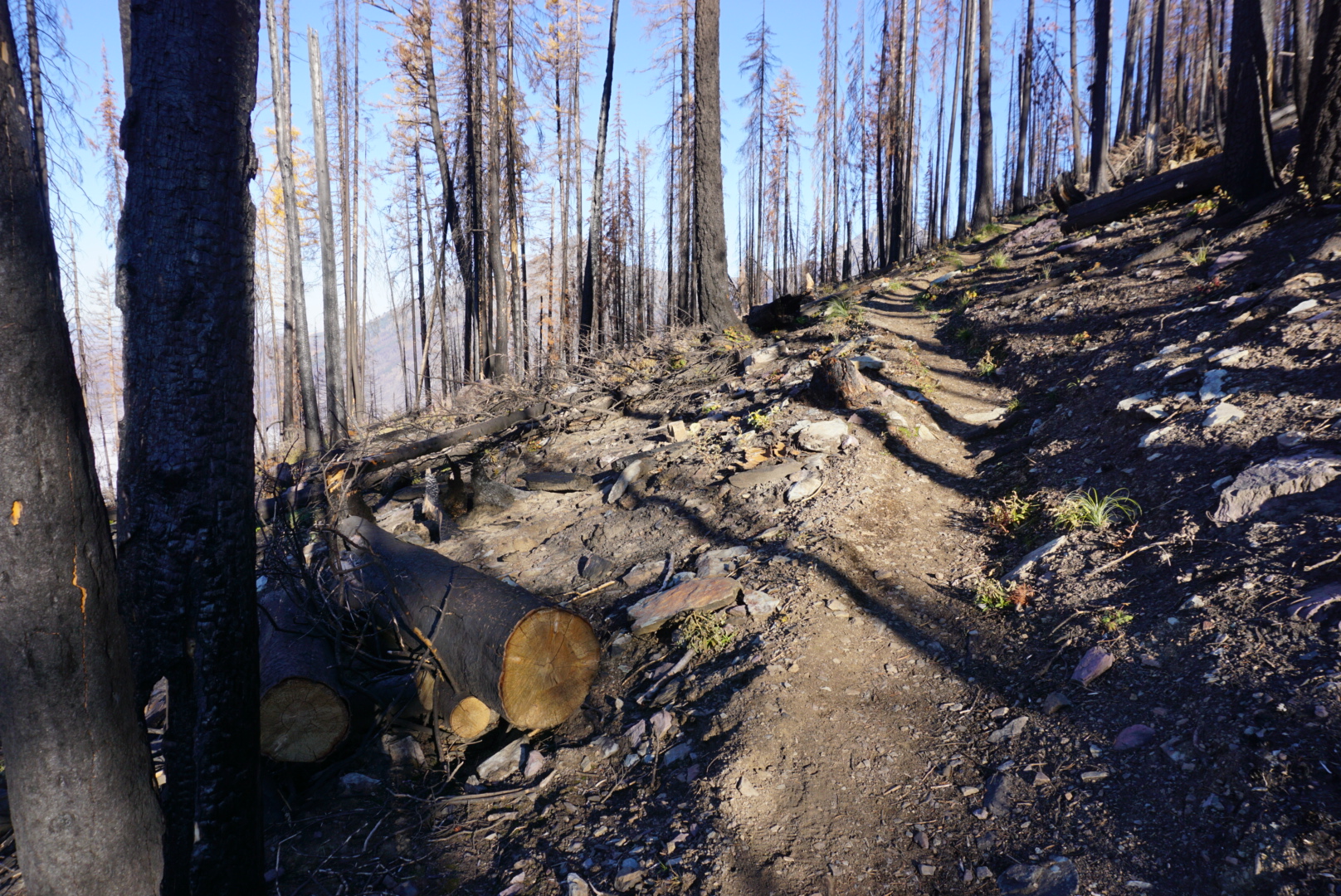
We hiked this trail in October 2018, just after the Howe Ridge Fire wreaked havoc in the park. It was a weekend of perfect Fall weather. Temps were cool, wind was mild, and skies were clear. An early cold snap weeks earlier turned the trees so the colors were in-your-face vivid.
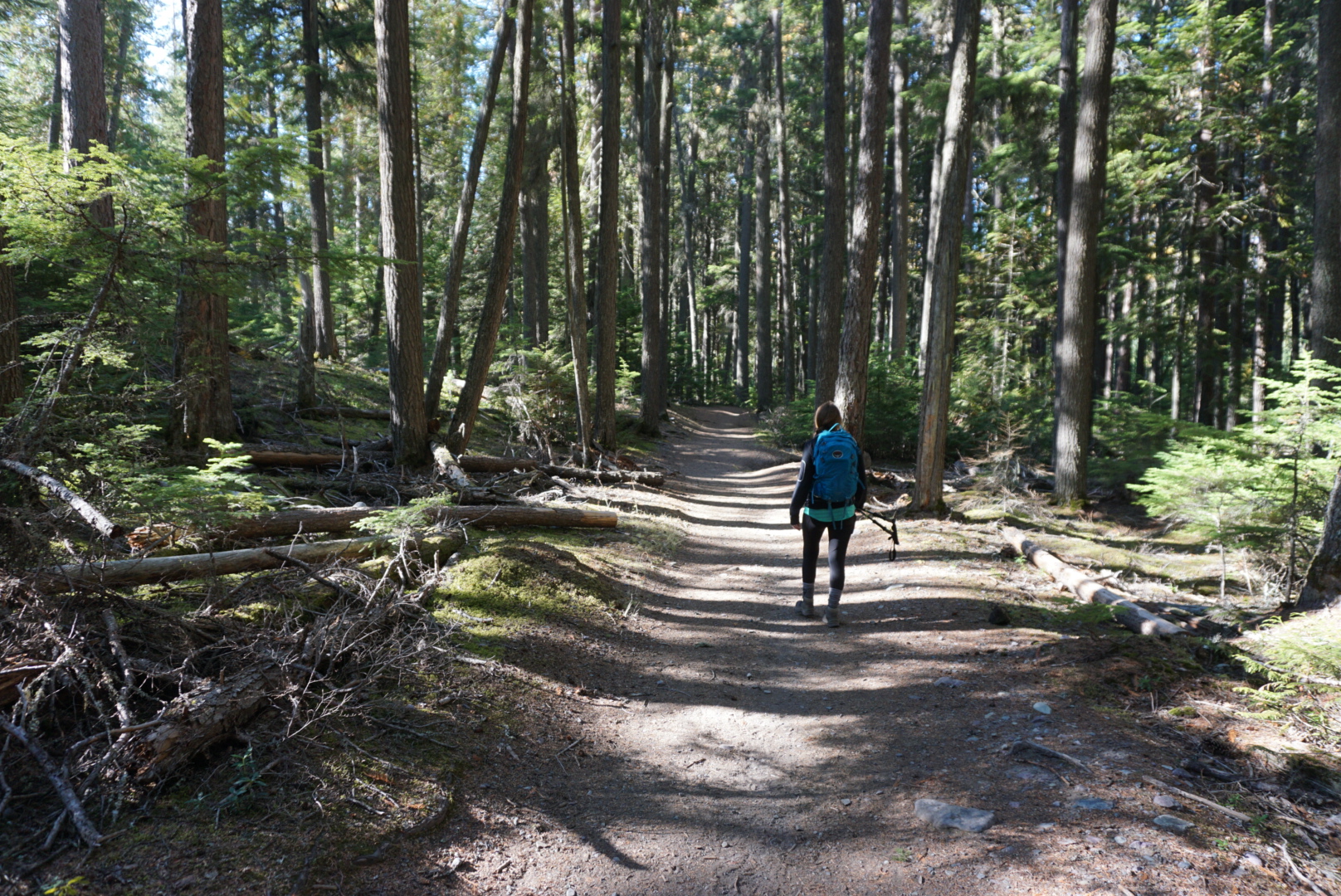
At first we were in thick forest
Rising off the forest floor (PC Rachel Payne)
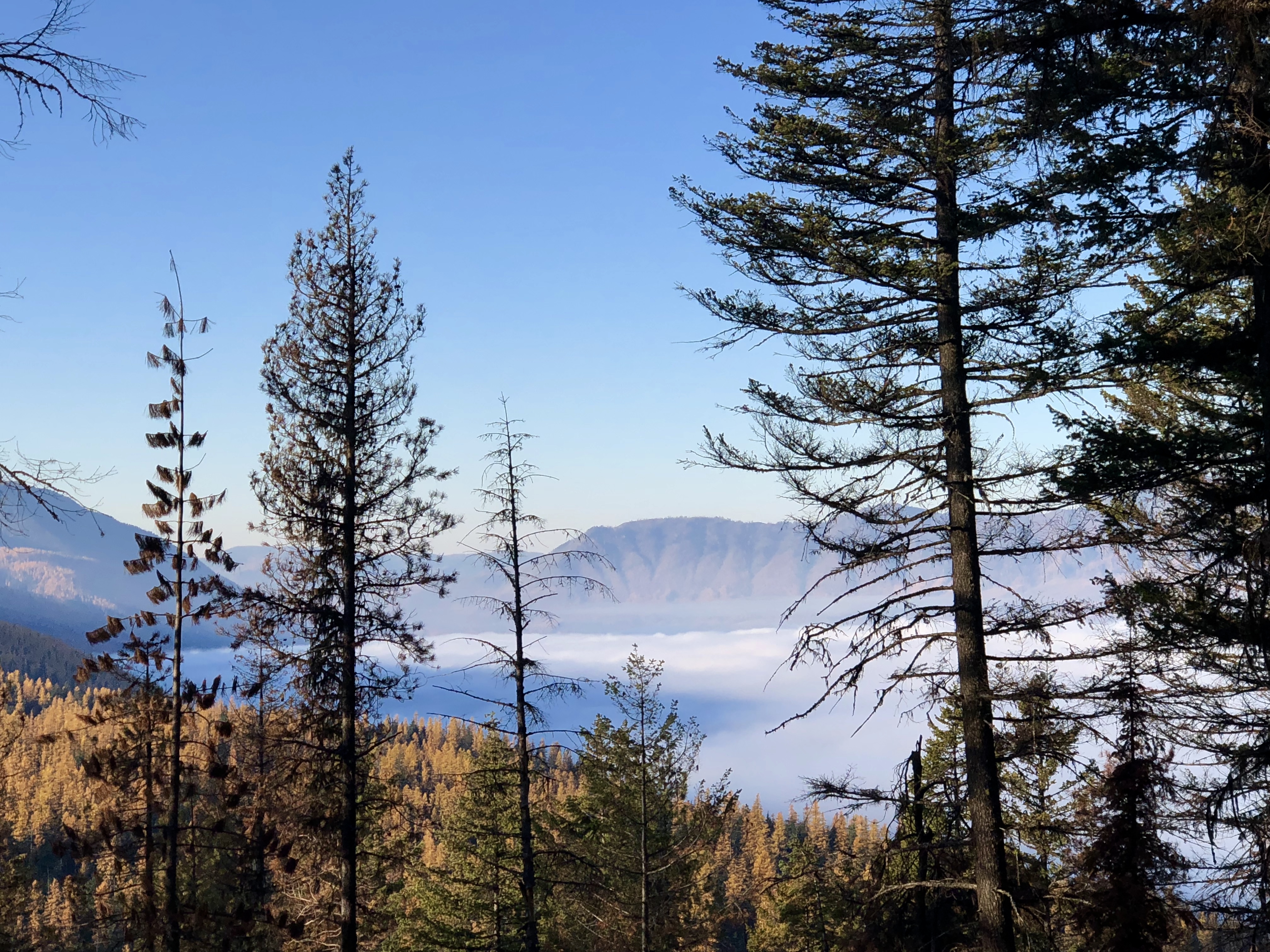
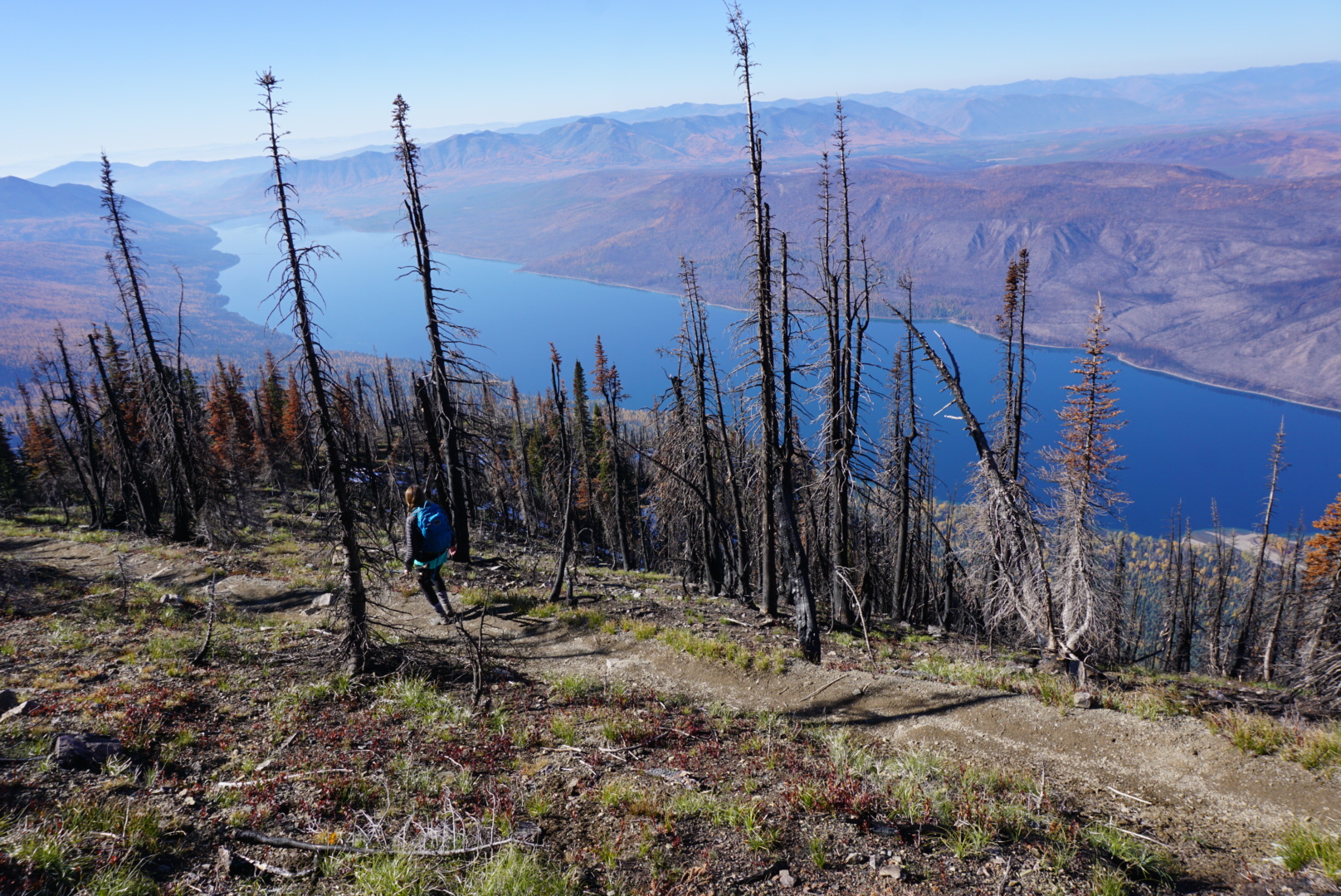
The Sprague Fire of 2017 burned out much of the area surrounding the trail so there were sustained views along the way that were not available in the past. And there was something oddly beautiful about all that black char on the skeletal remains of trees towering around us. The new undergrowth was fresh and green and spoke of new beginnings.
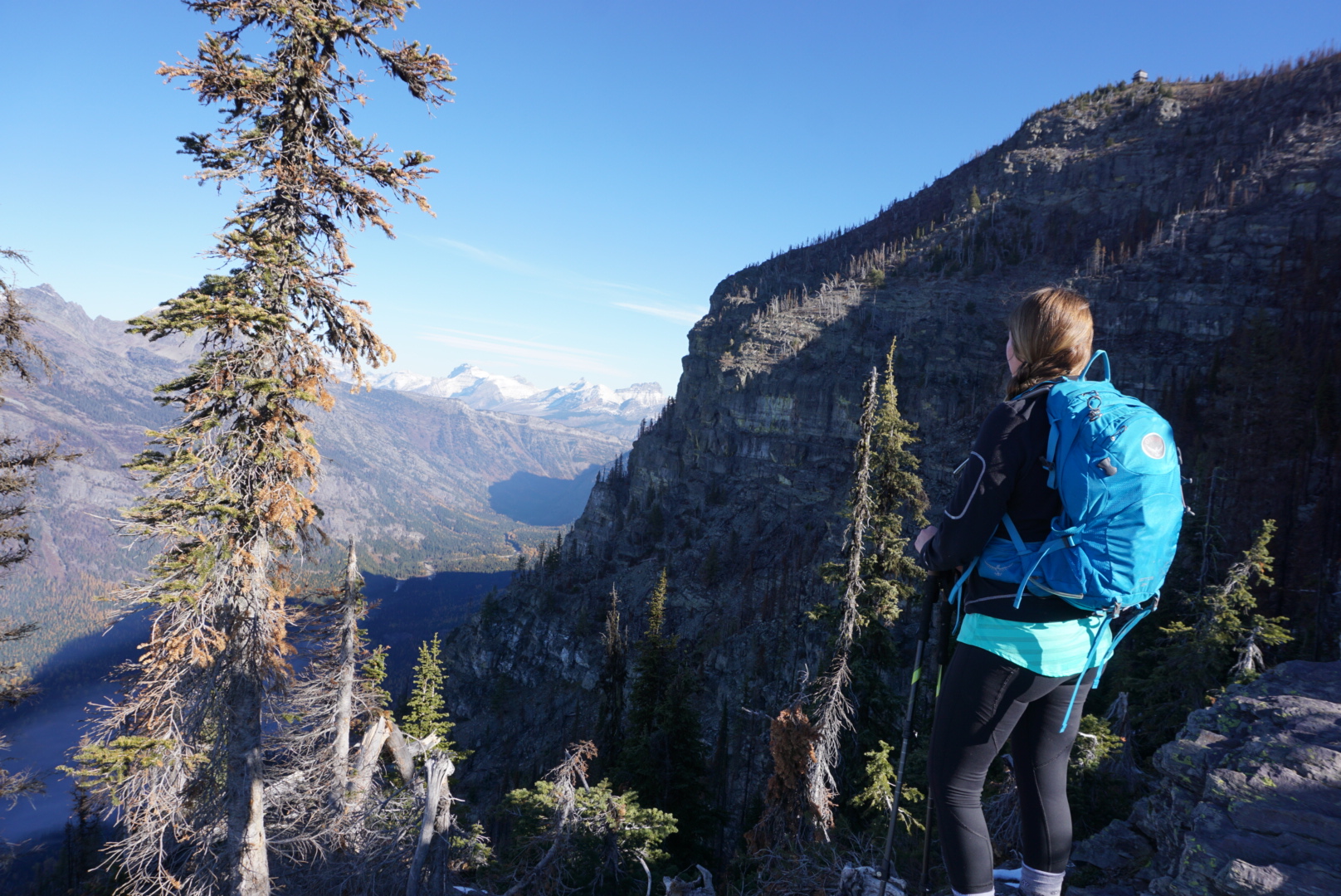
As we got higher and higher along the trail we began to appreciate the prominence of the mountains around us. Peaks in immediate sight were Stanton, Vaught, McPartland, Little Matterhorn, Edwards, and Gunsight. To the south we could see Lake McDonald in its entirety. And we saw from the southern base of Stanton the area of the 2018 Howe Ridge Fire and where it met up with the 2003 Robert Fire.
From within the Sprague Fire we see the Howe Ridge Fire and Robert Fire
You will see quite a few people on this trail because of its popularity but it rarely feels “crowded” because the dauntingly steep grade tends to spread people out sparsely. We saw only a dozen people on the trail this day, but despite the difficulty they ranged in age from adolescent to geriatric. I hope I’m climbing 4,300′ a day when I’m in my 70’s!
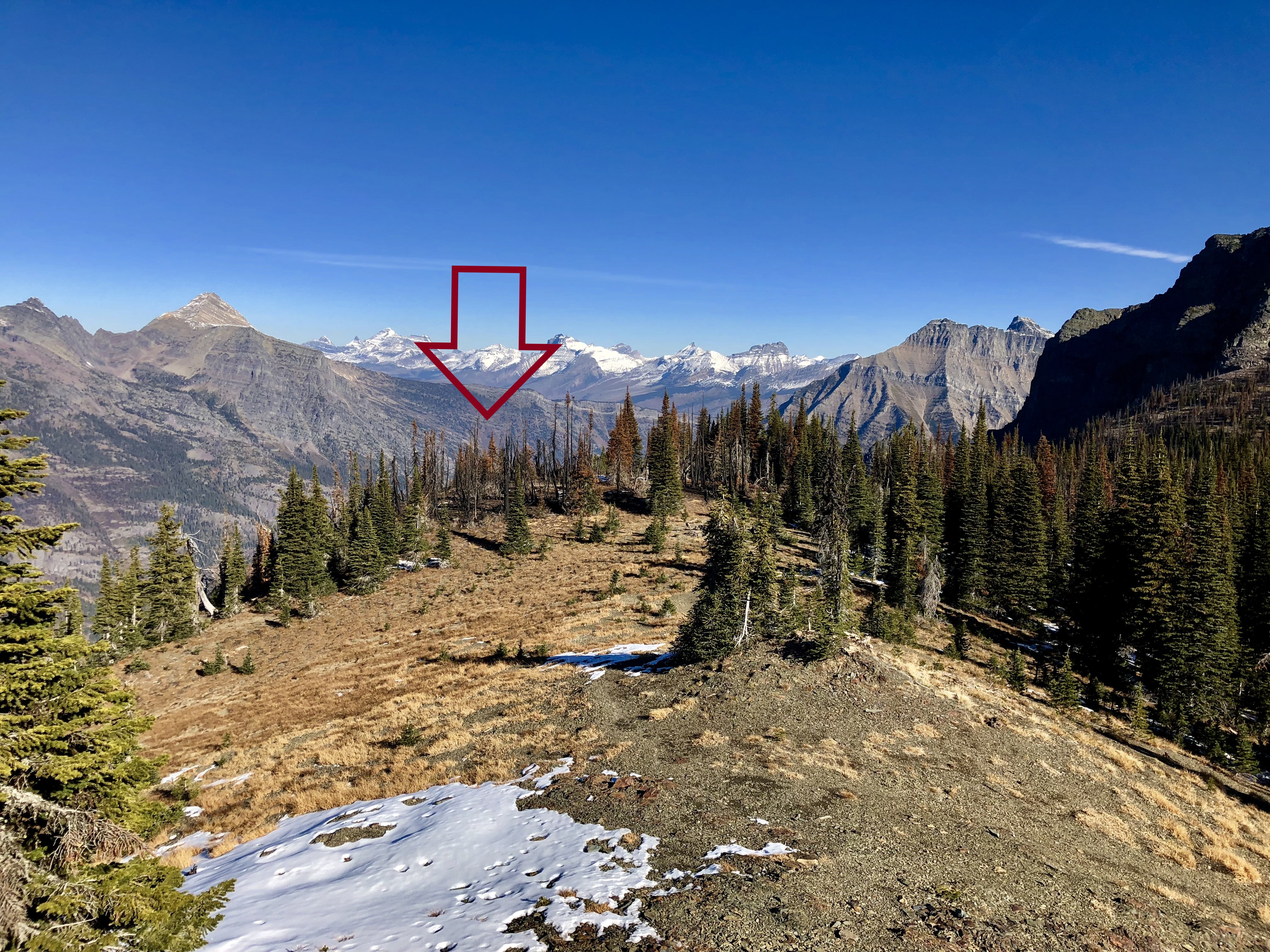
Can you see the lookout above?
Mid-to-Late October is a time of year when migratory eagles are passing through this area. We came across two volunteers from the Citizen Science Program who were doing annual raptor counts on one of the rocky outcroppings where the view into the Snyder Valley was prime for seeing birds. Sometimes the lookout is used as a base camp for the raptor count activities. Want to get involved in projects like this? Go here: GNP Citizen Science
The Snyder Lakes and Sperry Chalet trails are ~2000 ft below
Approaching the lookout. Mt. Brown visible in the trees to the right (PC Rachel Payne)
Of course the views from the lookout are fabulous! We took our time getting the photos we wanted, which certainly included panoramas. Then we had a quick bite. Lunch always tastes good on a mountain and this was no exception. And today our dessert included some Ibuprofen because we knew we would “kneed” it for the pounding our joints would take on the way down.
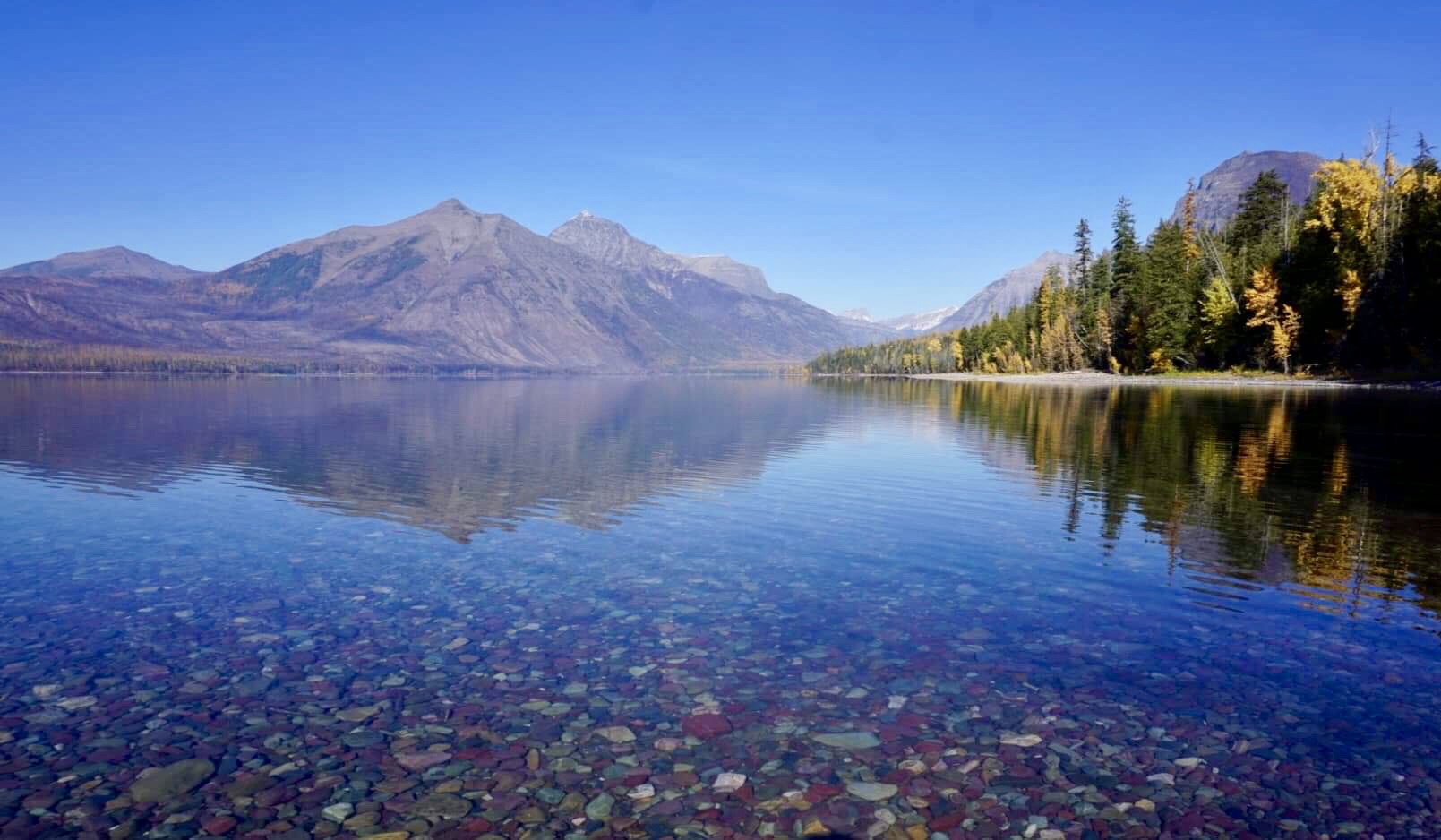
View of Lake McDonald (PC Rachel Payne)
This is a fairly popular winter trail as well. I have snowshoed this trail before and I plan to ski it this year. Who knows, maybe I will even do a winter ascent of the Mount Brown summit!
The fire came within 100 yards of the lookout !
Starting off from Lake McDonald. The classic colored rocks
Amy is a freelance author and photographer in Great Falls, MT
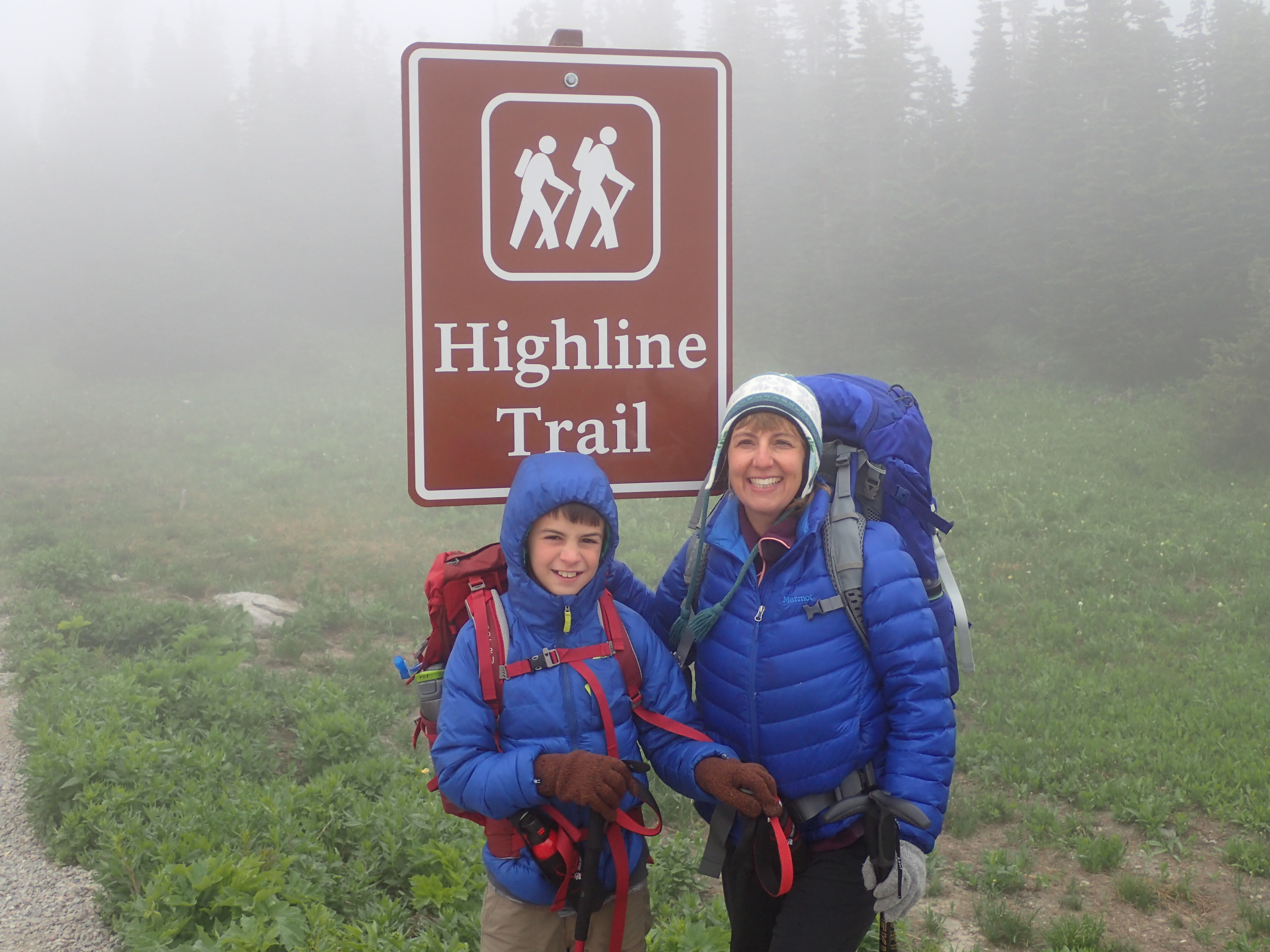
As each summer flits by, it’s more obvious that time is precious with our children. For many summers, my girlfriends and I ventured into Glacier for a grand “Moms’ Hike Out” exploring the trails and chalets as we recharged our mental batteries. This year, we included our kids as three of us brought our 11 year olds on an overnight trip to Granite Park Chalet.
Securing a room at the chalet is competitive reservations at its finest. There were four of us, including my son Samuel, on the computers at the appointed date in January ready to type as soon as the 8 a.m. hour hit. Although all of us submitted reservations, only two of us were given the dates we requested, but we had our spot! From then it was watching the copious snowfall and counting down the days until mid-July.








 The Glacier Blog